Review · PHOTOGRAPHY TOURS
Samarkand: Photo Walking Tour
Samarkand looks better through a camera. I like the way this interactive photo challenge makes you work with the city instead of simply following a guide from one monument to the next. The chance to frame all three madrasahs at Registan Square is a strong opening task, and the small group, limited to six people, should keep the advice personal. My main caution is the timing: the listed stops add up to more than two hours, so confirm the exact route and finish when you book.
I also like the change of pace from grand architecture to small details at Bibi-Khanym Mosque, then to fruit, color, and daily life at Siyob Bozor. You do not need a professional camera. A charged phone is enough, and the guide helps with angles, composition, poses, and even taking pictures of you.
The price is $63 per person, which is fair if you want a guided creative session rather than a standard sightseeing walk. It is less compelling if you already know Samarkand well, prefer a long historical tour, or want plenty of time inside each major monument.
Key points at a glance
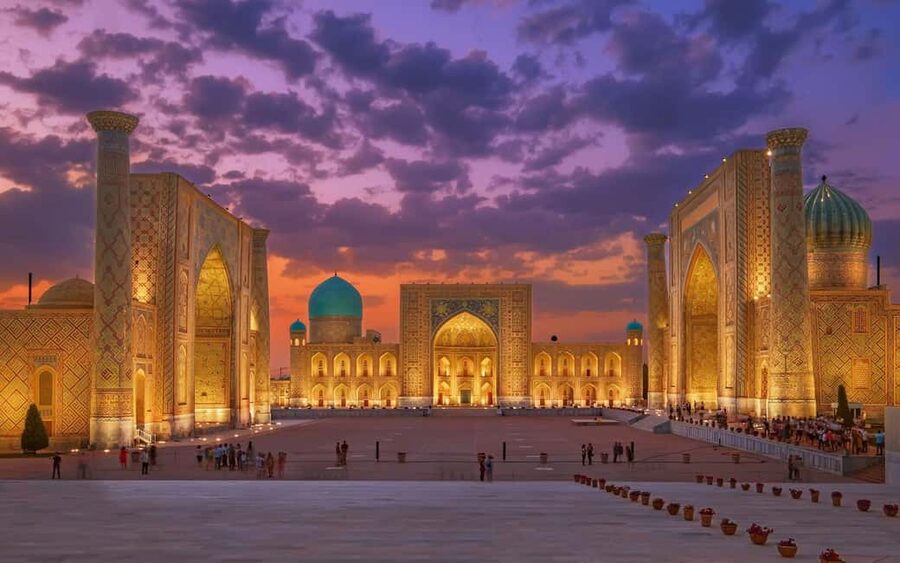
- Registan becomes a composition exercise: You try to place all three madrasahs in one strong image rather than simply take the usual front-facing snapshot.
- Bibi-Khanym shifts your attention to detail: Tile work, textures, and smaller architectural features become the subject.
- Siyob Bozor adds real local color: Fruit displays, movement, and ordinary scenes give your photo collection a sense of place.
- The group is capped at six people: That matters when you need help with framing, posing, or getting your own picture taken.
- A Treasure Passport adds a playful finish: You collect stamps at important stops and receive a symbolic local keepsake from Samarkand.
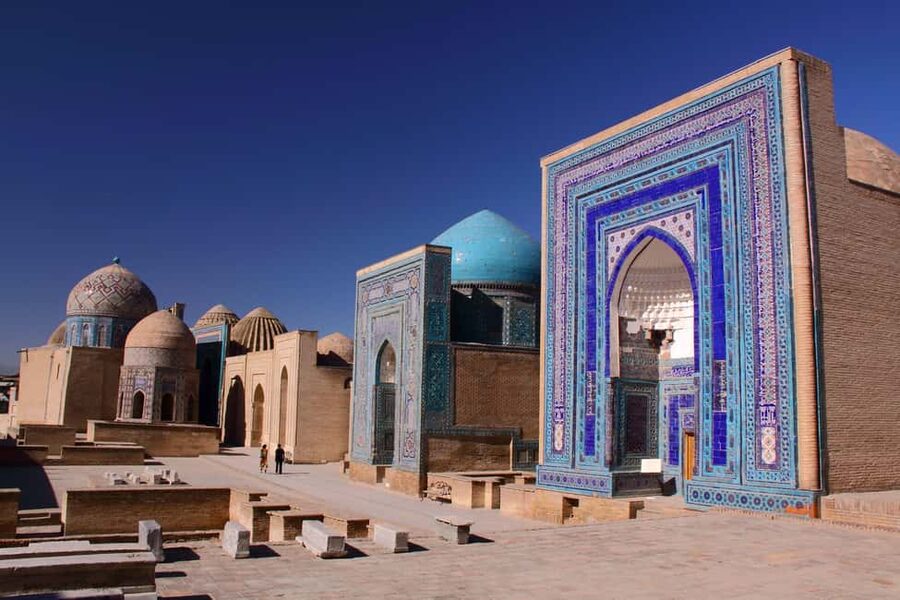
- The route includes four major locations: Registan, Bibi-Khanym, Shah-i-Zinda, and Hazrat Khizr are all part of the planned photo walk.
Why this is different from a standard Samarkand tour
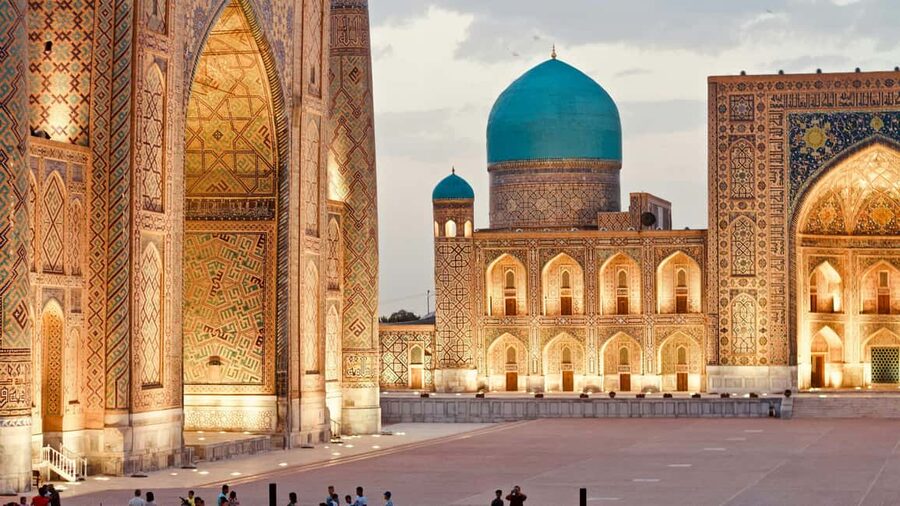
Many city tours ask you to listen, walk, and take pictures when the guide pauses. This one gives you a job at each stop. You look for a particular frame, detail, color, or human moment, then use the guide’s advice to improve the result.
That changes the way you move through Samarkand. At Registan, you are not only learning what the three madrasahs are. You are also thinking about symmetry, scale, and where to stand so the square feels broad rather than flat. At Bibi-Khanym, you slow down and look closely. At the market, you begin watching movement and color.
I think this format works best for people who enjoy a little direction. You do not need to be a serious photographer, but you should be willing to try a challenge and show the guide what you are seeing. The tasks are designed for all skill levels, and the advice applies to smartphones as well as cameras.
The guide also helps with personal photographs. One of the strongest human touches in the experience is the offer to take pictures of you and suggest useful angles and poses. Solo visitors often miss this service on ordinary walks, where they must ask strangers or settle for a quick selfie.
More Photography Tours in the world:
- Barcelona E-Bike Photography Tour
★ 5.0 · 843 reviews - Tromso: Northern Lights Photography Tour
★ 4.2 · 843 reviews - Tromsø: Northern Lights Photography Tour
★ 4.8 · 788 reviews
Starting at Registan Square
The meeting point is in the photography area of Registan Square, protected by a glass fence. Look for the licensed guide holding a sign marked 777. This detail is worth noting because Registan can be crowded and spread out, and a clear meeting signal saves time at the start.
Registan is the right place to begin. The square gives you a grand subject immediately, but the challenge asks you to do more than point your phone toward the center. Your task is to frame all three madrasahs in one composition.
That sounds simple until you try it. The buildings are large, the square has strong symmetry, and small changes in position can alter the balance of the image. The guide can help you find viewpoints that many people pass without noticing. You may learn to use the open space in front of the madrasahs, keep the vertical lines straight, and avoid letting one building dominate the frame by accident.
The planned photo stop lasts about 30 minutes. That is enough for several attempts and some basic coaching, but it is not a long architectural photography session. If you want to experiment with many angles, you may need to move on before you feel finished.
This first stop also sets the tone. You are not collecting a quick proof that you were at Registan. You are trying to make one photograph with a clear idea behind it. For a casual phone photographer, that small change in purpose can produce much better results.
Bibi-Khanym Mosque and the value of small details
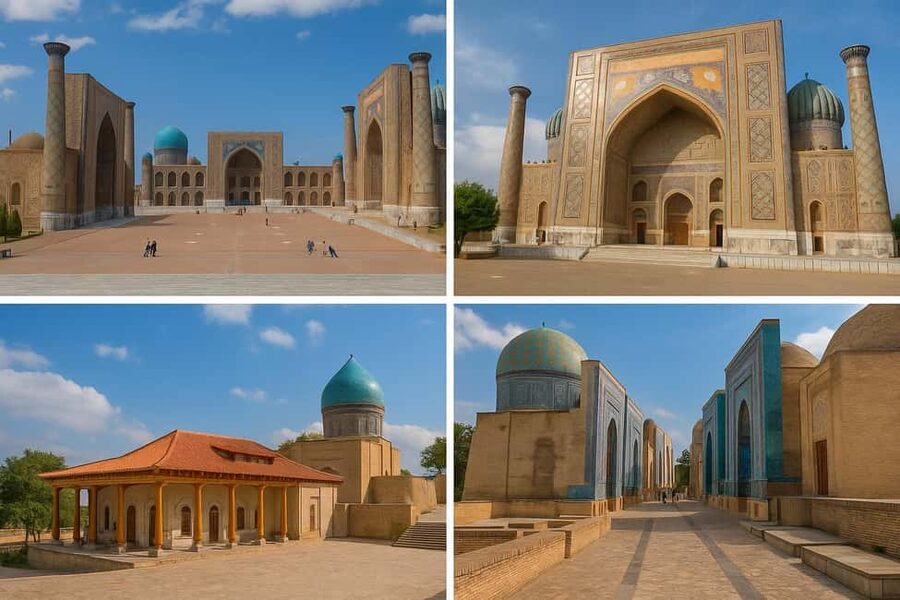
The next stop is Bibi-Khanym Mosque, with about 30 minutes for a guided visit. After the wide view of Registan, the focus turns inward to patterns, surfaces, and architectural details.
This is a useful lesson in travel photography. Famous monuments are often photographed from the same distance and angle. Details give you another way to remember the place. The guide may direct your attention to tile patterns, textures, edges, repeated shapes, or decorative sections that do not appear in a normal postcard view.
You will likely spend more time looking down at your screen, then back up at the building. That is the point. The task trains you to notice how small parts create the character of a large monument.
Bibi-Khanym is also a good place to test simple composition advice. A close view can remove distractions and make color or texture fill the frame. A strong line can guide the eye through the photograph. You may find that a small section of wall tells a more personal story than another full shot of the mosque.
The limitation is time. Thirty minutes passes quickly when you are learning a site and trying several images. If architectural detail is your main interest, you might wish for a longer visit. Still, the short format keeps the walk moving and prevents the tour from becoming a long lecture at one monument.
Siyob Bozor brings color and daily life
Siyob Bozor changes the subject completely. Here, the goal is not perfect symmetry or grand architecture. You look for color, movement, food displays, and ordinary scenes that show how Samarkand feels during the day.
The market is listed for a photo stop and shopping, with roughly 30 minutes available. Bright fruit displays can give your phone strong colors, while people moving through the market can add energy to a frame. The guide offers advice on capturing candid moments, but you should still be polite and aware of personal space when photographing people.
This part of the walk is valuable because it gives your photographs a human setting. A collection made only of monuments can feel detached from the city. Market images help connect Samarkand’s famous buildings with everyday life.
You can also buy something here if you want to shop, but personal expenses are not included. Keep that distinction clear. The tour price covers the guide, route, photography instruction, water, and the planned keepsake. Anything you purchase at the bazaar comes from your own budget.
The market stop may appeal especially to phone users. A smartphone handles strong colors and quick scenes well, and you can work without changing lenses or carrying equipment. The guide’s help with timing and framing may be more useful here than a technical explanation of camera settings.
One caution: markets are active places, and the best moment may disappear quickly. Do not expect every photo to be perfectly posed. The aim is to record atmosphere and movement, not create a studio portrait.
Same place, a different kind of shoot:
- Bali: Full-Day Instagram Highlights Tour
★ 4.8 · 7,817 reviews - #1 Northern Lights Tour In Iceland from Reykjavik with PRO photos
★ 4.5 · 2,887 reviews - ️ Bali Instagram Tour: The Most Famous Spots (Private & All-Inclusive)
★ 5.0 · 2,857 reviews - Silfra: Fissure Snorkeling Tour with Underwater Photos
★ 4.9 · 2,731 reviews
Shah-i-Zinda: a final major setting
Shah-i-Zinda is included as a guided stop and brings you back to highly decorated architecture. Its covered passageways, tiled surfaces, and repeated shapes offer another chance to work with details, but the setting differs from Bibi-Khanym.
Here, your images can focus on rhythm and progression. A row of decorated facades can lead the eye forward. A close view of tile work can isolate color and pattern. The guide can point out viewpoints that help you avoid taking the same straight-on image as everyone else.
This is also where the walk may feel more like sightseeing again. The guide shares local information while helping you photograph the site, so you receive some cultural context rather than a series of disconnected camera exercises.
The supplied route assigns 30 minutes to Shah-i-Zinda. That is a useful amount of time for a focused visit, but not enough for a leisurely exploration of every corner. You should arrive ready to choose a few subjects rather than try to photograph everything.
Comfortable shoes matter here and throughout the walk. The route is described as mostly flat and easy to walk, but you will be on your feet and moving between several important sites. The tour is not suitable for wheelchair users, and people over 95 are specifically excluded from participation.
The final stop and an unusual souvenir
The included route description names Hazrat Khizr as another guided photo location, with a further photo stop. The schedule presents six stages, but the final entry is not fully specified in the timing details. Since the named stops each receive about 30 minutes, the published schedule appears longer than the stated two-hour duration.
That is the one practical point I would clarify before paying. Ask the provider to confirm the exact final stop, total walking time, and how long you will spend at Shah-i-Zinda and Hazrat Khizr. This does not ruin the concept, but it helps you plan the rest of your day.
The Treasure Passport gives the walk a playful structure. You collect stamps at important landmarks, then finish with a symbolic local keepsake from Samarkand. It is a small item, not a major financial benefit, but it gives the tour a physical ending beyond a camera roll full of images.
I like this idea for families, couples, and younger visitors who enjoy collecting things. It also helps solo visitors feel that the walk has a clear story: complete the challenges, gather the stamps, and leave with a memento.
Guide support and group size
The tour includes a licensed local guide who speaks English or Japanese. The guide’s role is broader than pointing out monuments. You receive local context, photography instruction, help finding good viewpoints, and assistance with personal pictures.
A small group of no more than six people is important here. Photo coaching is difficult in a large crowd. With six or fewer, you have a better chance to ask for a framing suggestion, show the guide an image, or request a quick picture of yourself without holding up dozens of people.
The strongest praise attached to this experience concerns kindness, hospitality, clear English, and help with photos. One guest, Susan from the United States, specifically appreciated the guide’s fluent English, cultural explanations, suggestions for angles and poses, and willingness to take pictures. That combination matters because a photo tour can easily become too technical or too rushed. Here, the human side appears to be a major strength.
A second verified guest, Martin from Denmark, praised the friendly Spanish-speaking women connected with the experience. The advertised tour languages are English and Japanese, so do not book expecting Spanish guidance unless the provider confirms it directly. The available information supports English and Japanese as the official options.
What the $63 price gets you
At $63 per person, this is not the cheapest way to walk through central Samarkand. A self-guided route costs far less, and you can take pictures at the same monuments without joining a group.
The value comes from the added structure. You pay for a licensed guide, a small group, specific photo tasks, help with composition, access to selected viewpoints, bottled water, the Treasure Passport, and a keepsake. You also avoid spending time wondering where to stand or what details to photograph.
I think the price is reasonable for a visitor who wants a polished set of personal photos and some light instruction. It is especially useful for solo visitors, couples who want pictures together, and people who carry a phone but feel unsure about composition.
The calculation is less favorable for someone mainly seeking historical explanation. The walk is only two hours, and photography takes up much of that time. You will receive local insight, but this is not designed as a long academic tour of Samarkand’s monuments.
The 4.8 rating from four verified bookings suggests a very positive early response, but the sample is small. I would treat the praise as encouraging rather than conclusive. The guide’s warmth and practical help are clear strengths, while the unclear timing deserves a quick question before booking.
Who will enjoy this most
I would choose this walk for:
- Solo visitors who want someone to take good photos of them.
- Couples and friends who want shared pictures without asking strangers.
- Smartphone users who want simple, useful advice.
- First-time visitors who enjoy seeing landmarks through small creative tasks.
- People who prefer a relaxed small group to a large sightseeing party.
- Families or younger visitors who like the Treasure Passport and stamp collection.
I would hesitate if you want to spend a long time at each monument, avoid market scenes, or prefer a traditional lecture-led tour. The interactive format asks you to participate, and the two-hour schedule may feel short if you want both detailed history and serious photography.
Bring comfortable shoes and a fully charged smartphone. No professional camera is required, and no additional tour payments are required during the walk. You should still budget for anything you choose to buy at Siyob Bozor.
Free cancellation is available up to 24 hours before the start for a full refund, and you can reserve now while paying later. Starting times depend on availability. These policies are useful if your Samarkand schedule is still changing.
Should you book this Samarkand photo walk?
Book it if you want to turn famous monuments into personal photo assignments, not just tick them off your sightseeing list. The best reasons are the six-person limit, the practical help with phone photography, the chance to get better pictures of yourself, and the shift from Registan’s symmetry to Bibi-Khanym’s details and Siyob Bozor’s daily scenes.
Before booking, confirm the exact duration and final stop because the listed 30-minute sections appear to total more than two hours. If the schedule is clarified and you like creative, hands-on sightseeing, $63 is a sensible price for a focused introduction to Samarkand.
If you want a full historical tour or hours to explore each monument at your own speed, choose a longer traditional tour instead. For everyone else, this is a friendly way to leave Samarkand with more than standard snapshots: you get a small skill, a stamped passport, a keepsake, and pictures shaped by your own eye.
FAQ
How long does the photo walking tour last?
The advertised duration is two hours. The route also lists several 30-minute stops, so confirm the exact schedule and final stop when booking.
Where does the tour begin?
You meet at the photography area of Registan Square, protected by a glass fence. The guide carries a sign marked 777.
Which locations are included?
The route includes Registan Square, Bibi-Khanym Mosque, Siyob Bozor, Shah-i-Zinda, and Hazrat Khizr.
What languages are available?
The live guide is available in English or Japanese.
Do I need a professional camera?
No. You use your own smartphone or camera, and the guide provides advice on angles and composition. A charged smartphone is recommended.
How many people can join the group?
The group is limited to six participants. The tour is not suitable for wheelchair users or people over 95 years old.
Just added around the world
- Private Milan Photo Walk with Professional Photographer★ 5.0 · 4 reviews
- Private Vacation Photography Session with Local Photographer in Milan★ 5.0 · 2 reviews
- An Adventure in Milan and your unforgettable Private Photoshoot★ 5.0 · 12 reviews
- Milan Photowalk with a Professional Photographer★ 5.0 · 7 reviews
- Private Wynwood Miami Photoshoot★ 3.0 · 2 reviews
- Private Sunset and Night Photo Tour★ 5.0 · 3 reviews
- Private Vacation Photography Session with Local Photographer in Miami★ 3.0 · 2 reviews
- Miami: Professional Private Photoshoot at Miami Beach★ 5.0 · 2 reviews
Photography Tours, compared.