
Review · PHOTOGRAPHY TOURS
Photo Walking Tour Barcelona Cathedral Gothic Quarter El Born
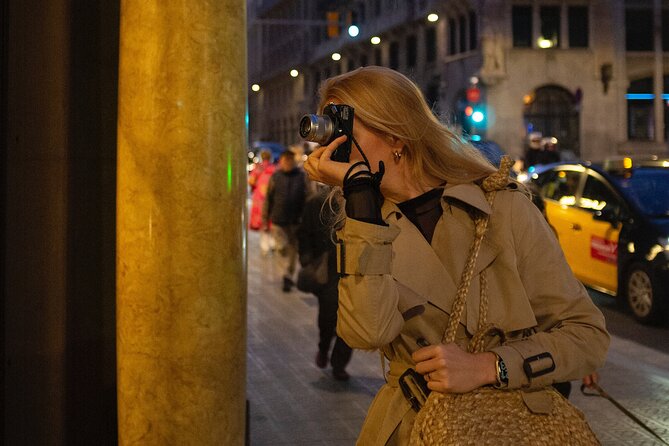
Barcelona rewards a camera held high. This photo walk links grand stations, leafy parks, Gothic lanes, and lively squares while teaching you how to frame them better. I like the small group limit of 10, which should give you room to ask questions, and I like that you need no special equipment beyond your phone or camera. The main catch is time: the listed stops add up to more than two hours, so the visit may feel brisk.
I also like that the guide focuses on practical improvements, including angles, reflections, and composition rather than technical camera jargon. Leonardo received especially warm praise for adding historical context and clever ways to make ordinary tourist pictures more interesting. Still, this is not a full sightseeing tour with interior admissions, food, or transport included. You are paying for instruction and guided access to good photo spots.
Key points before you book
- Eleven central photo stops: The route covers Estació de França, Parc de la Ciutadella, Arc de Triomf, the Gothic Quarter, and Plaça Reial.
- Useful for phone photographers: Android phones, iPhones, and cameras are all welcome, and no previous photography experience is needed.
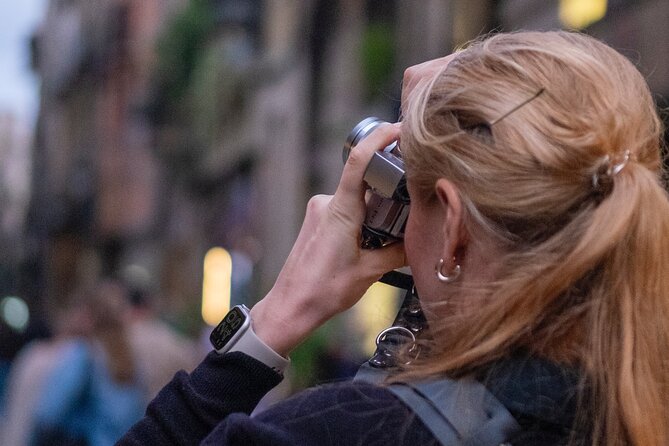
- Personal coaching: The guide offers individual advice on angles, reflections, framing, and ways to improve your images.
- Small group format: The maximum group size is 10, with occasional possibility of a much smaller group.
- Strong overall rating: The experience is rated 4.9 out of 5, with 97 percent of customers recommending it.
- Plan ahead: It is booked an average of 41 days in advance, and poor weather can lead to a rescheduled date or refund.
Why this photo walk works for Barcelona
Barcelona can be hard to photograph well. The city gives you ornate Modernist buildings, medieval stonework, formal avenues, parks, arches, and crowded public squares, often within a short walk of each other. That variety is useful for a photo lesson because you can try several approaches in one outing.
You might work with strong lines at Estació de França, open space at Arc de Triomf, close architectural details at Casa de l’Ardiaca, and reflections or unusual angles around the Gothic Quarter. The point is not simply to collect famous sights. It is to leave with a better sense of how to look at them.
The tour is offered in English and lasts about two hours. The group can include up to 10 people, but one past outing had only one participant because of very hot July weather. That kind of small turnout can make the experience feel almost like a private lesson, though you should not count on having the guide to yourself.
The price is $59.90 per person. That is fair if you want hands-on photography help, especially if you use a phone and normally take quick snapshots without thinking much about composition. It is less appealing if you only want a standard walking tour or already have strong photography skills.
More Photography Tours in Barcelona
- Barcelona E-Bike Photography Tour
★ 5.0 · 843 reviews - Photo Walking Tour Sitges Experience Beaches and Town
★ 5.0 · 65 reviews - Barcelona: 4-Hour E-Bike Photography Tour
★ 4.8 · 36 reviews
Starting at Estació de França
The meeting point is Estación de Francia at Av. del Marquès de l’Argentera, 6. The station is in the El Born district, near the harbor, and its elegant architecture gives the group an immediate subject to work with.
You have about 10 minutes here. That is enough for a quick introduction to the guide’s approach and a few shots of the station’s structure. Look for the kind of details that disappear in a rushed holiday photo: symmetry, repeating lines, arches, and the relationship between the foreground and the larger building.
The station dates to 1929 and was built to accommodate railway traffic during the International Exposition of Barcelona. You do not need to know every architectural detail to benefit from the stop. The useful lesson is learning how a large building can be photographed as a whole or reduced to smaller patterns.
Because this is the starting point, arrive with your phone or camera charged and ready. Equipment is not supplied, and transportation to the meeting point is your responsibility.
Green space at Parc de la Ciutadella
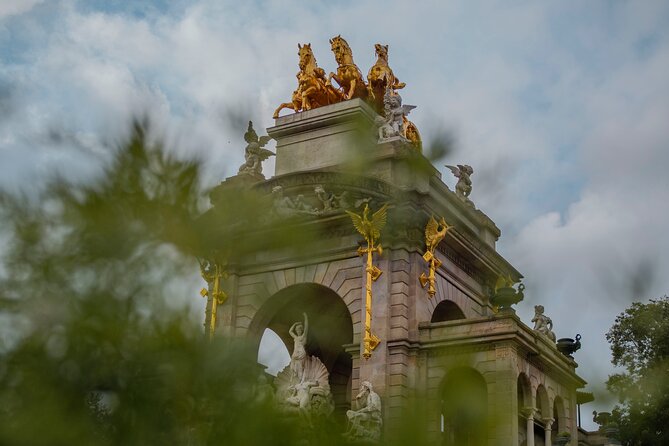
A short walk takes you to Parc de la Ciutadella, where the tour spends about 20 minutes. This is the longest stop on the route, and that makes sense. A park gives you more room to experiment than a narrow street.
The park was designed for the 1859 Barcelona Universal Exposition. It is now a green public space used by local residents and visitors, with a different mood from the stone streets nearby. Here, you can work on framing, distance, layers, and the balance between open space and architectural details.
I would pay close attention to the guide’s advice at this stop. One of the most useful parts of the experience is learning how to avoid placing the main subject directly in the center every time. A small change in position can make a familiar scene feel more personal.
The extra time also helps if your group includes people using different devices. Phone cameras and DSLR cameras do not always require the same settings, but composition advice works for both.
Framing the Arc de Triomf
The Arc de Triomf is only about a 10-minute walk from the park and receives another 10 minutes on the tour. Built for the 1888 Universal Exposition, it is known for its Neo-Mudéjar design and strong red-brick appearance.
An arch naturally gives you a lesson in lines and perspective. You can photograph it straight on, frame it from below, or use the long avenue leading toward it. The guide’s job here is not just to point out the monument. It is to help you notice how position changes the feeling of the image.
Ten minutes passes quickly, particularly if the group stops for several compositions. You may need to choose between listening and shooting. That is part of the tradeoff with a short route: you cover a lot, but you will not spend long perfecting every picture.
More Photography Tours in Spain
- Barcelona: Creative Photo Tour of the City’s Artistic Corners
★ 5.0 · 5 reviews - Photographic tour of Madrid with a professional photographer
★ 5.0 · 104 reviews - Private Photography Tour of Madrid
★ 5.0 · 27 reviews - Exclusive Photo Tour Madrid ⭐️
★ 4.3 · 23 reviews
A quick look at the Palace of Catalan Music
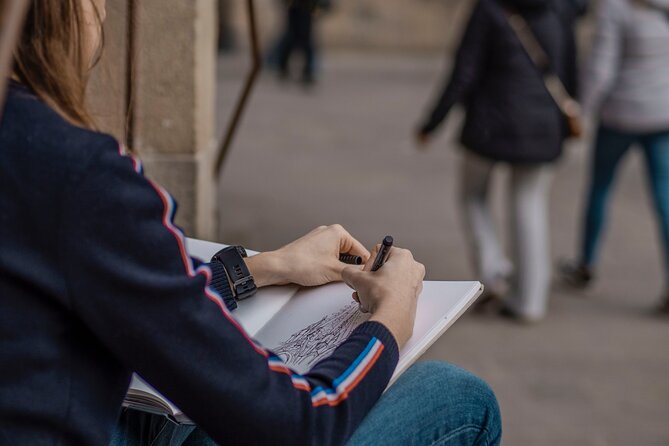
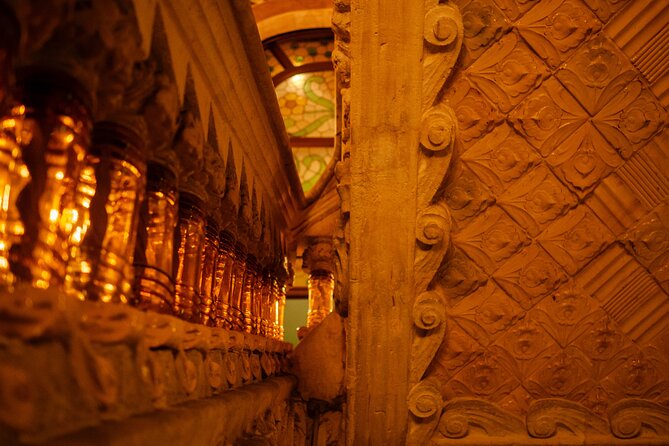
The Palau de la Música Catalana is one of Barcelona’s major Modernist buildings. It was designed by Lluís Domènech i Montaner, a leading figure in the Catalan Modernisme movement, and the tour allows about 10 minutes here.
The stop is focused on the exterior and surrounding views. Admission is not included, and the route does not describe an interior visit. That matters if you are hoping to see the concert hall itself. You should treat this as a chance to photograph architectural details, not as a music or building tour.
The short visit can still be worthwhile. Modernist architecture often gives you color, decoration, curves, and small details that reward close framing. This is a good place to apply the guide’s tips about unusual angles instead of taking only the familiar front-facing shot.
The kiss mural at Plaça de Isidre Nonell
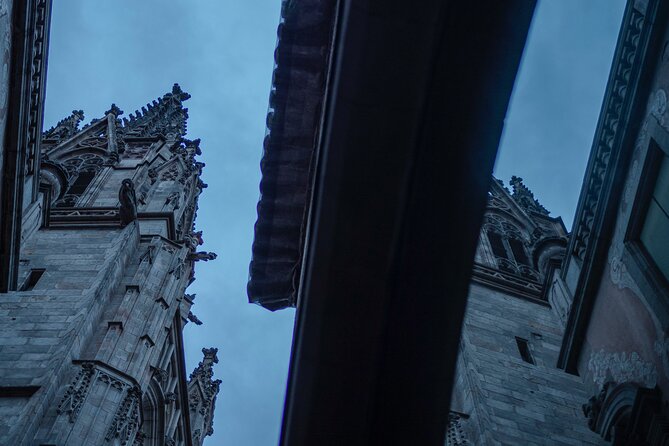
The stop called El Món Neix En Cada Besada takes you to Plaça de Isidre Nonell for about 10 minutes. The name means The World Begins in Every Kiss, and the site offers a more poetic subject than a formal monument.
This is the kind of stop that gives the route variety. You move from major civic architecture to a public artwork with a phrase and visual idea behind it. The guide can help you decide how closely to frame it, how much of the surrounding square to include, and how to keep the image from looking flat.
The attraction is quick and focused. Do not expect a long cultural presentation or extended time for creative experiments. Still, a short stop can show you how to photograph a public artwork as part of its setting rather than treating it as a stand-alone object.
Gothic Quarter details around Barcelona Cathedral
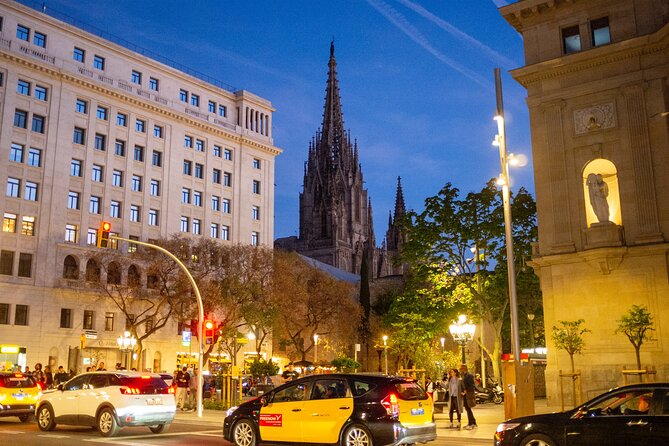
Barcelona Cathedral, officially Catedral de la Santa Creu i Santa Eulàlia, is one of the central sights in the Gothic Quarter. The route gives it about 10 minutes.
The cathedral offers the sort of detailed stonework that benefits from slower observation. You might photograph the full façade, then move in on a small feature. The guide’s suggestions about angles and framing are useful here, since Gothic architecture can easily turn into a busy collection of lines if you do not choose a clear subject.
This is also a place where the timing becomes important. With only 10 minutes, you will not have time for a full visit and a photography lesson. Admission is free according to the tour details, but no interior visit is promised. Think of this as an exterior photo stop in the historic center.
Casa de l’Ardiaca and the Bishop’s Bridge
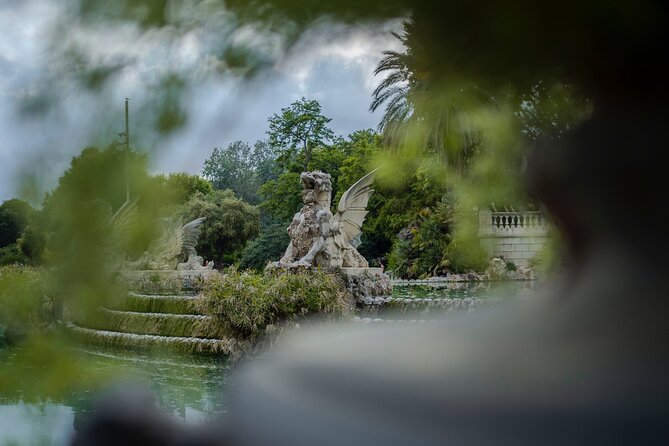
Casa de l’Ardiaca sits at Carrer de Santa Llúcia, 1, beside the cathedral area. The building is linked to the medieval archdeacon, the head of the canons in the cathedral, and has both religious and civic connections.
You have another 10 minutes here. I like the way this stop shifts the focus from a famous cathedral to a less dominant historic building. It encourages you to look at doorways, stone textures, windows, and smaller sections of the city instead of aiming your camera only at the biggest sight.
Next comes Pont del Bisbe, the Bishop’s Bridge, on Carrer del Bisbe. The bridge connects two buildings belonging to the Palau de la Generalitat and is a well-known example of Gothic Revival architecture.
This is likely one of the most obvious photo stops on the walk. Its narrow passage and ornate design invite a centered composition, but that is also why advice on angles matters. A guide can show you how to make the picture less predictable. Be prepared for limited space and a quick stop, since the route has several more squares ahead.
Plaça de Sant Jaume and Plaça Sant Miquel
Plaça de Sant Jaume is one of the Gothic Quarter’s main civic squares. It has played an important role in Barcelona for centuries and remains a central meeting point. The route allows about 10 minutes.
This stop gives you a chance to photograph a broader urban scene. Instead of focusing on one building, you can work with open space, façades, people, and the square’s public role. The guide may also add historical context, which helps you understand why the setting matters before you press the shutter.
Plaça Sant Miquel is smaller and quieter. It offers a look at the medieval character of the old center without the same scale as Plaça de Sant Jaume. That contrast is useful. You can practice making a modest square feel intentional in a photograph, rather than assuming every good image needs a grand monument.
The two squares together show one of the tour’s strengths: the route is not limited to postcard sights. It includes places where you can learn to find visual interest in ordinary urban spaces.
Ending at Plaça Reial
The final listed stop is Plaça Reial, just off La Rambla. It is known for elegant architecture and a lively public atmosphere, with arcades and a strong sense of enclosure.
The tour ends back at the starting meeting point, according to the details provided. That creates a timing question because the route includes 11 stops, and the listed stop times total about 110 minutes before allowing for walking. The experience is advertised as approximately two hours, so the guide may need to keep some stops short or adjust the route.
Plaça Reial is a fitting final subject because it gives you another kind of composition. You can work with repeating arches, open space, architectural balance, and the challenge of photographing a public place without losing the overall shape.
What you actually learn about photography
The strongest part of this experience is the practical coaching. The guidance includes angles, reflections, framing, and ways to make pictures look less like ordinary tourist snapshots.
One particularly useful idea is changing your viewpoint. A familiar landmark can look very different when you lower the camera, move to one side, use a reflection, or include a strong foreground. These are skills you can use long after leaving Barcelona.
The instruction suits beginners because no previous experience is required. It also works for people who already use a camera but want fresh ideas for urban photography. The guide can work with a phone or a DSLR, so you do not need to worry about bringing professional equipment.
Leonardo received especially strong praise for combining local history with creative photo advice. Another highly praised outing was led by a young couple described as enthusiastic and experienced in photography. The consistent theme is personal attention, not a lecture delivered to a large crowd.
One warning is that the route moves quickly. You may learn a useful technique but have little time to repeat it at every location. If you want detailed instruction on manual camera settings, ask about that before booking, since the advertised focus is composition and creative improvement rather than advanced technical training.
Who gets the best value for $59.90
I think the price works best for three types of people:
- You use your phone often but want better travel pictures.
- You enjoy city architecture and want a guide to point out strong shooting positions.
- You are traveling alone or with a small group and prefer personal coaching to a large walking tour.
The price is also easier to justify if you value the combination of sightseeing and instruction. You are not paying for entry tickets, meals, or transport. You are paying for the guide’s time, route planning, historical explanations, and individual advice.
For a family or group, ask about the available group discount. The maximum group size of 10 keeps the format manageable, but a larger private group may change the feel of the lesson.
I would hesitate if your main goal is seeing interiors, taking your time at each monument, or getting a long historical tour. The schedule is packed, and every stop is free. The value comes from learning how to photograph Barcelona, not from included admissions.
Timing, weather, and small practical details
The tour is offered in English and has mobile ticketing. It begins at Estación de Francia and ends back at the meeting point. Public transportation is nearby, but getting there and returning afterward is not included.
Wear comfortable shoes because the route links several districts and public spaces. Bring your own phone or camera, since no equipment is supplied. You do not need special photography experience, but you should arrive ready to take part rather than simply follow along.
Weather matters. The experience requires good weather, and poor conditions can lead to a different date or a full refund. You can cancel for a full refund up to 24 hours before the start time. Cancellations or changes inside that window are not accepted, and the tour can also be canceled if the minimum number of participants is not met.
The experience is currently rated 4.9 out of 5, with 97 percent recommending it. One serious problem did occur when a guide failed to appear at the scheduled time, and the operator later arranged another time that day. That is worth keeping in mind, although the available feedback is otherwise strongly positive. If anything goes wrong at the meeting point, contact the operator promptly rather than waiting through the whole session.
Should you book the Barcelona photo walk?
Book it if you want a compact introduction to Barcelona’s architecture and practical advice you can use on the rest of your trip. I especially recommend it for phone photographers, solo visitors, couples, and anyone who likes learning by trying things in real streets rather than sitting in a classroom.
Skip it if you want a leisurely Gothic Quarter tour, interior visits, or a full two hours at only one or two locations. The route is ambitious, and the listed stop times are short.
At $59.90, this is a fair specialist tour when the guide gives you the personal tips promised. Bring a charged phone, arrive at Estació de França early, and treat the walk as a fast-moving photo lesson with historical stops. That is where the value lies.
FAQ
How long does the photo walking tour last?
The experience lasts approximately two hours.
Where does the tour start?
It starts at Estación de Francia, Av. del Marquès de l’Argentera, 6, in Barcelona’s Ciutat Vella area.
Where does the tour end?
The activity ends back at the meeting point.
Do I need a professional camera?
No. You can bring any Android phone, iPhone, or camera that works for you. No photography experience is required.
What is included in the price?
The tour includes individual tips and guidance on improving your images. Food, drinks, transportation, and camera equipment are not included.
What happens if the weather is poor?
If the tour is canceled because of poor weather, you will be offered a different date or a full refund.
Just added around Barcelona
- Barcelona: Gothic Quarter Cinematic Photoshoot and Guide★ 3.8 · 7 reviews
- Barcelona: Private Sagrada Familia Photoshoot★ 4.8 · 47 reviews
- Barcelona: Professional Private Photoshoot★ 4.9 · 28 reviews
- Sagrada Familia cinematic photoshoot★ 5.0 · 2 reviews
- Barcelona: Private Photoshoot with a Professional★ 5.0 · 2 reviews
- Barcelona Tourist Photographer – Exclusive Photoshoots★ 5.0 · 2 reviews
- Barcelona: Phone Photography Tips & Tricks – Park & Old Town★ 5.0 · 25 reviews
- Barcelona: Photoshoot in Scenic Locations★ 4.9 · 46 reviews
Photography Tours, compared.
Browse the lists this shoot appears in