
Review · STREET PHOTOGRAPHY TOURS
Saigon Street Photography Experience
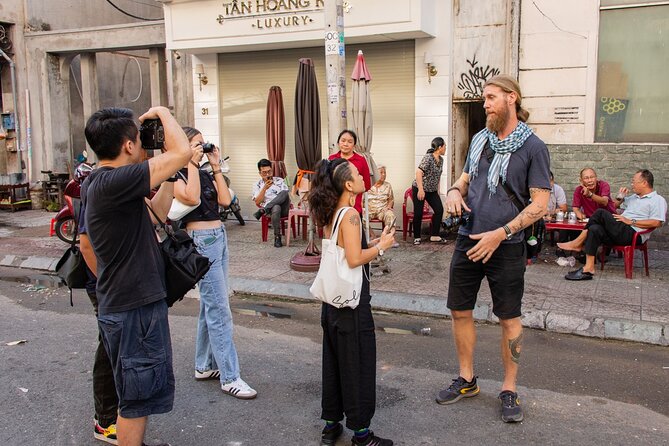
Saigon wakes up with a camera in hand. This 2.5-hour morning walk takes you beyond the usual downtown sights, into old apartment buildings, working markets, narrow alleyways, and a Buddhist temple. I especially like the combination of practical photography coaching and access to everyday places you might not find on your own.
I also like the small-group format, with no more than 10 people, and the chance to work with photographers Frederik Wissink or Kevin Lee. The main consideration is the early start at 7:00 am, plus the fact that this experience depends on good weather. You will also get more from it if you enjoy walking and are willing to photograph people respectfully.
Key points to know before booking
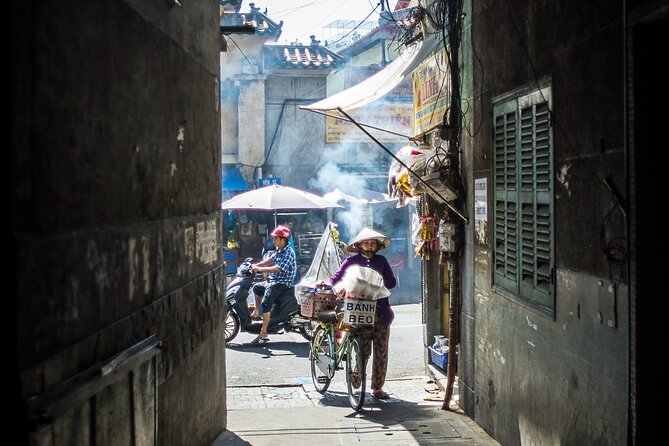
- Begin with coffee or tea at 7:00 am: The host starts with basic advice on composition, light, camera settings, and approaching people.
- Visit places beyond the standard sightseeing circuit: Stops include French colonial and war-era apartment buildings, a local hardware market, alleyways, and a Buddhist temple.
- Suitable for cameras and phones: Fred has helped beginners use smartphone cameras, including an iPhone 16, while experienced photographers can work on angles, exposure, and light.
- Expect a small group: The maximum is 10 people, though some departures may be much smaller.
- Hear local stories along the way: The walk includes cultural details, historic facts, and conversation about life in Ho Chi Minh City.
- Plan around the morning: The experience lasts about 2 hours and 30 minutes, starts at Cafe Linh77 Hàm Nghi, and returns there.
Why this morning walk works so well
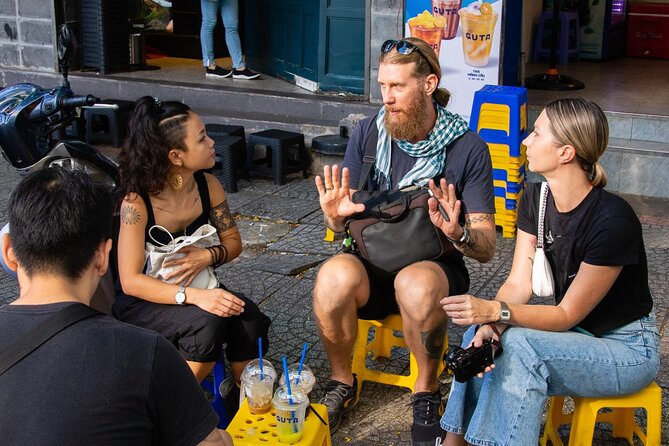
Many city photo walks simply take you past famous buildings and tell you to point your camera. This one aims for something more useful. You get help deciding what to photograph, why a scene works, and how to approach people without making the moment uncomfortable.
The opening coffee or tea is a smart touch. It gives you time to meet your host and ask questions before the walk begins. You can discuss your camera, your experience level, and the kind of pictures you hope to make. Even if you use only a phone, that short introduction can help you get more from the morning.
The guides bring serious professional experience. Frederik Wissink has worked in Vietnam for 17 years, producing commercial photography for hotels such as Accor, Hyatt, and Four Seasons, along with companies including Google and Samsung. His work has appeared in The New York Times, The Guardian, USA Today, and Discovery Channel projects.
Kevin Lee brings a different but complementary background. He works in commercial photography and executive production, and has hosted street photography meetups and walks in Singapore. Both guides are used to helping people improve, not simply leading a group from one address to another.
More Street Photography Tours in Vietnam:
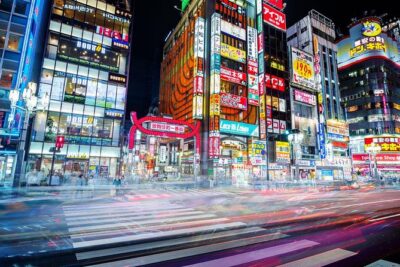
- Tokyo Cyberpunk Street Photo Tour
★ 5.0 · 165 reviews - Learn the art of street photography in the heart of Montmartre!
★ 5.0 · 33 reviews - Istanbul Street Photo Tour
★ 5.0 · 31 reviews
Starting at Cafe Linh77 in District 1
The meeting point is Cafe Linh77 Hàm Nghi in District 1. The start time is 7:00 am, when the city is already active but the day is still relatively cool and fresh. That timing matters in Ho Chi Minh City. You get morning light and early street activity, while avoiding some of the heavier heat later in the day.
You begin over coffee or tea with an informal lesson. The host explains ways to approach people, details to watch for, and simple methods for making stronger pictures. This might include looking at light before subject matter, trying unusual angles, or paying attention to the edges of the frame.
This first discussion is useful for every skill level. Beginners get a clear starting point instead of a flood of technical jargon. More experienced photographers can identify a specific goal, such as improving candid portraits, using exposure more carefully, or finding better compositions in crowded streets.
Bring the camera you actually want to use during your trip. The experience works with professional cameras, compact cameras, and phones. One participant learned useful techniques with an iPhone 16, which is a good reminder that you do not need expensive equipment to benefit from the walk.
French colonial and war-era apartment buildings
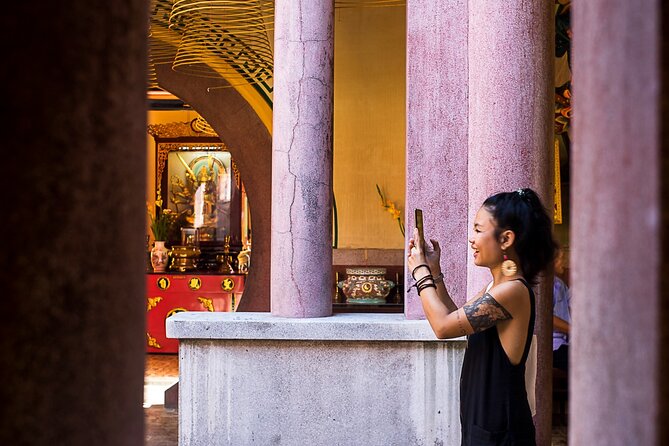
One of the most interesting parts of the route is the look at older apartment buildings from the French colonial and war eras. These buildings provide more than attractive facades. They show how older parts of Saigon have been adapted for daily life, with homes, shops, stairways, and small corners layered together.
The buildings can be rewarding subjects because they offer lines, shadows, aged surfaces, balconies, corridors, and views into ordinary life. The guide can help you slow down and notice these details instead of taking only a quick exterior photograph.
The access is part of the value. A visitor walking alone might pass by without realizing that an apartment building contains worthwhile photographic spaces. The host knows which locations offer something special and can explain the setting without turning the stop into a long lecture.
You should keep your expectations sensible. This is not a private architectural tour with guaranteed access to every room or floor. The precise route can vary, and the experience is built around what is available that morning. Still, these buildings are among the places that give the walk its local character.
Alleys and ordinary family life

The walk also moves through an intricate network of alleyways where Vietnamese families live their daily lives. These lanes offer a closer look at the city’s residential side, far from the polished hotel and shopping districts.
This is where the advice about approaching people becomes important. Street photography is not only about finding a good subject. It is about reading the situation, being polite, and knowing when to put the camera away. A guide who understands local customs can help you make better choices.
You might see domestic scenes, working spaces, small businesses, or people simply getting on with the morning. The value is not in treating local life as a display. It is in learning to notice real moments while showing basic respect for the people in front of your lens.
The alleys also reward a slower pace. A good photograph may come from the way light enters a passage, the shape of a doorway, or the relationship between old walls and modern life. Fred and Kevin encourage you to look for these small visual connections.
A few more photo experiences around Vietnam worth a look
- Sapa: Fansipan Cable, Cat Cat Village & Moana Instagram Tour
★ 5.0 · 777 reviews - Instagram Incense Quang Phu Cau Village Tour with Train Street
★ 5.0 · 323 reviews - Sapa: Fansipan Cable, Cat Cat Village, Moana Instagram Tour
★ 4.8 · 294 reviews - Hoi An/Da Nang: Private Photoshoot & Guided Walking Tour
★ 5.0 · 160 reviews
A local hardware market with useful photo practice
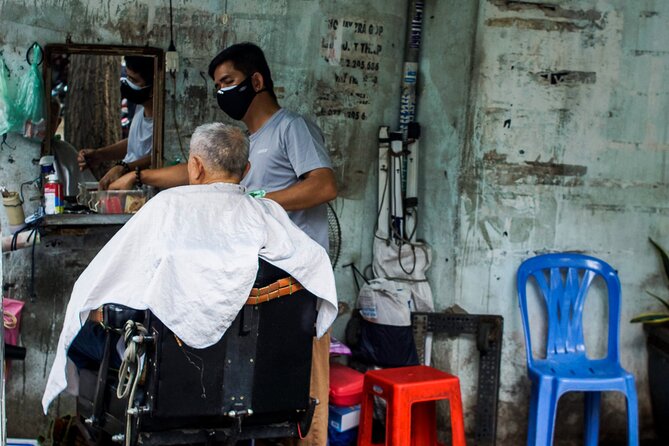
The local hardware market adds a more workaday stop to the route. Markets are often strong places to practice street photography because they offer activity, textures, objects, signs, and people focused on their jobs.
A hardware market may not sound like a major sightseeing stop, and that is precisely why it can be valuable. You are not waiting for a famous landmark to make the picture interesting. You are learning to find order, color, contrast, and human activity in a practical setting.
Your guide can help you experiment with framing and timing. You might work on a close detail, a wider scene, or a photograph that shows how people and objects fit together. The point is to build habits that will help you elsewhere in Vietnam.
A market is also a place where conditions can change quickly. People move, light shifts, and space may be tight. That can be challenging for a beginner, but it gives you useful practice in making decisions without spending five minutes setting up each shot.
The Buddhist temple and a change of pace
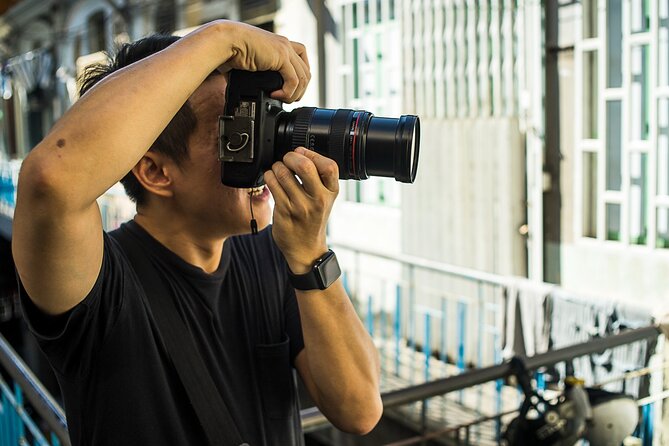
The Buddhist temple provides a quieter visual contrast to the market and apartment buildings. Religious sites can offer architectural details, decorative elements, courtyards, and moments of calm. The guide also shares cultural and historic information, helping you understand what you are photographing.
This stop is not presented as a formal religious lesson. Instead, it forms part of a wider picture of Saigon, showing how places of worship fit into the city’s daily life. You should follow local etiquette and listen carefully to any guidance about where photography is appropriate.
For photography, the temple can help you work with different kinds of light and composition. You may find more deliberate shapes and repeating details than in the alleyways. It is a useful place to practice looking carefully rather than chasing action.
The change in pace also makes the route feel balanced. You move from architecture to family neighborhoods, then from a practical market to a more reflective setting. The experience is not just a string of random photo stops.
Learning angles, light, and exposure
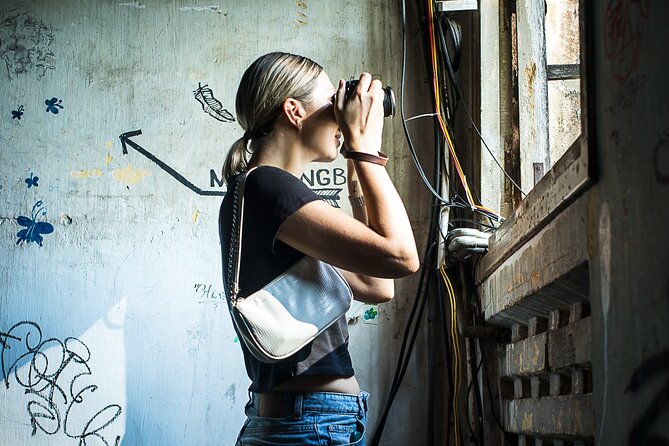
The strongest part of this activity is the hands-on coaching. The guides focus on practical choices that can improve your pictures immediately. Angles, light, and exposure come up repeatedly, and you are encouraged to experiment instead of relying only on automatic settings.
Fred has taught people from complete beginners to experienced photographers. One beginner found the friendly atmosphere and basic tips especially helpful. An experienced photographer who usually works with scenery used the walk to approach street photography in a new way.
That range is important. You do not need to arrive with technical confidence. At the same time, someone who already understands shutter speed or aperture should not feel that the morning is only an introduction to camera basics.
The guide can also help you compose differently. Instead of pointing straight at an obvious subject, you may be encouraged to change your height, wait for a person to enter the frame, use a doorway as a border, or look for light and shadow. These are simple ideas, but they can change how you photograph the rest of your trip.
The instruction applies to phones, too. A phone camera may limit some manual controls, but it still gives you plenty to work with. The useful lesson is to make better decisions before pressing the shutter, rather than assuming a more expensive camera will solve every problem.
Guides Frederik Wissink and Kevin Lee
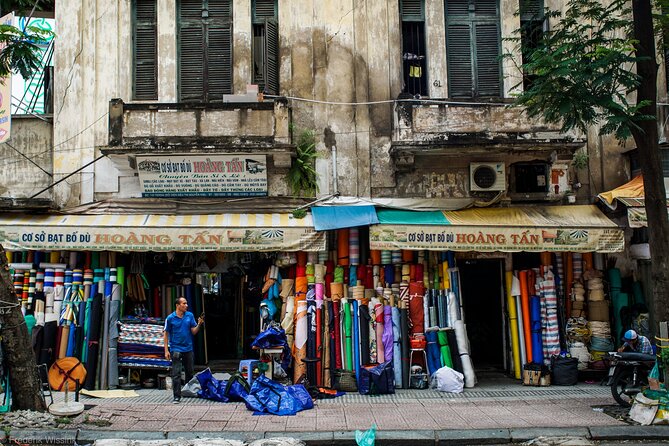
The experience is hosted by Frederik Wissink or Kevin Lee. Frederik is the photographer behind the concept and has spent more than a decade working and teaching in Vietnam. His commercial assignments give him a strong eye for light, buildings, and polished compositions, while his local experience helps him find less obvious parts of Saigon.
Kevin takes on the producer’s role as well as commercial photography work. He has a calm, personable teaching style and experience leading street photography walks in Singapore. The tone is friendly rather than formal, which helps when you are trying something unfamiliar.
The host may make a major difference to your morning. The available information includes particularly positive experiences with both Fred and Kevin, as well as a guide named Trung on one departure. Since hosts can vary, you should expect the same general format but not an identical personality or route every time.
Group size also matters. The maximum is 10, but some departures have been much smaller. A small group makes it easier to ask about your own camera and receive help with a particular image. If you are hoping for a private lesson, remember that the experience is not advertised as private.
What the $73 price means
At $73 per person, this is not the cheapest way to walk around Ho Chi Minh City. You are paying for a focused lesson, a local route, professional guidance, and a small-group setting rather than transportation or a long list of major attractions.
The value is strongest if you want to improve your photography. A guide can save you time by taking you to locations you might not find independently, then explaining how to work with the light and people there. That combination is more useful than simply downloading a list of photo spots.
It is also a reasonable choice if you want a different introduction to the city. You see older buildings, local streets, a market, and a temple while learning how these places fit into everyday life. You are not spending the morning on a standard monument route.
The price is harder to justify if you only want casual sightseeing or a quick set of souvenir pictures. You will spend much of the walk thinking about technique, composition, and respectful interaction. If photography is not part of your interest, a regular walking tour may offer better value.
Timing, walking, and practical details
The experience lasts about 2 hours and 30 minutes and ends back at Cafe Linh77. The route includes several stops, but the locations are not far apart, so the amount of walking is described as manageable.
The early start is both a benefit and a constraint. Morning light can be excellent, and the streets may be less congested, especially on a weekend. One useful tip is to choose a weekend departure if your schedule allows, since lighter traffic can make it easier to photograph.
You should wear comfortable shoes and bring the camera or phone you plan to use. The route includes streets, apartment buildings, markets, and alleyways, so you will be moving through active urban spaces rather than staying in one controlled location.
The activity is near public transportation, and most people can participate. It requires good weather. If poor weather forces cancellation, you are offered another date or a full refund. You can also cancel up to 24 hours before the start for a full refund, while later cancellations are not refunded.
Who should book this experience
I would recommend it most strongly to three types of people:
- Beginners who want direct help: You can learn basic composition, light, exposure, and ways to approach people without feeling lost.
- Experienced photographers changing subjects: If you usually photograph scenery, buildings, or travel details, the walk gives you practice with candid street scenes.
- Curious visitors who want a local view: You see residential alleys, older apartments, a working market, and a temple rather than only the best-known downtown sights.
It also suits couples or friends who want to learn together. The maximum group size keeps the setting fairly personal, and the walk includes enough variety that people with different interests can work on their own pictures.
I would hesitate to recommend it if you dislike early mornings, walking in active neighborhoods, or photographing around other people. It is also not ideal if you expect a fixed list of famous landmarks or a guaranteed set of perfect images. The guide can create good opportunities, but you still have to watch, wait, and make the picture.
Should you book the Saigon Street Photography Experience?
If you want to take better photographs and see a less polished side of Ho Chi Minh City, I think this is a strong choice. The mix of professional instruction, local access, and a small group gives the $73 price real purpose.
Book it early in your stay if you can. The advice about light, angles, and composition may improve the rest of your photography in Vietnam. Choose a weekend morning for a calmer route, bring your everyday camera or phone, and arrive ready to walk and experiment.
Skip it if your main goal is a general city tour with little instruction. For anyone who wants to understand how to photograph Saigon rather than simply pass through it, this morning offers useful lessons and places you are unlikely to discover by accident.
FAQ
Where does the Saigon Street Photography Experience start?
It starts at Cafe Linh77 Hàm Nghi in Phuong Nguyen Thai Binh, District 1, Ho Chi Minh City, Vietnam.
What time does the experience begin?
The experience starts at 7:00 am.
How long does the photography walk last?
It lasts approximately 2 hours and 30 minutes.
Where does the experience end?
The activity ends back at the starting point, Cafe Linh77 Hàm Nghi.
What locations are included?
The walk includes French colonial and war-era apartment buildings, a local hardware market, a Buddhist temple, and alleyways where Vietnamese families live and work.
Is the experience suitable for beginners?
Yes. It is designed for aspiring and professional photographers at any level, including people who are learning the basics.
Can I use a smartphone instead of a camera?
Yes. The experience can be useful with a phone, and photography tips have been provided for smartphone users.
What happens if the weather is poor?
The experience requires good weather. If it is canceled because of weather, you are offered a different date or a full refund.
Just added around Vietnam
- Hoi An Family photoshoot with professional photographer★ 5.0 · 4 reviews
- Ho Chi Minh Styled Photoshoot Tour With Makeup Photographer★ 5.0 · 2 reviews
- Ho Chi Minh City: Professional Portrait Photography Session★ 5.0 · 6 reviews
- Ho Chi Minh City Instagram Tour: Hidden Gems (All-Inclusive)★ 5.0 · 2 reviews
- Hanoi Instagram Tour: Famous Spots (Private & All-Inclusive)★ 5.0 · 2 reviews
- Half-day Hoi An Sunrise Or Sunset Photo Tour★ 4.1 · 7 reviews
- Free E-sim Da Nang: Instagram Half-Day Tour with Local Guide★ 4.3 · 4 reviews
- Da Nang: Hoi An Instagram Tour (Private & All-Inclusive)★ 5.0 · 3 reviews
Street Photography Tours, compared.
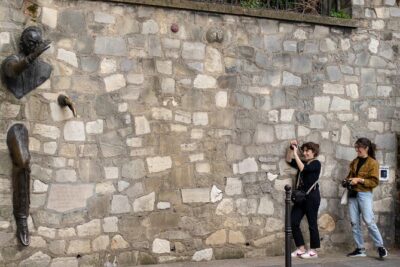
Learn the art of street photography in the heart of Montmartre!
Read our review →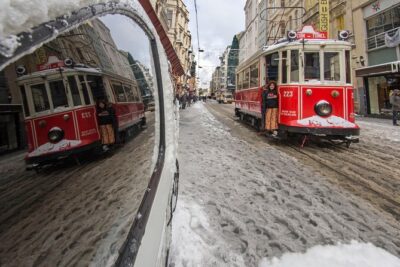
Browse the lists this shoot appears in