
Review · LONDON PHOTO TOURS & PHOTOSHOOTS
Discover Photography
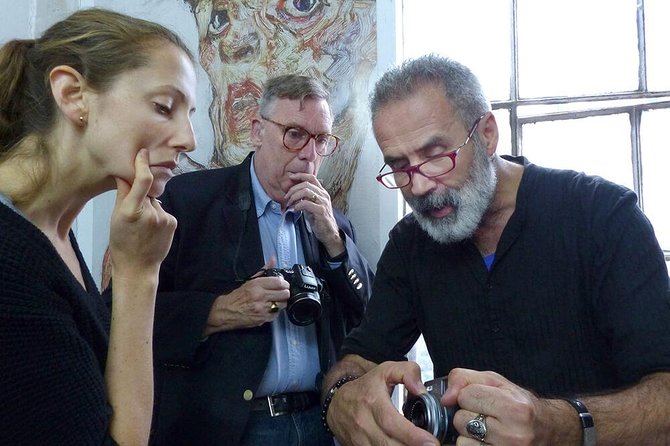
Better camera skills start with simple controls. This 2-hour-30-minute London class gives beginners a clear introduction to aperture, shutter speed, ISO, lenses, and composition, with time to practise rather than simply listen. You meet at Westland Place Studios in N1 and finish at the same location.
I like the small group limit of 12, which should leave room for questions, and I like the practical exercise that shows how aperture and shutter speed change a photograph. The course is led by an award-winning photographer, with tutors including Vehbi Koca and Pierre praised for clear explanations and patient help. The main drawback is that you need a DSLR or compact digital camera with manual settings to get the full benefit, and the price of $95.80 is a serious spend for a short beginner class.
Key points to know before booking
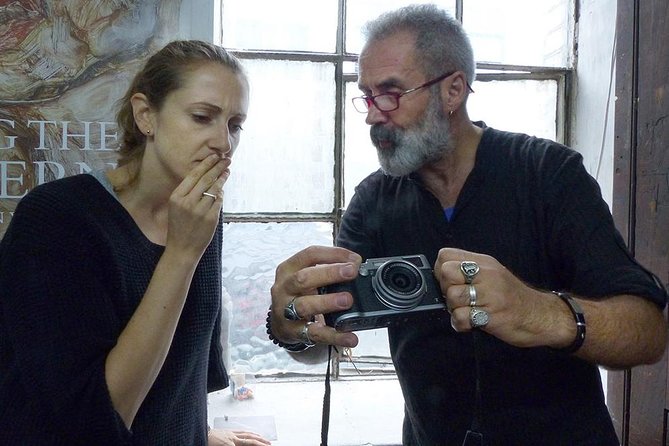
- Manual camera practice: You learn how to move beyond automatic settings and work with semi-automatic and manual modes.
- Small class of up to 12: The group size is limited, giving you a better chance to ask about your own camera.
- Hands-on exposure exercise: You practise the effects of aperture and shutter speed instead of only hearing technical explanations.
- Award-winning instruction: Tutors such as Vehbi Koca and Pierre focus on friendly, clear teaching and practical help.
- Central London meeting point: The class begins and ends at Westland Place Studios, 11 Westland Place, London N1 7LP.
- Best for adults with compatible cameras: The minimum age is 18, and a camera with manual controls is essential for the main course.
What the 2-hour-30-minute class is really about
This is not a sightseeing tour with a few photography tips added. It is a compact camera course designed to help you understand what your camera is doing and why your pictures sometimes look too dark, too bright, flat, or out of focus.
You begin with the core controls. The aim is to show how aperture, shutter speed, and ISO work together to create an exposure. Once these settings make sense, you can choose an effect rather than hope the automatic mode makes the right call.
That distinction matters. Automatic mode is useful when you need a quick picture, but it makes many decisions for you. In this class, you learn when to let the camera help and when to take control yourself.
The course also covers lenses, focal length, angle of view, and perspective. These topics are useful because changing a lens is not only about getting closer or farther away. It can change how much of a scene fits into the frame and how objects relate to one another.
You also work through composition, colour temperature, and white balance. Those subjects help with the parts of photography that technical settings alone cannot fix. A correctly exposed image can still feel weak if the framing is careless or the colours look wrong.
A few more photo experiences around London worth a look
- London: Private Photoshoot with Video Clip Option
★ 4.8 · 182 reviews - Professional Photoshoot in London Photographer
★ 5.0 · 102 reviews - Private landmarks photoshoot for families and couples
★ 5.0 · 92 reviews
Meeting at Westland Place Studios in N1
The class starts at Westland Place Studios3, 11 Westland Place, London N1 7LP, and returns there at the end. The meeting point is near public transportation, which helps if you are fitting the course into a larger London day.
The supplied information does not give a detailed walking route or list named photographic stops. You should therefore think of this as a studio-based lesson with a practical exercise, not as a guided tour through famous London locations.
That may disappoint you if you want to photograph landmarks from the start. It is also a sensible setup for a beginner class. You spend less time moving between places and more time learning how the controls affect the image.
Arrive with your camera ready to use. Confirmation is provided when you book, so check those details before setting out and allow enough time to reach the studio without rushing. A class on shutter speed is easier to enjoy when you are not arriving breathless.
Aperture, shutter speed, and ISO without the fog
The most useful part of a beginner course is often learning how the three main exposure controls connect. The session explains the relationship between aperture, shutter speed, and ISO, rather than treating each setting as a separate menu option.
Aperture controls how much light enters through the lens and affects depth of field. In plain terms, it helps decide how much of the picture looks sharp from front to back. That gives you more creative choice when you want to draw attention to one subject or keep more of a scene clear.
Shutter speed controls how long the camera records light. A faster setting can help freeze movement, while a slower setting changes how motion appears. The practical exercise is especially useful here because you can see the result instead of trying to remember a definition.
ISO affects the camera sensor’s sensitivity to light. The class uses these settings together, so you learn that changing one often requires a change in another. This is the point where manual photography begins to feel less like a collection of mysterious numbers.
You do not need to become an expert in one afternoon. A realistic goal is to leave knowing what to adjust first and what effect to expect. That alone can make your next day of sightseeing more productive.
The practical exercise is the part worth your time
The class includes an exercise exploring the effects of aperture and shutter speed. This is important because many beginners understand the words but do not yet recognise the visual result in their own pictures.
You get a chance to test settings and compare outcomes. The supplied details do not state the exact location or subject used for the exercise, so you should not expect a named photo walk or a particular London view.
Still, the structure has value. You are not only watching a photographer demonstrate a control. You are working with your own camera and seeing how the setting changes your image.
The best way to use this part is to ask direct questions about the problems you usually have. If your pictures are blurry, too dark, or lacking background separation, show the tutor examples or explain what you are trying to achieve. The smaller group should make that kind of help more practical than it would be in a large lecture.
Same place, a different kind of shoot:
- London: Private Landmark Tour with Professional Photographer
★ 4.7 · 91 reviews - Professional Private Photoshoot in London
★ 5.0 · 63 reviews - London: Private travel vacation photoshoot -Romantic Special
★ 4.7 · 50 reviews - Private Tour: Night Photography Tour in London
★ 5.0 · 48 reviews
Lenses, focal length, and perspective
Lenses receive proper attention during the course. You learn about focal length, angle of view, and perspective, all of which shape the way a scene appears.
A lens with a different focal length does more than change the size of a subject in the frame. It changes how you compose and how much of the surroundings you include. Understanding this can help you stop treating a zoom ring as a simple way to make a subject bigger.
The course also covers how to make the most of each lens. That is useful if you own more than one lens and tend to carry them without knowing when each is most effective.
There is no information that a particular lens is supplied, so bring the equipment you want to understand. If you have a compact digital camera with manual settings, the stated course requirements indicate that it can be suitable. If your camera only offers automatic operation, you will miss much of the main lesson.
Composition, colour, and white balance
Photography is not only exposure. The class includes composition, colour temperature, and white balance, which address the look and feel of a finished photograph.
Composition helps you decide what belongs in the frame and where the main subject should sit. You learn to consider the arrangement of lines, shapes, and empty space rather than pointing the camera and pressing the button.
Colour temperature explains why light can make an image look warm or cool. White balance helps the camera interpret those colours more accurately. This can matter in mixed or changing light, where automatic settings do not always produce the look you expect.
These subjects give the class a broader purpose. You are not simply learning to produce a technically acceptable exposure. You are learning how camera choices affect the picture you want to make.
Semi-automatic modes are a useful middle step
You do not have to jump from full automatic mode straight into complete manual control. The course covers semi-automatic modes as well, which gives you a practical middle ground.
This is one of the strongest features for a beginner. Semi-automatic settings allow you to control one important part of the image while the camera manages another. You can build confidence before taking responsibility for every setting.
The lesson should help you understand when automatic, semi-automatic, and manual modes make sense. A quick street picture may call for speed and simplicity. A carefully planned image may reward more control.
The value here is not in memorising one correct mode. It is in learning to choose. Once you know what each mode gives you and takes away, you can work faster without surrendering all creative control.
Teaching style and the small-group advantage
The class is limited to 12 people. That is not a private lesson, but it is small enough to make questions possible and keep the session from feeling like a crowded presentation.
Vehbi Koca receives especially strong praise for simple explanations, friendly methods, and a willingness to help people experiment with different cameras. That matters because beginners often worry that their equipment is somehow too basic or too complicated.
Pierre is also noted for answering questions and making sure everyone keeps up with the information. The two names suggest that the teaching style is a key part of the experience, though your actual tutor may depend on the date.
An award-winning photographer may bring strong technical and creative experience, but teaching skill matters just as much. Here, the useful emphasis is on explaining settings in plain terms and helping you apply them.
You should still take responsibility for your own learning. Bring questions, use the practical exercise fully, and do not be shy about saying when a setting is unclear. The group format works best when you participate.
Is $95.80 good value for two and a half hours?
At $95.80 per person, this is not a casual add-on to a London sightseeing day. You are paying for focused instruction, a small group, and practical help with your own camera.
The value is strongest if you already own a compatible camera but use it mostly in automatic mode. A single class can save you from years of ignoring the controls you paid for. It may also help you decide whether you want to continue with more advanced photography practice.
The price is harder to justify if you only want a few quick tips or if you use a phone with no manual controls. One session cannot turn a complete beginner into a polished photographer, and the course is not presented as an extended photo tour.
There is one point worth checking before you book. One provided account describes an enjoyable iPhone photography session with Pierre, while the main course information requires a DSLR or compact digital camera with manual settings. That suggests the provider may offer different photography sessions, so confirm that you are booking the manual-camera course you want.
For the right person, the cost can be fair. You are buying skills that remain useful long after your London visit, not simply a short activity that ends when you leave the meeting point.
Who should take Discover Photography?
I would recommend this course to an adult beginner who owns a DSLR or compact digital camera with manual settings and wants practical guidance. It suits you especially well if you understand basic camera operation but have never felt comfortable changing aperture, shutter speed, or ISO.
It also fits a visitor who wants to improve holiday pictures before a longer trip. Learning in London can give you a chance to practise with familiar equipment before you reach a place where every missed photograph feels more costly.
The class may also suit someone who wants to experiment. The teaching style described by the supplied feedback encourages questions and trying different approaches, rather than treating one camera or one technique as the only right answer.
I would hesitate if you want a landmark photo walk, a private tutor, or a course built around smartphone photography. The exact session matters, and the camera requirement should guide your choice.
The minimum age is 18. Children must be accompanied by an adult, and both must have paid tickets. Most people can participate, but the information does not provide further details about specific access needs, so contact the provider if you have a concern.
Booking, cancellations, and practical planning
You receive confirmation at the time of booking. The activity has a maximum of 12 people and requires a minimum number to run.
The cancellation policy is strict. The experience is non-refundable and cannot be changed for any reason, so only book once your plans and camera choice are settled. If the provider cancels because the minimum number is not reached, you are offered another date or experience, or a full refund.
The mobile ticket is convenient for getting into the activity without handling paper documents. Keep your camera charged and bring the equipment you want to practise with, since the class is built around operating your own camera.
Final verdict: should you book it?
Book Discover Photography if you want to understand your camera rather than leave every decision to automatic mode. The small group, hands-on exposure exercise, and patient instruction linked with tutors such as Vehbi Koca and Pierre make it more useful than a basic lecture.
Skip it if you are looking for a London photo walk, a broad sightseeing experience, or a smartphone-only class. At $95.80, the course needs to solve a real problem for you.
For an adult beginner with a compatible camera, that problem is clear: you want better pictures but do not yet know which setting to change. This class gives you a focused place to start.
FAQ
Where does Discover Photography take place?
The class begins at Westland Place Studios3, 11 Westland Place, London N1 7LP, UK. It ends back at the same meeting point.
How long does the photography course last?
The course lasts approximately 2 hours and 30 minutes.
How much does the experience cost?
The listed price is $95.80 per person.
What type of camera should I bring?
You need a DSLR camera or a compact digital camera with manual settings to get the most from the course.
Does the class cover manual camera settings?
Yes. You learn to operate the camera in semi-automatic and manual modes, along with the effects of aperture, shutter speed, and ISO.
What photography topics are included?
The course covers lenses, composition, colour temperature, white balance, depth of field, focal length, angle of view, perspective, aperture, and shutter speed.
Is there practical photography during the class?
Yes. The course includes a practical exercise exploring the effects of aperture and shutter speed.
How many people can join the class?
The activity has a maximum of 12 participants.
What is the minimum age?
The minimum age is 18. Children must be accompanied by an adult, and both need paid tickets.
Just added around London
- Ultimate introduction to photography in Central London★ 5.0 · 19 reviews
- Street Photography Workshops in London★ 5.0 · 6 reviews
- Private Tour: Photography Walking Tour from Trafalgar Square to Covent Garden★ 5.0 · 5 reviews
- Shoreditch Street Art Private Photography Tour including Brick Lane★ 5.0 · 5 reviews
- South Bank Photography Tour – Small Group★ 5.0 · 2 reviews
- PRIVATE PHOTOSHOOT in London★ 5.0 · 6 reviews
- Professional Private Photoshoot in London★ 5.0 · 63 reviews
- Private Photoshoot in London★ 5.0 · 17 reviews
London Photo Tours & Photoshoots, compared.
Professional Photoshoot in London Photographer
Read our review →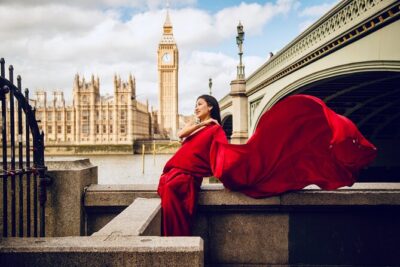
Browse the lists this shoot appears in