
Review · PHOTOGRAPHY TOURS
Alfama Photo Walk – Lisbon Photography Experience Led by a Local
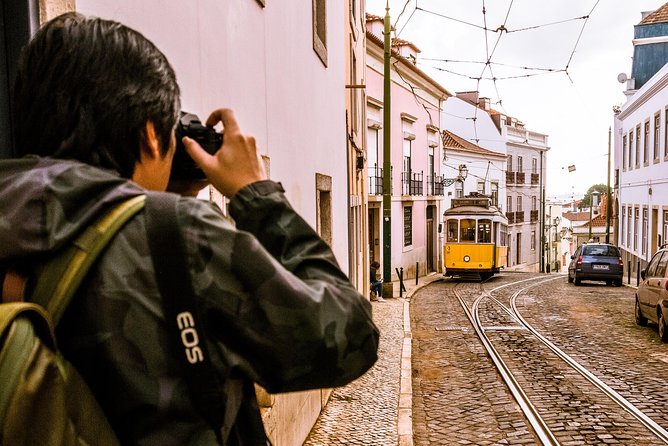
Lisbon rewards a slow eye. This three-hour walk through Alfama and nearby São Vicente combines practical photography coaching with a close look at Lisbon’s oldest neighborhoods. I like the small maximum group of five, and I like that guide Carlos Reveles teaches you to wait for the right angle and light instead of simply pointing out famous places. The main drawback is the hilly route, which can feel demanding in walking shoes that lack support.
You bring your own camera or phone, and the instruction adjusts to your equipment and experience. The walk costs $112.82 per person, so it makes the most sense if you want usable photography advice, local orientation, and time to compose rather than a quick sightseeing circuit.
Key Points Before You Book
- Small groups make coaching possible: The walk has a maximum of five people, giving you room to ask questions and work on your own pictures.
- Carlos Reveles teaches timing and composition: His advice includes finding the right angle, reading light, and waiting for a strong moment.
- The route covers more than Alfama: You also photograph São Vicente, Graça, Igreja de São Miguel, Lisbon Cathedral, and a hilltop viewpoint.
- You get both street and architectural practice: Moving trams, church façades, rooftops, river views, chapels, and neighborhood life all become subjects.
- The pace favors photography over speed: The route is designed to leave time for framing and experimentation.
- Bring sturdy walking shoes: Alfama’s narrow streets and steep hills are part of the setting, but they also make the walk physical.
Why This Walk Works Best Early in Your Lisbon Stay
I like the idea of taking this walk near the beginning of a Lisbon visit. It gives you a feel for Alfama’s layout while showing you places you may want to revisit with better light or a clearer photographic plan.
One of the strongest points is the combination of orientation and instruction. You are not simply led from one pretty street to the next. Carlos helps you notice how light changes across narrow lanes, how to frame buildings against open sky, and how to balance a moving tram with the fixed lines of a church or street.
That matters because Alfama can overwhelm your camera. There are tiled façades, old stone, laundry, shadows, bright walls, people, traffic, and steep streets competing for attention. A guide who helps you decide what belongs in the frame can save you from returning home with hundreds of busy pictures.
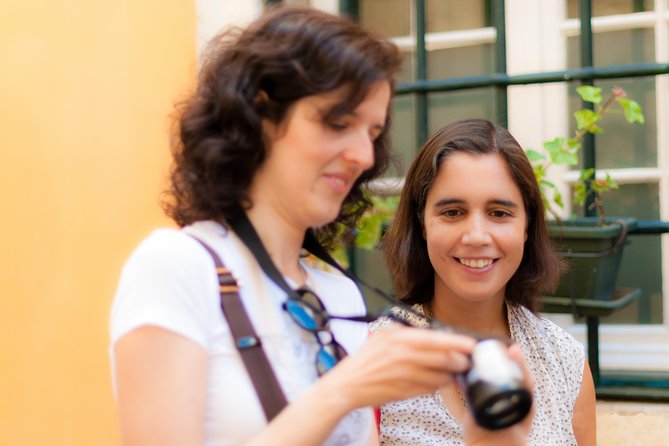
The small group limit is another real advantage. With up to five people, the walk should feel more like a photo lesson than a standard group outing. You can ask about your camera settings, show Carlos a composition, and then continue at your own pace without holding up a large crowd.
The timing may also help. The walk lasts about three hours, but it is not packed with rapid stops. Each place gives you time to look, take several versions of a picture, and think about why one frame works better than another.
More Photography Tours in Lisbon
- Lisbon: 2-Hour Street Art Photo Tour
★ 4.9 · 43 reviews - Private Highlights Photography Tour in Lisbon
★ 3.0 · 8 reviews - Alfama Photo Walk: Lisbon Photography Tour with a Local
★ 4.8 · 6 reviews
Starting at Chafariz das Moiras
The meeting point is Chafariz das Moiras at Largo do Correio-Mor. From there, the route moves into the historic core on foot and finishes at Largo da Sé by Lisbon Cathedral.
You should arrive ready to walk. Hotel pickup and drop-off are not included, and you need to make your own way to the starting point. The meeting area is near public transportation, which makes access easier, but the actual experience is on foot.
This is not the right outing for someone who wants a relaxed ride through Lisbon. The route uses narrow streets and hills, and one participant specifically pointed out the need for good walking shoes. Wear something comfortable and supportive, since the best viewpoints often require climbing.
You also need to bring your own photography equipment. That can be a camera, depending on what you use, but the tour does not provide equipment, snacks, food, or drinks. A small bag with water is a sensible choice, although food and beverages are not included.
Alfama: Photographing Daily Life in Narrow Streets
The first major section spends about an hour in Alfama. This is the heart of the experience and the place where the photography lessons have the most room to develop.
Alfama offers tight streets, changing light, and ordinary neighborhood scenes. Those conditions are useful because they force you to make decisions. You may need to work with shade in one lane, bright light at the end of another, or a small patch of color against a plain wall.
Carlos helps you find practical shooting positions rather than simply giving you a list of famous corners. That distinction is important. A good position can reveal layers in the scene, create a stronger foreground, or let you use the street’s lines to guide the eye.
You also get local context as you work. The cultural and historical information adds purpose to the pictures. Instead of treating Alfama as a collection of old walls, you begin to see it as a lived-in neighborhood with its own daily rhythm.
The best part for many people will be the freedom to make the pictures their own. Carlos offers advice, but the experience is not described as a rigid lesson where everyone must copy the guide’s frame. You can try a different angle, wait for a passing person, or focus on a small architectural detail.
This section should suit photographers at several levels. Beginners can learn how to look for light and organize a frame. More experienced photographers can use the walk to sharpen street work, find new viewpoints, or get a better feel for the district.
São Vicente and Graça: Catching Trams in Motion
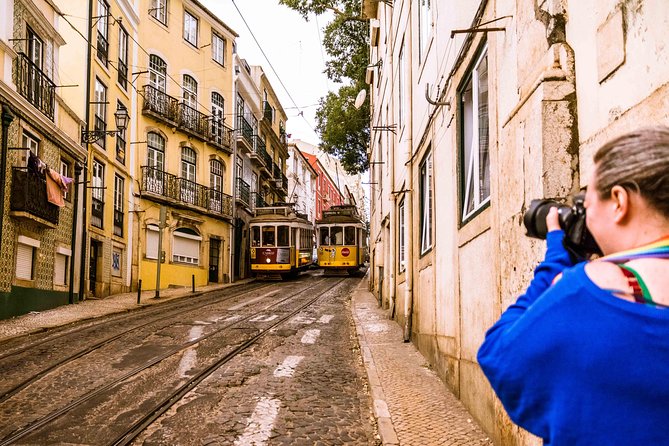
The next stop lasts about 30 minutes and focuses on two useful subjects: Lisbon’s trams and the Igreja de São Vicente de Fora.
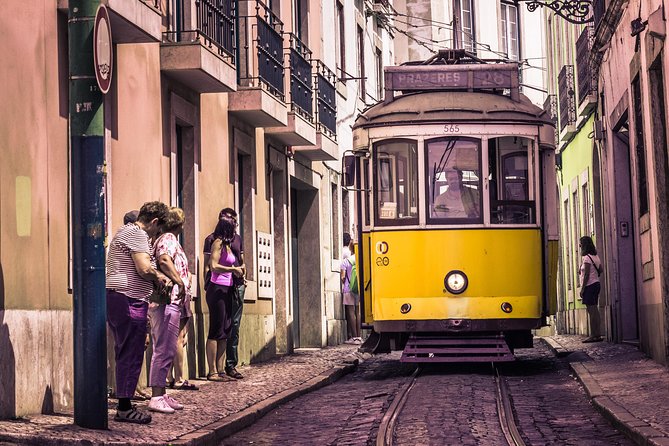
Along Calçada de São Vicente, you practice photographing trams as they move. This is a good exercise because the subject changes quickly, while the street, buildings, and rails remain fixed. Carlos shows you how to balance motion with still architectural lines.
That lesson has value beyond Lisbon. Street photography often depends on timing. You may have the right location but need to wait for a tram, person, shadow, or other moving element to complete the frame. The goal is not simply to photograph the tram, but to place it well within the surrounding scene.
At Igreja de São Vicente de Fora, the focus shifts to architectural photography. You can work with the building’s shape, details, and relationship to the street. The change from moving subject to solid structure gives the walk a useful rhythm.
Thirty minutes is enough to practice, but not enough for an extended architectural study. If church exteriors are your main interest, you may want to return later on your own. The strength here is variety and instruction, not a long visit inside the church.
More Photography Tours in Portugal
- Porto 1/2 Day Walking Photo Tour & Portraits
★ 5.0 · 163 reviews - PHOTO TOUR (Full Day Private Tour- Sunrise to sunset)
★ 5.0 · 68 reviews
Miradouro de Santo Estevão and the Rooftop View
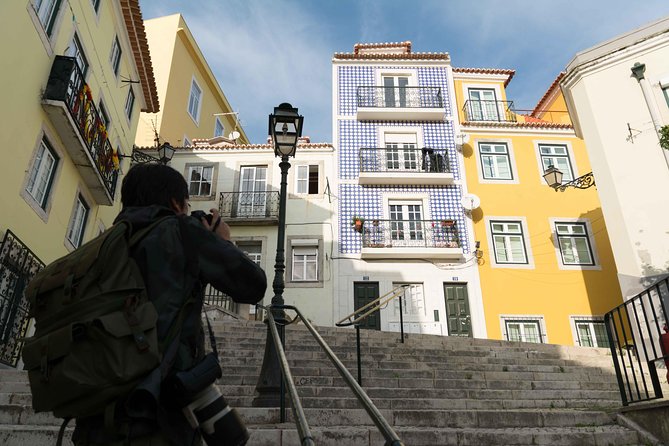
Miradouro de Santo Estevão provides a welcome change from the tight streets. From this lookout, you can photograph Alfama’s rooftops and the Tagus River in broad compositions.
This is where the earlier street work can start to make sense. In the lanes, you learn to manage limited space and close details. At the viewpoint, you work with distance, layers, and a wider view.
Carlos helps you think about how to arrange rooftops, sky, and river within the frame. You can also use the stop to slow down and compare different compositions rather than taking one quick picture and moving on.
The viewpoint is scheduled for about 30 minutes. That should be enough for several attempts, but light conditions will depend on the time of day and the weather. The experience requires good weather, so poor conditions can lead to a different date or a full refund.
Do not expect every stop to offer a dramatic sunset or perfect sky. The value is in learning how to work with the conditions in front of you. That is a more useful skill than relying on ideal weather.
Igreja de São Miguel and the Small-Scale Lisbon Frame
The walk then reaches Igreja de São Miguel, set beside a neighborhood square. This stop also lasts about 30 minutes and offers a different kind of subject from the larger church and open viewpoint.
Here, you can work with small chapels, local activity, classic Lisbon details, and the way buildings frame the square. The setting should appeal to photographers who prefer intimate scenes over grand monuments.
A neighborhood square gives you room to practice selective framing. You might focus on a doorway, a church detail, a patch of light, or the relationship between people and architecture. The guide’s role is useful here because small subjects can be easy to overlook when a famous church is nearby.
This stop also helps keep the walk grounded in everyday Lisbon. The route does not rely only on postcard views. It includes ordinary corners where the character comes from scale, texture, and local life.
Lisbon Cathedral: Finishing With Strong Architecture
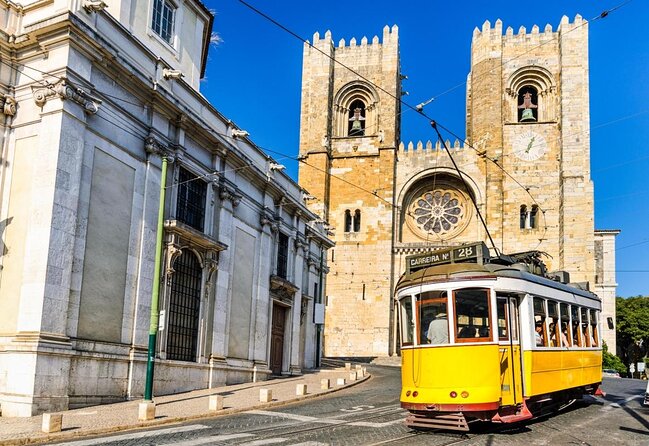
The final stop is Lisbon Cathedral, one of the city’s oldest churches. The walk ends at Largo da Sé, so you finish close to a major landmark rather than returning to the starting point.
The cathedral offers several photographic approaches. You can work with close architectural details, dramatic light, and layers created by the surrounding urban setting. It gives you a strong final subject after the smaller scenes of Alfama and São Miguel.
The location is also practical for your day. Since the walk ends in the cathedral square, you can continue exploring from there instead of retracing your route. The experience itself does not include admission tickets to paid attractions, but the listed stops are treated as free-access points during the walk.
The final 30 minutes may feel short if you want a careful architectural study. Still, ending here gives the route a clear finish and leaves you near one of Lisbon’s best-known historic areas.
The Photography Advice You Actually Receive
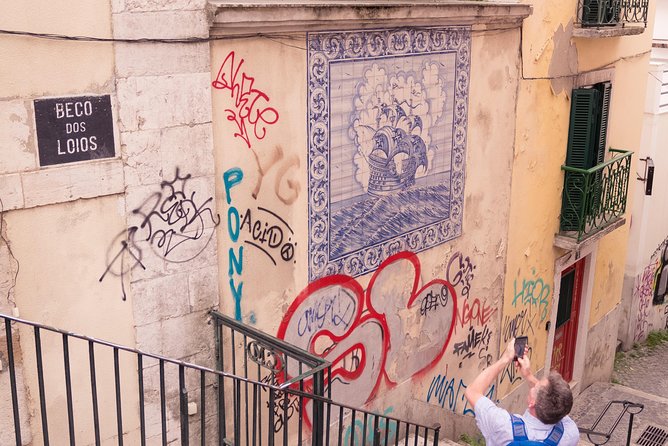
The instruction is aimed at helping you make better pictures, not at showing off technical terms. Carlos adapts his guidance to your equipment and level, which is useful if you are using a phone, a basic camera, or more advanced gear.
The key lessons include:
- Reading light in narrow streets and at different times of day
- Finding stronger angles for familiar subjects
- Waiting for the right moment rather than taking the first frame
- Balancing moving trams with fixed buildings
- Using architectural lines and surrounding layers
- Choosing practical positions for street scenes
- Thinking about composition before pressing the shutter
I especially like the emphasis on waiting. Lisbon’s streets can offer good pictures quickly, but the best frame may appear only after a tram reaches the right point, a person enters the scene, or the light shifts across a wall.
Carlos is also described as friendly, warm, and generous with his time. That matters during a creative activity. You should feel comfortable asking basic questions, trying a different approach, or spending extra time on a scene that interests you.
Is $112.82 Good Value?
At $112.82 per person, this is not a cheap walking tour. You are paying for roughly three hours, a small group, photography instruction, and local guidance rather than for admission to a museum or monument.
The price looks more reasonable if you plan to use the advice during the rest of your Lisbon stay. A good lesson on light, timing, and composition can improve dozens of later pictures. You also get a route through several historic areas, which adds sightseeing value.
The cost is harder to justify if you mainly want a standard introduction to Alfama. You can walk through these neighborhoods without a guide, and the tour does not include equipment, refreshments, hotel transport, or attraction admissions.
I would consider it good value for someone who specifically wants to improve street or travel photography. It is less suitable for someone who wants the lowest-cost way to see the old city.
Group discounts are available, which may help if you are booking with others. The maximum group size of five is an important part of the value. A larger group could make individual coaching less useful.
Who Should Book This Experience?
I would point this walk toward:
- Beginners who want help using a camera or phone in real streets
- Intermediate photographers looking for fresh angles in Lisbon
- Solo visitors who want a guided creative activity
- Couples or small groups with a shared interest in photography
- People who want to understand Alfama beyond its famous viewpoints
- Visitors who prefer a slow, hands-on walk to a fast sightseeing tour
You should think twice if you dislike hills, cannot walk comfortably for three hours, or want a private tour with no other participants. The outing is small, but it is still a group experience, not a guaranteed private booking.
It may also disappoint if your main goal is professional equipment, formal editing instruction, or a delivered set of photographs. You bring your own equipment, and the focus is on making pictures during the walk.
Booking is confirmed at the time of purchase, and the experience is offered in English. Free cancellation is available up to 24 hours before the start time. Changes or cancellations inside that period are not refunded, so check your plans carefully.
Final Verdict: A Useful First-Day Photo Walk
I would book the Alfama Photo Walk if photography is part of the reason you are visiting Lisbon. The route gives you narrow lanes, moving trams, historic churches, rooftop views, small squares, and a final cathedral, while Carlos Reveles adds practical advice about timing and composition.
The strongest reasons to go are the small group, the thoughtful pace, and the chance to learn by photographing real scenes instead of sitting through a classroom lesson. The biggest cautions are the price, the hills, and the need to bring your own equipment.
Book it early in your stay if you want the advice to shape the rest of your pictures. Skip it if you only want a cheap walk or an effortless sightseeing route. For the right person, this is a friendly, focused way to get your bearings in Lisbon and start seeing Alfama with a more careful eye.
FAQ
How long does the Alfama Photo Walk last?
The experience lasts approximately three hours.
Where does the photo walk start?
It starts at Chafariz das Moiras, Largo do Correio-Mor, 1100-179 Lisboa, Portugal.
Where does the walk finish?
The walk ends at Largo da Sé, 1100-401 Lisboa, Portugal, near Lisbon Cathedral.
How many people can join the tour?
The maximum group size is five people.
Is photography equipment provided?
No. You must bring your own photography equipment.
Is the tour offered in English?
Yes. The experience is offered in English.
What happens if the weather is poor?
The experience requires good weather. If it is canceled because of poor weather, you will be offered a different date or a full refund.
Just added around Lisbon
- Private Professional Photoshoot at Alfama, Lisbon★ 5.0 · 6 reviews
- Vacation Photographer in Lisbon – Private, Professional and Fun!★ 5.0 · 15 reviews
- Alfama Photo Walk: Lisbon Photography Tour with a Local★ 4.8 · 6 reviews
- Lisbon: 2-Hour Street Art Photo Tour★ 4.9 · 43 reviews
- Private Highlights Photography Tour in Lisbon★ 3.0 · 8 reviews
- Alfama: Unforgettable Photoshoot Experience with a Local★ 5.0 · 77 reviews
- Lisbon Cinematic Photoshoot with Top-Rated Photographer★ 5.0 · 76 reviews
- Romantic Photoshoot Experience for Couples in Lisbon★ 4.9 · 78 reviews
Photography Tours, compared.

Browse the lists this shoot appears in