
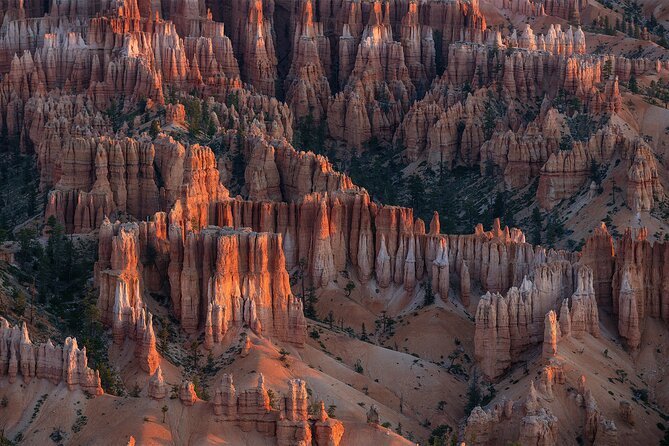
Review · PHOTOGRAPHY TOURS
Bryce Canyon Photography Tours
Bryce after dark changes everything. This small-group photography outing pairs Bryce Canyon’s hoodoos with hands-on guidance from Hunter, who helps you improve camera settings, composition, and confidence. I like the choice between a Milky Way tour and a sunrise outing, and I like the limited group size of no more than four people. The main drawback is the early or late timing, plus the $289 price for roughly three hours.
The tour is built around teaching rather than simply driving you to a viewpoint and pointing at the scenery. Tina’s glowing feedback highlights how much Hunter helped her understand her camera and its functions in a short time. If you want a stack of quick snapshots, this may feel too instructional. If you want to make better photographs and understand why they work, it offers real value.
Key points at a glance
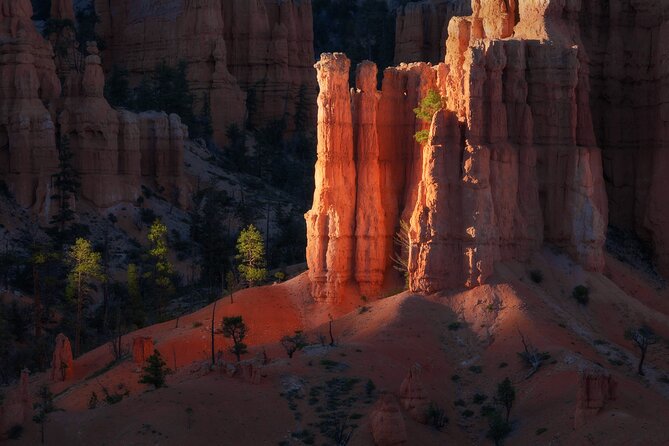
- Two very different photo options: Choose a sunrise tour along the rim or an astro outing inside the park after sunset.
- Small groups matter: The maximum is four people, giving Hunter room to offer individual help with settings and composition.
- Sunrise covers several viewpoints: The morning route may include Sunset Point, Sunrise Point, Bryce Point, and Inspiration Point, with two to four locations visited.
- The astro tour changes the setting: You walk into the park interior to frame hoodoos beneath the Milky Way.
- Hotel pickup is available: Pickup usually begins at Ruby’s Inn, with lodging pickup available in Bryce City.
- Bring your own food and water: No meals or drinks are included, and the three-hour outing can occur at an awkward time for eating.
What this Bryce Canyon photo tour is really about
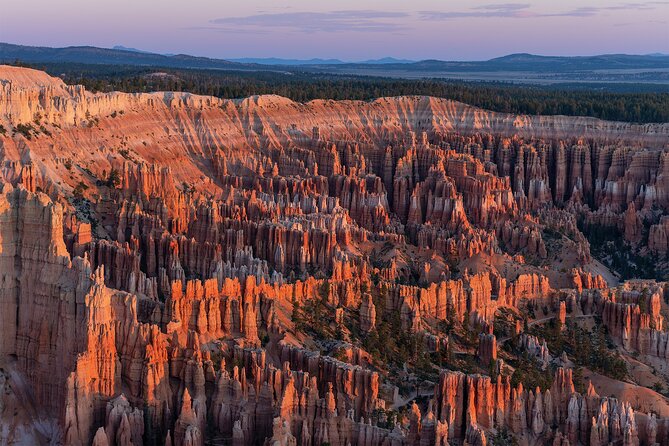
This is not just a scenic ride with a camera in your lap. The stated goal is to build on your current skill level, so the experience can work for someone still learning camera controls as well as someone who already knows the basics and wants sharper decisions in the field.
Hunter’s teaching covers camera settings, composition, and other practical photography choices. That matters at Bryce Canyon because the same view can look flat, crowded, dramatic, warm, cool, bright, or dark depending on how you handle the camera. A guide who gives feedback while you are actually facing the hoodoos can help you connect theory with the photograph in front of you.
The small group limit is one of the strongest features. With four people at most, you are less likely to wait through a long line of camera questions. It also gives you a better chance to ask for help with your own camera rather than watching a general demonstration aimed at everyone.
The experience is offered in English. An air-conditioned vehicle handles transportation between locations, while the photography itself takes place at viewpoints or on foot, depending on which tour you select.
More Photography Tours in the USA
- From Waikiki: Best of Oahu Photo Tour with Pickup
★ 4.9 · 274 reviews - The Ultimate LA and Hollywood Photo Tour
★ 5.0 · 233 reviews - Beautiful Colors of Hawaii Photo Tour
★ 5.0 · 165 reviews
Sunrise photography from four Bryce viewpoints
The sunrise outing begins about one hour before sunrise. That means you need to be ready before daylight, but the early start gives you access to changing light across several parts of the rim.
The planned stops include Sunset Point, Sunrise Point, Bryce Point, and Inspiration Point. The tour usually visits two to four locations, so you should not assume every outing will use all four. The selection can vary with timing, conditions, and how much time is useful at each location.
Sunset Point
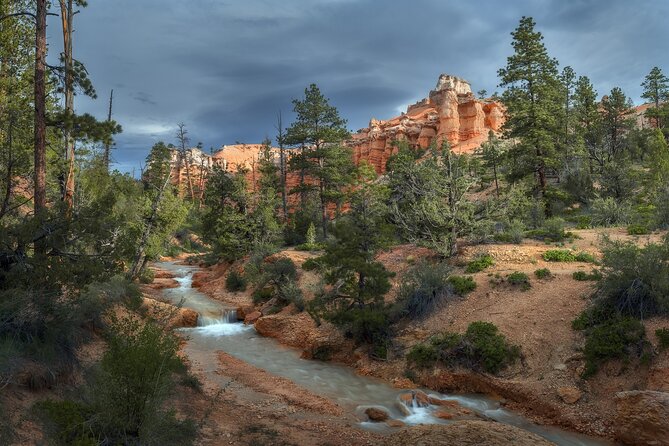
Despite its name, Sunset Point can be valuable during a sunrise route. Its position along the rim gives you a direct introduction to Bryce Canyon’s tightly packed hoodoos and deep amphitheater. You can use this first stop to get your camera ready and begin working with Hunter’s advice before the morning gets busy.
The advantage is variety. You are not tied to one overlook for three hours, so you can build a set of photographs with different angles and compositions. The tradeoff is that moving between locations means less time at any single viewpoint.
Sunrise Point
Sunrise Point is an obvious morning choice, and it gives the early light a chance to shape the hoodoos. This is a useful place to work on exposure decisions because the brightening sky and shadowed formations can challenge your camera.
Hunter’s feedback is especially useful here. Instead of leaving you to guess whether a setting is helping, he can discuss how your choices affect the final frame. Tina specifically praised his help with camera functions, which suggests the lesson is practical and hands-on rather than limited to broad advice.
Same place, a different kind of shoot:
- The ‘OG’ Manatee Snorkel Tour with In-Water Guide/Photographer
★ 5.0 · 2,539 reviews - Manatee Swim Tour with In Water Photographer
★ 5.0 · 2,300 reviews - Guided Small Group Manatee Snorkeling Tour with In-Water Photographer
★ 5.0 · 1,336 reviews - LA: Hollywood Sign Tour with Comedians, Dogs, & Epic Photos
★ 4.9 · 1,193 reviews
Bryce Point
Bryce Point offers another broad view into the amphitheater. Visiting more than one rim location helps you avoid producing a whole collection of photographs that all look alike.
The benefit is a wider range of compositions. The limitation is simple: this is a three-hour tour, not a full-day workshop. You will need to keep moving, listen closely, and make decisions without spending too long perfecting every single frame.
Inspiration Point
Inspiration Point adds another rim perspective and may give you a final chance to refine the ideas covered earlier. By this stage, you should have had time to work through settings, framing, and composition with actual scenery in front of you.
The strongest value of the sunrise tour is the combination of locations and instruction. You are not paying only for a ride to Bryce Canyon viewpoints. You are paying for a guide who helps you turn those viewpoints into better photographs.
The astro tour puts hoodoos beneath the Milky Way
The astro outing begins with pickup about one hour after sunset and lasts three hours. You then walk into the interior of Bryce Canyon National Park to place the hoodoos high in the night sky and photograph the Milky Way.
That description signals a different kind of outing from the sunrise tour. You are not simply stopping at rim overlooks. You are walking to multiple locations and working with night compositions, which creates more variety but also asks more of you physically and mentally.
Night photography requires careful attention to camera settings and composition. Hunter works with you on those choices while you photograph, rather than leaving you to remember a classroom lesson later. The chance to try several compositions is important because astro photography can look very different depending on how much sky, rock, and foreground you include.
The big appeal is the subject itself. Bryce’s hoodoos become dark forms against the night sky, with the Milky Way providing the main visual drama. You should choose this outing because you specifically want night photography, not because it sounds like a longer version of the sunrise tour.
The timing is the main consideration. Pickup one hour after sunset may not suit anyone who prefers a normal evening schedule. You will also want water and a snack before setting out, since no food or drinks are supplied.
Hunter’s teaching is the main reason to book
The most useful part of the experience is the direct instruction. Tina described the outing as a major improvement in her ability to create stronger photographs and praised Hunter for helping her understand her camera and its functions. She also credited him with helping on composition, not just buttons and menus.
That distinction matters. Camera instruction can become frustrating when it stays abstract. Here, the feedback happens while you are facing Bryce Canyon, so you can see the result of a setting or framing choice right away.
I would expect the greatest benefit if you bring questions. Think about the settings you often avoid, the controls you do not understand, or the kinds of compositions you struggle to create. A short tour becomes far more useful when you arrive ready to ask focused questions.
The tour also suits you if you already know your camera but feel that your images lack direction. Hunter’s help with composition may be as useful as technical instruction. You can learn not only how to operate the camera, but also how to decide what belongs in the frame.
Is $289 a fair price for three hours?
At $289 per person, this is not a budget sightseeing activity. The price makes more sense if you treat it as a private-style lesson in a very small group rather than as standard park transportation.
You receive an air-conditioned vehicle, guidance to strong photo locations, and photography instruction. The maximum group size of four is important when considering the cost. A larger group could spread the instructor’s attention thin, while this format gives you a better chance to receive personal feedback.
The value depends heavily on your goal. If you want a few scenic photographs and do not care how they are made, the price may feel high for three hours. If you want to improve your camera skills and leave with more confidence, the lesson can justify the cost.
The sunrise tour also uses several locations, while the astro outing includes multiple walking stops and night-sky instruction. Those details make the experience more than a single overlook visit, but neither option includes food or beverages. Bring your own water and snack so you are not distracted by basic needs during the session.
Group discounts are available, which may help if you are booking with friends or family. Since the maximum is four people, ask about the group arrangement when planning so you know how the discount applies to your party.
Pickup in Bryce City keeps the morning easier
Pickup typically takes place in the lobby of Ruby’s Inn, but Hunter can pick you up at lodging in Bryce City. This is particularly useful for the sunrise departure, when arranging your own transport before dawn would be inconvenient.
For the astro outing, lodging pickup also saves you from dealing with directions after dark. The tour provides an air-conditioned vehicle between locations, so you are not responsible for navigating the park while also managing camera equipment.
The exact pickup time depends on your selected outing. Sunrise pickup is about one hour before sunrise. Astro pickup is about one hour after sunset. Confirm the time when your booking is finalized, then plan your evening or morning around it.
The tour has mobile tickets and is offered in English. Confirmation is sent within 48 hours of booking, subject to availability, so do not assume your preferred date is secured until you receive that confirmation.
Who will get the most from this experience?
I would recommend the tour most strongly to:
- Photographers who want direct help with camera settings
- Beginners who feel unsure about manual controls or composition
- Intermediate photographers who want a fresh approach to Bryce Canyon
- Couples or small groups who prefer focused instruction
- Anyone who wants to photograph the Milky Way with hoodoos in the frame
- Visitors who value several viewpoints over a single scenic stop
It may be less suitable if you dislike early mornings, late-night outings, walking, or learning while you shoot. The available information does not describe a demanding route, and most people can participate, but the astro tour does include walking into the park interior and between multiple locations.
You should also be comfortable with an English-language lesson. The guide’s teaching is central to the experience, so communication matters.
Weather, cancellation, and planning advice
Good weather is required. If poor weather cancels the outing, you will be offered another date or a full refund.
You can cancel for a full refund if you do so at least 24 hours before the start time. Cancellations made less than 24 hours in advance are not refunded, and changes within that period are not accepted. The cutoff uses local time.
I would pack water and a snack, since nothing to eat or drink is provided. Bring the camera equipment you want to learn to use, and arrive ready to practice rather than simply watch. The tour is short enough that preparation will make a real difference.
My recommendation: book it for the instruction
I would book this tour if improving your photography matters as much as seeing Bryce Canyon. Hunter’s camera and composition coaching, the four-person limit, and the choice between sunrise and Milky Way work give the outing a clear purpose.
Choose sunrise if you want several rim viewpoints and changing morning light. Choose the astro tour if night photography and the Milky Way are the main reason you are visiting. Skip it if you only want a quick sightseeing trip or if $289 feels too steep for a three-hour lesson.
For the right photographer, this is a focused way to turn Bryce Canyon’s hoodoos into better images, not just more images.
FAQ
Where does pickup take place?
Pickup typically takes place in the lobby of Ruby’s Inn. Pickup is also available from lodging locations in Bryce City.
How long does the photography tour last?
Both the astro and sunrise outings last approximately three hours.
How many people can join the tour?
The maximum group size is four people.
Is transportation included?
Yes. An air-conditioned vehicle is included for transportation between locations.
Is food included?
No. Food and beverages are not provided. Bring water and a snack for yourself and your group.
What time does the sunrise tour begin?
Pickup for the sunrise outing takes place about one hour before sunrise.
What time does the astro tour begin?
Pickup for the astro outing takes place about one hour after sunset.
What locations can the sunrise tour visit?
The possible stops are Sunset Point, Sunrise Point, Bryce Point, and Inspiration Point. The tour visits two to four locations.
Is photography instruction included?
Yes. The tour includes photography instruction, guidance to photo locations, and feedback on camera settings and compositions.
What happens if bad weather cancels the tour?
You can choose a different date or receive a full refund if the experience is canceled because of poor weather.
Just added around the USA
- Private Wynwood Miami Photoshoot★ 3.0 · 2 reviews
- Private Sunset and Night Photo Tour★ 5.0 · 3 reviews
- Miami: Professional Private Photoshoot at Miami Beach★ 5.0 · 2 reviews
- Private Vacation Photography Session with Local Photographer in Miami★ 3.0 · 2 reviews
- Photographer, Professional Photo Shoot – Miami★ 3.0 · 2 reviews
- Private Vacation Photoshoot with Photographer in Lahaina★ 5.0 · 2 reviews
- Private Road To Hana Tour with Professional Photos Included★ 5.0 · 19 reviews
- Professional Photographer in Maui★ 4.5 · 3 reviews
Photography Tours, compared.
Browse the lists this shoot appears in