Review · PHOTOGRAPHY TOURS
Evening Photography Tour of Kathmandu
Kathmandu glows differently after sunset. This private evening tour pairs Boudhanath Stupa with the fire ceremony at Pashupatinath, giving you two powerful settings for night photography and a guide to explain what you are seeing. I like the included transport from central Kathmandu and the fact that only your group takes part. The main caution is that the tour is built around religious ceremonies, not a dedicated technical photography class.
I also like the useful local knowledge. Guides such as Bikash and Deepa have been praised for explaining Kathmandu and Nepal during the drive, not just pointing out photo spots. Allow three to four hours, bring your camera, and check your expectations before booking: one past participant felt the promotional picture was a little misleading.
Key points at a glance
- Boudhanath after dark: Photograph butter lamps, monks, devotees, and the illuminated white dome during evening circumambulation.
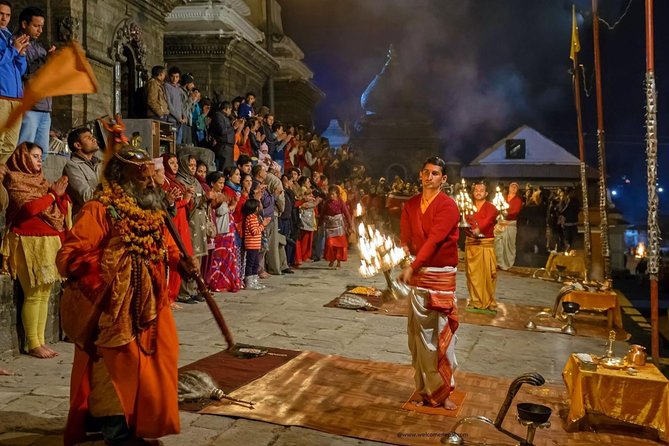
- Pashupatinath’s fire ritual: Watch chanting, singing, dancing, and flame offerings during the Hindu aarti beside the Bagmati River.
- Private setting: Your party travels alone, which makes the outing more personal than a large group excursion.
- Central Kathmandu pickup: Private transport is included, along with entrance fees and an English-speaking licensed city guide.
- Best for atmosphere over camera lessons: The guide helps you find meaningful scenes, but the focus is cultural access and timing rather than formal instruction.
- Plan ahead: The tour is often booked about 12 days in advance, so leaving it until the last minute may not work.
Why an evening tour works so well in Kathmandu
Daylight shows you Kathmandu’s monuments. Evening shows you how people use them.
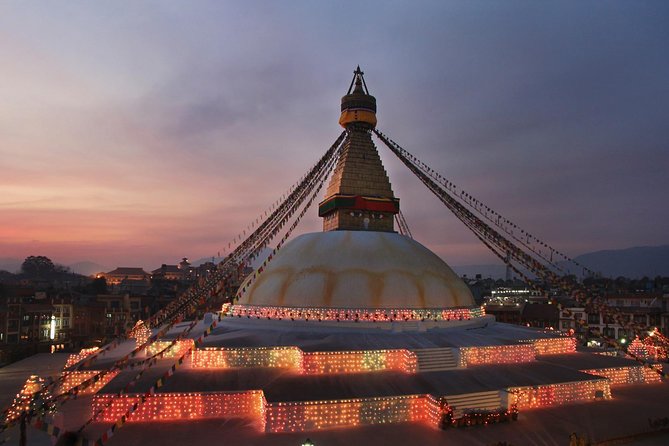
At Boudhanath, the white stupa becomes a gathering point for prayer, movement, and small pools of lamp light. At Pashupatinath, the focus shifts to music, flame, and ceremony on the banks of the sacred Bagmati River. The two visits feel different, and that contrast gives the outing its value.
I would not treat this as a simple sightseeing drive with a camera in your bag. The strongest reason to book is the chance to be in the right place during specific evening activity. A guide can help you understand why people are walking around the stupa, why lamps are lit, and what the fire ritual means.
The tour lasts about three to four hours. Each main stop is listed at roughly one hour, with the remaining time used for transport between sites. That is enough time for a focused visit, though not enough for a slow, all-night photography session at both locations.
More Photography Tours in the world:
- Barcelona E-Bike Photography Tour
★ 5.0 · 843 reviews - Tromso: Northern Lights Photography Tour
★ 4.2 · 843 reviews - Tromsø: Northern Lights Photography Tour
★ 4.8 · 788 reviews
Boudhanath Stupa and the circle of lamps
Boudhanath is an important pilgrimage center for Tibetan Buddhists and one of Kathmandu’s most recognizable religious sites. In the evening, the white domed stupa is lit and decorated, while devotees make a parikrama, or circumambulation, around it.
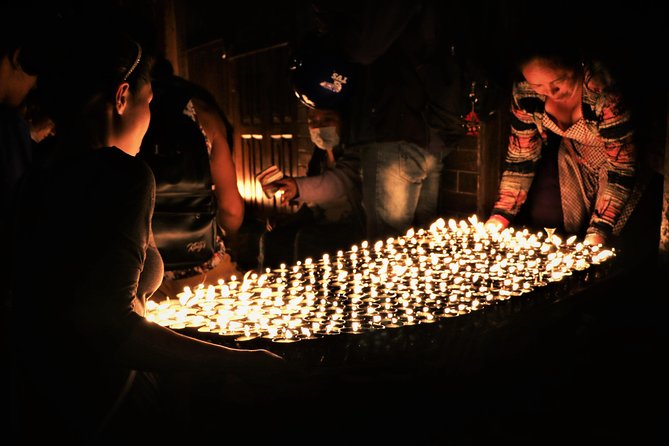
This is the first strong photography opportunity. You can look for the repeated motion of people walking around the stupa, the glow of butter lamps, and the contrast between monks, devotees, prayer, and architecture. The setting offers more than a single postcard view because the activity takes place around the monument rather than only in front of it.
Your guide’s role matters here. The tour promises help finding the best settings and moments, which is especially useful if you do not know the site. A good guide can give you cultural context and help you recognize when a scene is part of an ordinary devotional routine rather than a performance arranged for visitors.
The visit lasts about one hour, and admission is included. That keeps the stop simple. You do not need to arrange a separate ticket or find your own way across Kathmandu before sunset.
You should still approach your camera with care. People lighting lamps and praying are taking part in religious practice, not posing for a staged portrait. The tour description emphasizes spiritual traditions, so respectful observation matters as much as getting a sharp image.
For photographers, Boudhanath may be the easier place to begin. The stupa provides a fixed subject, while the walking devotees create movement and changing compositions. If you are using a phone, the lamp light and illuminated dome may be more forgiving than the darker setting at Pashupatinath, though the tour does not promise any particular camera conditions.
Pashupatinath and the Bagmati River aarti
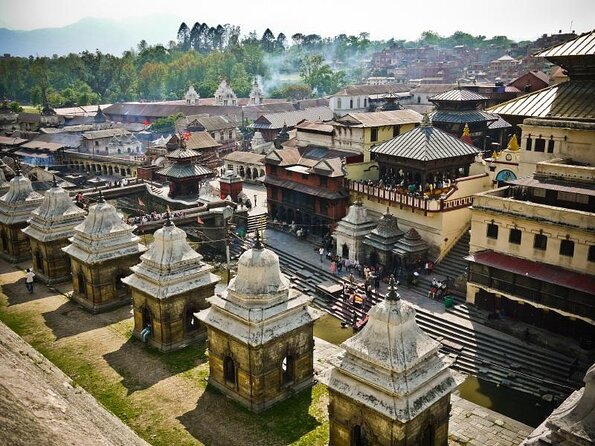
The second stop is Pashupatinath Temple, one of the most important Hindu shrines devoted to Lord Shiva. The name Pashupatinath means protector of all living beings, and the evening visit centers on a sacred aarti ritual.
During aarti, priests offer light from flames to the gods. The ceremony includes chanting, singing, and fire rituals, while devotees may dance in a trance. The setting beside the Bagmati River adds another layer to the scene, with the firelight providing the visual focus after dark.
This is likely to be the emotional high point of the tour. One participant described witnessing a fire-lit devotion to Shiva at night by the river, and that detail explains why the outing can be worthwhile even for someone who has already seen Kathmandu’s major sites during the day.
Photography here is less predictable than at Boudhanath. The ceremony has its own rhythm, and the available light comes from flames and surrounding illumination. You may need to work quickly and accept that some images will be atmospheric rather than technically perfect.
The guide can help you understand the chants and actions instead of leaving you to watch from the edge without context. That is important at a sacred ritual. You are not simply waiting for a dramatic flame; you are watching a religious act with meaning for the people taking part.
The listed visit lasts about one hour, and admission is included. The tour does not include dinner, bottled water, or alcoholic drinks, so plan around those omissions. Since the activity takes place in the evening, you may want to eat before or after the tour rather than expecting a meal along the way.
What the private format changes
This is a private tour, so only your group participates. That is a useful feature for photography because you are not attached to a large party with a fixed pace and a long list of unrelated stops.
Private does not automatically mean a full photography workshop. The information promises an English-speaking licensed city guide, cultural explanation, transport, and help locating worthwhile scenes. It does not promise instruction in shutter speed, lenses, composition, or post-processing.
I see the private format as most valuable for three kinds of people. First, it suits couples or friends who want an evening built around their own interests. Second, it helps first-time visitors who would feel uncertain finding both religious sites at night. Third, it works for photographers who want cultural access without organizing transport themselves.
Group discounts are offered, which may improve the per-person value if you are traveling with several people. The exact discount is not specified, so check the price for your group before assuming how much you will save.
More Evening Trips around the world:
- Rhodes: E-bike Highlights Sunset or Morning Photo Tour
★ 4.9 · 351 reviews - Cappadocia Sunrise & Sunset Horse Tour with Photography
★ 4.9 · 348 reviews - Mediaeval Rhodes E-bike Highlights Photo Tour Morning/Sunset
★ 5.0 · 164 reviews - Tokyo by Night Photography Tour (Private Option Available)
★ 5.0 · 151 reviews
The guide can make or break the evening
The strongest praise has gone to the guides. Bikash has been described as professional, polite, and highly informed about Kathmandu and its heritage sites. Deepa was also praised for giving well-informed help during the evening ceremony.
That matters because the drive between Boudhanath and Pashupatinath is not dead time. The guide may use it to explain Kathmandu, Nepal, and the places ahead. One person specifically enjoyed hearing about the city and country while riding between the two stops.
The wording here is important. You are paying for more than a car ride and admission tickets, but you are not guaranteed a particular guide unless the operator confirms one. Ask about guide assignment if a specific person, such as Bikash or Deepa, is important to you.
I would also tell you to explain your priorities at the start. If you care most about photographing people, say so. If you prefer architecture, lamps, or ceremony details, make that clear. The tour is private, but the supplied information does not promise a customized shot list, so direct communication should help you get the most from the time.
Price, timing, and practical value
At $102 per person, this is not the cheapest way to see Boudhanath and Pashupatinath. The price includes private transportation, all fees and taxes, admission to both listed stops, and an English-speaking licensed city guide.
The value depends on how you would otherwise arrange the evening. If you already have transport, know both sites well, and are comfortable visiting at night, the price may feel high. If you want a private vehicle, cultural explanation, and help with timing, the package is easier to justify.
I especially see value for a solo visitor or a small group that does not want to solve Kathmandu’s evening transport on its own. The cost is per person, so a larger party using the group discount may find it more attractive.
The average booking point is about 12 days before the tour. That is a useful planning signal. You do not need to book months ahead based on the information provided, but you should not assume a last-minute place will be available.
The experience requires good weather and a minimum number of participants. If poor weather cancels it, you are offered another date or a full refund. If the minimum is not met, you are offered another date, another experience, or a full refund. You can cancel for a full refund up to 24 hours before the start time. Changes or cancellations inside that period are not accepted for a refund.
What to bring and what not to expect
The tour says all you need is your camera, and transportation is supplied. Still, I would bring only the equipment you can carry comfortably for several hours. The information does not specify camera support, special lighting, or storage facilities, so do not assume those will be provided.
You should also bring a practical attitude toward evening photography. Religious sites can be visually dramatic, but available light may be limited. The experience is about finding meaningful moments, not guaranteeing a perfect image at every stop.
Wear something suitable for visiting major religious landmarks. The supplied details do not set out a formal dress code, but respectful clothing and behavior are sensible at both locations. Avoid treating worshippers as props, and follow any instructions given by the guide or temple staff.
Food and drinks are not included. Dinner, bottled water, and alcoholic beverages are specifically excluded, so arrange those separately. Since the tour is only three to four hours, this is a manageable omission, but it is worth remembering when planning your evening.
Who will enjoy this Kathmandu photo tour
I would recommend it most strongly to photographers who value access and context. You may get more from an hour at each site with a guide who knows where to look than from several hours wandering without a plan.
It also suits first-time visitors who want to see two major religious landmarks in one evening. The private transport removes some of the uncertainty, while the guide provides a thread connecting Tibetan Buddhist practice at Boudhanath with Hindu worship at Pashupatinath.
Couples, families, and small groups should appreciate the private format. Group discounts may help with the cost, though the exact savings need to be confirmed.
I would be more cautious if your main goal is a formal photography lesson. There is no stated promise of camera coaching, portfolio feedback, tripod support, or extended time at one location. You are buying a guided cultural outing with strong photography potential, not a classroom.
I would also be cautious if you want a broad night tour of Kathmandu. The route focuses on two religious landmarks. It does not include a meal, a general city circuit, or a long list of neighborhoods.
Should you book it?
Book this tour if you want two significant religious sites, evening ceremony, private transport, and local explanation in one compact outing. The best moments are likely to come from the butter lamps and circumambulation at Boudhanath, followed by the chanting and fire of aarti at Pashupatinath.
Skip it if you already know both sites well, have dependable evening transport, or want a technical photography workshop. At $102 per person, the cost makes the most sense when you value the guide and private arrangement, not merely the entrance tickets.
For many visitors, the decisive question is simple: do you want to find these moments on your own, or would you rather have Bikash, Deepa, or another licensed guide help you understand where to be and what is happening? If the latter sounds useful, this is a well-focused evening in Kathmandu.
FAQ
How long does the Evening Photography Tour of Kathmandu last?
The tour lasts approximately three to four hours, including the visits to Boudhanath Stupa and Pashupatinath Temple and the transport between them.
What places does the tour visit?
It visits Boudhanath Stupa and Pashupatinath Temple in Kathmandu.
Is the tour private?
Yes. Only your group participates in the activity.
Is transportation included?
Yes. Private transportation from central Kathmandu is included.
Are entrance fees included?
Yes. Admission tickets for both listed stops are included, along with all fees and taxes.
Does the tour include a guide?
Yes. An English-speaking licensed city guide is included.
Are food and drinks included?
No. Dinner, bottled water, and alcoholic beverages are not included.
Can I cancel for a full refund?
Yes. You can cancel at least 24 hours before the start time for a full refund. Cancellations or changes made less than 24 hours before the start time are not accepted for a refund.
Just added around the world
- Private Milan Photo Walk with Professional Photographer★ 5.0 · 4 reviews
- Private Vacation Photography Session with Local Photographer in Milan★ 5.0 · 2 reviews
- An Adventure in Milan and your unforgettable Private Photoshoot★ 5.0 · 12 reviews
- Milan Photowalk with a Professional Photographer★ 5.0 · 7 reviews
- Private Wynwood Miami Photoshoot★ 3.0 · 2 reviews
- Private Sunset and Night Photo Tour★ 5.0 · 3 reviews
- Private Vacation Photography Session with Local Photographer in Miami★ 3.0 · 2 reviews
- Miami: Professional Private Photoshoot at Miami Beach★ 5.0 · 2 reviews
Photography Tours, compared.