
Review · PHOTOGRAPHY TOURS
History of London Photography Tour
London rewards a slower shutter. This two-hour walk pairs practical photography coaching with a compact tour of the City, from Hawksmoor’s St. Mary Woolnoth to St. Paul’s Cathedral and the Millennium Bridge. I like the mix of camera advice and street-level history, and I like that the route ends at Tate Modern with views across the Thames.
The main drawback is the route’s focus on famous landmarks. You may get fresh angles and less familiar details, but this is not a tour of secret London. A maximum group of 18 also means personal help may vary, especially if everyone arrives with different cameras and skill levels.
Key points at a glance
- Start beneath the City of London: Meet at St. Mary Woolnoth, close to Bank station and the financial district.
- Learn while you walk: A professional photographer offers help with composition, lighting, camera settings, and angles.
- See ten major stops: The route includes the Royal Exchange, Bank of England, Guildhall, St. Paul’s, Millennium Bridge, Tower Bridge, and Tate Modern.
- Expect a mixed-ability group: The tour suits beginners and experienced photographers, with a maximum of 18 people.
- Finish on the South Bank: Tate Modern provides a strong final subject and puts you near the river, bridges, and central London transport.
- Bring a camera or phone: Equipment is not provided, so your own device is essential if you want to get full value.
What this London photography walk actually offers
This is part sightseeing tour, part short photography class. You move through the City of London with a professional photographer, stopping to look at buildings, monuments, church fronts, and river views. The guide helps you think about how to frame a subject instead of simply pointing your camera at it.
That distinction matters. A standard walking tour may tell you what a building is. This experience also asks you to consider the building’s shape, light, nearby streets, and the best position for a picture. You might leave with better photographs, but you should also leave with a more careful way of looking at London.
The tour is designed for both visitors and London locals. That makes sense for this part of the city. The City of London is small but packed with layers, and familiar buildings can look different when you pause to study them. The route also brings you through places that many visitors pass without stopping, including several churches and memorials.
The tone appears relaxed rather than technical. Richard, one of the named leaders connected with the experience, helped participants who were not comfortable with camera settings before the walk began. Other comments describe friendly instruction, useful camera techniques, and a good mix of ages and abilities.
You do not need to arrive as a serious photographer. If you normally leave your camera on automatic, this can encourage you to try something new without turning the outing into a formal classroom. If you already know your camera well, you may get more from the guide’s suggestions about viewpoints and composition than from basic settings advice.
More Photography Tours in London
- Private Tour: Night Photography Tour in London
★ 5.0 · 48 reviews - Private Night Photography Tour in London
★ 5.0 · 29 reviews - Photography Tour walking the back streets of London’s West End (3 hours)
★ 5.0 · 24 reviews
Starting at St. Mary Woolnoth and Bank
The meeting point is IMPRINT Church London at St. Mary Woolnoth, 10 to 13 Lombard Street. This places you in the heart of the City, surrounded by banks, old lanes, modern towers, and historic churches.
St. Mary Woolnoth gives the tour an unusually strong opening. Worship has taken place here for at least 2,000 years, and traces of Roman and pagan religious buildings were found beneath the present church. The current building was commissioned from Nicholas Hawksmoor and rebuilt in 1727.
For photography, it is a useful first lesson in contrast. The church’s bold architecture sits among the hard-edged buildings of the financial district. Your guide can help you work out how much of the surrounding street to include, how to handle vertical lines, and how to frame the church against newer buildings.
The visit is scheduled for about 10 minutes, with no admission charge. That is enough for an introduction, a few photographs, and some historical context, but not a long architectural study.
Royal Exchange and Bank of England
The Royal Exchange is the next short stop. This grand building has long been tied to London’s commercial life, and its formal exterior gives you a classic City subject. Your guide focuses on how to photograph it, so look for advice on framing the entrance, managing the building’s scale, and using nearby streets to create depth.
You then spend about 15 minutes at the Bank of England. This is one of the tour’s better opportunities to connect architecture with the working identity of the City. The building is packed with history and strong visual details, and the guide helps you find angles rather than simply giving you time to take a quick record shot.
A point worth keeping in mind: the City can feel visually crowded. Street signs, traffic, construction, and tall office buildings may compete with older façades. That is not a flaw in the route, but it does make the guide’s input useful. You may be shown how to simplify the picture, wait for a cleaner view, or use the surrounding buildings as part of the composition.
Guildhall and St. Mary-le-Bow
Guildhall brings Gothic architecture into the walk. This 800-year-old civic building gives you a different subject from the financial institutions nearby. The scheduled 15 minutes should allow time to examine the details and try more than one viewpoint.
I like this part of the route because it broadens the picture of the City. London’s financial district is not only glass towers and money. It also contains medieval civic traditions, old churches, and public buildings with a much older visual language.
At St. Mary-le-Bow, the focus turns to one of London’s best-known church traditions. According to local custom, a true Cockney must be born within earshot of the church bells. The church itself makes a compact photographic subject, especially if you enjoy architectural details rather than only broad city views.
This stop lasts around 10 minutes. That keeps the tour moving, though anyone hoping for a long session at each church may find the schedule brisk. The route contains ten stops in roughly two hours, so the experience favors variety over extended time with one building.
More Photography Tours in the UK
- London Photography Tour – Private Tour
★ 5.0 · 17 reviews - London: Iconic Sights Photo Walking Tour
★ 4.9 · 12 reviews - Iconic London Photo Walking Tour
★ 4.6 · 11 reviews - Private Tour: Photography Walking Tour from Trafalgar Square to Covent Garden
★ 5.0 · 5 reviews
St. Paul’s Cathedral and the stories around it
St. Paul’s receives the longest scheduled stop, about 20 minutes. That is sensible. Sir Christopher Wren’s cathedral is one of London’s defining buildings, and you need time to find a view that does more than repeat the standard postcard image.
The cathedral has witnessed major events in English history. Catherine of Aragon married Prince Arthur here in 1501. Queen Elizabeth I visited after the defeat of the Spanish Armada in 1588. The site is also linked in the tour’s historical account to the execution of Guy Fawkes and his co-conspirators after the Gunpowder Plot.
You are not simply handed a fact sheet. The guide helps you make a memorable photograph of the building. That may mean considering the surrounding street, looking for a stronger angle, or deciding how much sky and foreground to include. If your camera has settings you rarely use, this is also a good place to ask for help.
St. Paul’s can be difficult to photograph well because it is so familiar. A basic front-facing picture is easy. A more personal image takes patience and some guidance. This is one of the places where a photography-focused tour earns its price more clearly than a regular sightseeing walk.
The National Firefighters Memorial
The National Firefighters Memorial offers a change of scale. Instead of photographing a huge building, you work with a monument by sculptor John Mills, honoring the professional and volunteer firefighters who helped London survive the Blitz.
Winston Churchill called them heroes with grimy faces. The memorial’s figures, set among major London landmarks, give you a chance to work with people, movement, texture, and emotion rather than only stone façades.
The stop lasts about 10 minutes. I would treat it as a useful exercise in photographing sculpture. Consider how the figures relate to the buildings behind them, and how a change in position can make the monument feel more dramatic. The guide’s role here is especially practical because small shifts in viewpoint can change the entire image.
Crossing the Millennium Bridge
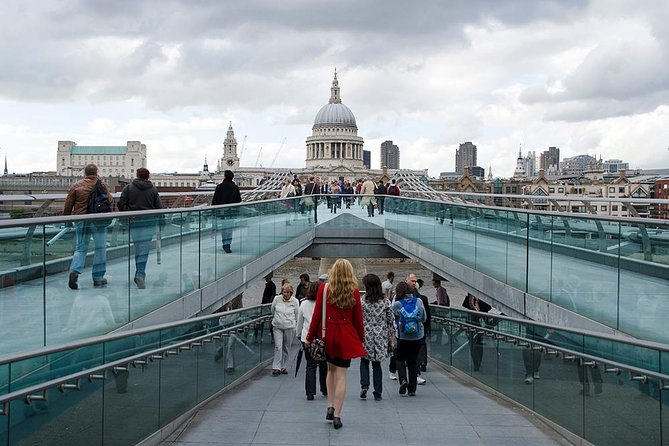
The Millennium Bridge links Tate Modern with the City of London and St. Paul’s Cathedral. Opened on June 10, 2000, the 325-meter footbridge is one of the route’s clearest chances to photograph London from an open urban viewpoint.
The bridge gives you lines, symmetry, distance, and strong connections between landmarks. St. Paul’s appears at one end, while the South Bank and Tate Modern draw you onward. Your guide can help you decide how to use the bridge’s structure, where to place the horizon, and how to include people without letting them take over the picture.
This is also a practical reminder to watch the light. A bright sky, shadowed walkway, or reflective metal surface can challenge a phone camera and a more advanced camera alike. You may receive basic advice about exposure or composition, but the information provided does not promise a specialist lesson in every camera system.
The bridge is a major photo opportunity, so it may feel less private than the earlier City streets. If your idea of the tour is a search for completely unknown corners, this section may feel too familiar. If you want strong London views with professional guidance, it is one of the best stops.
Tower Bridge and the Thames
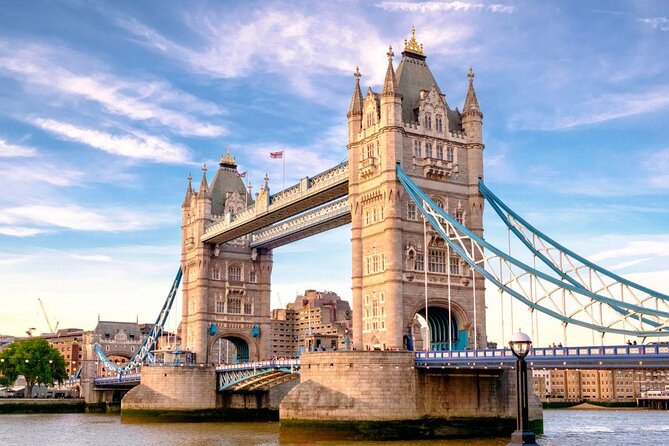
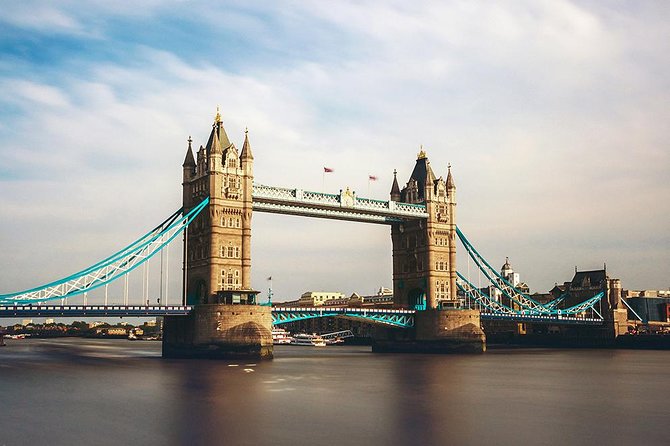
The Tower Bridge stop offers panoramic views of the Thames and the bridge itself. It is brief, around 10 minutes, so expect a quick opportunity rather than a visit inside the bridge or a detailed study of its engineering.
Even a short pause here can be valuable. River views allow you to work with open space, reflections, repeating bridge shapes, and the relationship between water, sky, and architecture. The scene also provides a useful contrast with the tight streets and enclosed church views earlier in the tour.
The wording of the route places the emphasis on photographing Tower Bridge, not on entering it. If you want the bridge exhibition or its glass walkways, you would need a separate plan. This experience keeps moving toward Tate Modern.
Ending at Tate Modern on the South Bank
The final stop is Tate Modern, housed in the former Bankside Power Station. The building was designed by Sir Giles Gilbert Scott, who also designed Battersea Power Station, and its huge brick form dominates this stretch of the South Bank.
For a photography tour, Tate Modern is a fitting finish. It gives you a strong architectural subject that looks different from the churches, civic buildings, and bridges earlier in the day. You can photograph its scale, brickwork, industrial character, and position beside the river.
The tour ends at Bankside, London SE1 9TG. That is useful if you want to continue along the South Bank, visit the gallery, or explore nearby river sights after the guided portion. The experience itself does not include admission to Tate Modern or any other paid attraction. The stops are listed as free admission points.
Is $71.63 a fair price?
At $71.63 per person, this is not the cheapest way to see the City of London. You are paying for a professional photographer, instruction, and a planned route through ten notable locations, not simply for a walk between landmarks.
The value depends on how much you want help with your camera. If you already know your settings and only want a guide to London’s major sights, a regular walking tour may cost less or cover more history. If you want practical advice and usually struggle to turn famous places into good photographs, the added instruction makes the price easier to justify.
The small maximum group of 18 is helpful, though it does not guarantee one-to-one coaching. A group with beginners, phone photographers, and experienced camera users may move at different speeds. The positive side is that the format has worked for mixed abilities, and the guide’s relaxed approach can make it easier to ask basic questions.
Bring your own camera or camera phone. The tour does not provide equipment. A phone is enough to take part, but anyone hoping to learn advanced camera controls will gain more from bringing a camera with settings they can adjust.
Who should book this experience?
I would recommend it to:
- First-time London visitors who want sightseeing with a creative task
- Local residents who know the main buildings but want fresh angles
- Beginners who want help moving beyond automatic settings
- Photographers who enjoy architecture, monuments, and city streets
- Solo visitors who prefer an organized walk with a small group
- Gift recipients looking for a practical activity rather than a passive tour
I would be more cautious if you want remote backstreets, rare subjects, or a quiet photographic expedition. One direct criticism of the route is that it stays with major tourist sights. That criticism is fair. The appeal is not total secrecy. It is learning to see well-known London places in a more deliberate way.
The two-hour length also suits a short city break. You get a concentrated route without giving up an entire day. Wear comfortable shoes, check the weather, and allow extra time before the start so you can find St. Mary Woolnoth.
The experience requires good weather. If poor weather forces cancellation, you are offered another date or a full refund. It can also be canceled if the minimum number is not reached, with the same general choice of another date, another experience, or a refund. Otherwise, the booking is non-refundable and cannot be changed.
Should you book the London photography tour?
Book it if you want camera guidance tied to real London subjects. The strongest parts are the helpful instruction, the mix of architecture and history, the chance to practice at St. Paul’s and Millennium Bridge, and the relaxed approach suited to mixed abilities.
Skip it if your priority is an offbeat route far from famous landmarks, or if you want a long, technical photography workshop. At $71.63, the tour makes the most sense when you value both the guided walk and the chance to improve your own photographs.
FAQ
Where does the History of London Photography Tour start?
It starts at IMPRINT Church London, St. Mary Woolnoth, 10 to 13 Lombard Street, London EC3V 9AN, UK.
Where does the tour end?
The tour ends at Tate Modern, Bankside, London SE1 9TG.
How long does the photography tour last?
The tour lasts approximately two hours.
What is included in the experience?
The price includes a guided photography tour led by a professional photographer, photo opportunities, photography advice, and historical information.
Do I need to bring a camera?
Yes. You need to bring a camera or camera phone to get the most from the experience.
What is the maximum group size?
The tour can have a maximum of 18 participants.
What happens if bad weather cancels the tour?
If poor weather causes cancellation, you are offered a different date or a full refund.
More History Tours around London
- London: Private Landmark Tour with Professional Photographer
★ 4.7 · 91 reviews - Private Landmark Photoshoot
★ 5.0 · 27 reviews - Iconic London Landmark Photography City Tour
★ 4.5 · 3 reviews - Private Tour: Historic London Photography Tour
★ 4.5 · 2 reviews
Just added around London
- Ultimate introduction to photography in Central London★ 5.0 · 19 reviews
- Street Photography Workshops in London★ 5.0 · 6 reviews
- Private Tour: Photography Walking Tour from Trafalgar Square to Covent Garden★ 5.0 · 5 reviews
- Shoreditch Street Art Private Photography Tour including Brick Lane★ 5.0 · 5 reviews
- South Bank Photography Tour – Small Group★ 5.0 · 2 reviews
- PRIVATE PHOTOSHOOT in London★ 5.0 · 6 reviews
- Professional Private Photoshoot in London★ 5.0 · 63 reviews
- Private Photoshoot in London★ 5.0 · 17 reviews
Photography Tours, compared.

Browse the lists this shoot appears in