
Review · PHOTOGRAPHY TOURS
New York City’s Iconic Sights: 3-Hour Photography Tour
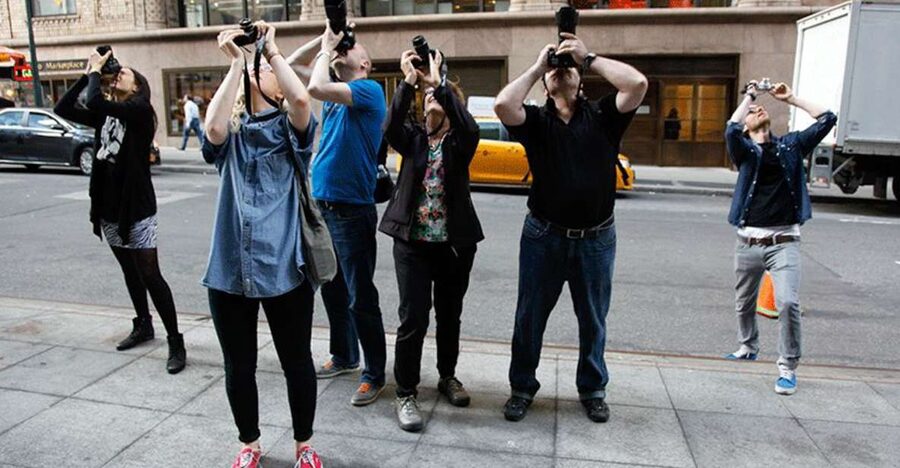
Manhattan makes a fine classroom. This three-hour photography walk turns famous sights into practical lessons, with stops at Rockefeller Center, Radio City Music Hall, the Empire State Building, and Central Park. I like the small groups, capped at eight, and the chance to learn from a working photographer rather than simply follow a guide holding a flag. The main drawback is the pace: you will walk, use the subway, and make several stops in a short time.
I also like that the tour welcomes every skill level. You can work on basic camera control, or focus on lines, angles, and stronger building shots if you already know your way around a camera. One named photographer, Zim, has been praised for friendly instruction and for explaining technical ideas clearly. Bring comfortable shoes, though, and do not assume the subway fare is covered without checking ahead.
Key points at a glance
- A compact Manhattan route: Photograph Rockefeller Center, Radio City Music Hall, the Empire State Building, and Central Park in three hours.
- Small groups of eight or fewer: You get a better chance to ask questions and set up shots without a crowd around you.
- Practical photography coaching: The focus is on lines, angles, building views, and making landmark photos more interesting.
- Subway travel is part of the experience: The route uses New York City public transit, so the tour moves beyond one sightseeing zone.
- Suitable for all skill levels: Beginners can learn camera basics while experienced photographers can refine composition.
- A strong value for serious photo takers: At $125, the price pays for personal instruction as well as sightseeing.
Why this three-hour photo walk feels different
New York offers no shortage of landmark tours. Most ask you to look, listen, and move on. This one asks you to stop and decide how you want the city to appear in your frame.
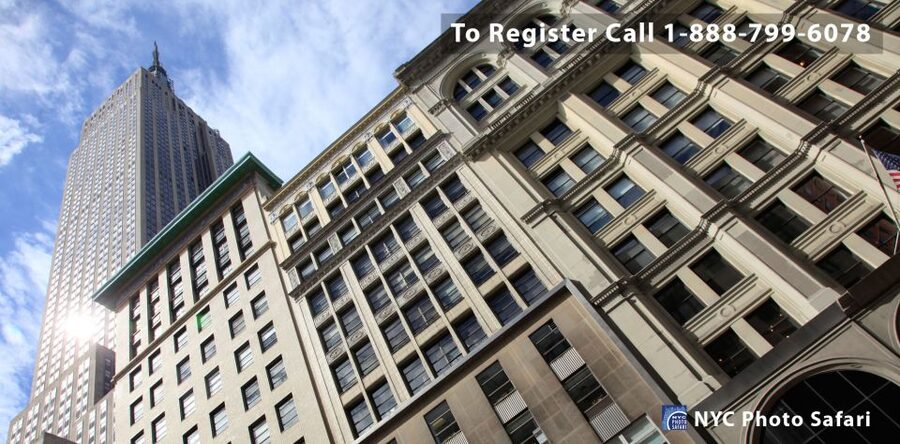
That small change matters. Rockefeller Center is not simply a famous plaza. It gives you strong lines, tall walls, open space, and changing angles. Radio City Music Hall offers another kind of architectural subject. The Empire State Building asks you to think about scale and distance. Central Park gives you a chance to photograph Manhattan from a different setting, including skyline views.
The guide’s job is to help you see those choices. You learn how to use lines and angles to bring buildings to life, rather than record them as flat souvenirs. You also get help with the practical problem every city photographer faces: how to make a familiar landmark look like your own picture.
The group limit of eight is important here. Photography instruction works best when the guide can see what you are doing, answer a question, and give a quick correction. A group of two has also taken part, allowing more time to set up shots in quieter spots and move faster through areas that did not offer much for the camera.
More Photography Tours in New York City
- New York Icon Photography Tour led by a Local Photographer
★ 5.0 · 155 reviews - Central Park Photography Tour with Local Photographer
★ 5.0 · 85 reviews - Iconic New York City Photography Tour
★ 5.0 · 61 reviews
Meeting at 34th and Madison
The experience begins at 34th and Madison. That location places you in a central part of Manhattan, close to the Empire State Building and within reach of the wider route.
You should arrive ready to walk and photograph from the start. This is not a coach tour with long periods of sitting. The tour moves through the city on foot and uses the subway between sections, so comfortable clothing and shoes are essential.
The meeting point also gives you a useful reminder about the tour’s style. You are not being driven from one photo stop to the next. You are learning to work with New York as it actually is, including changing viewpoints, street movement, and the practical limits of a busy urban route.
Photographing Rockefeller Center and Radio City Music Hall
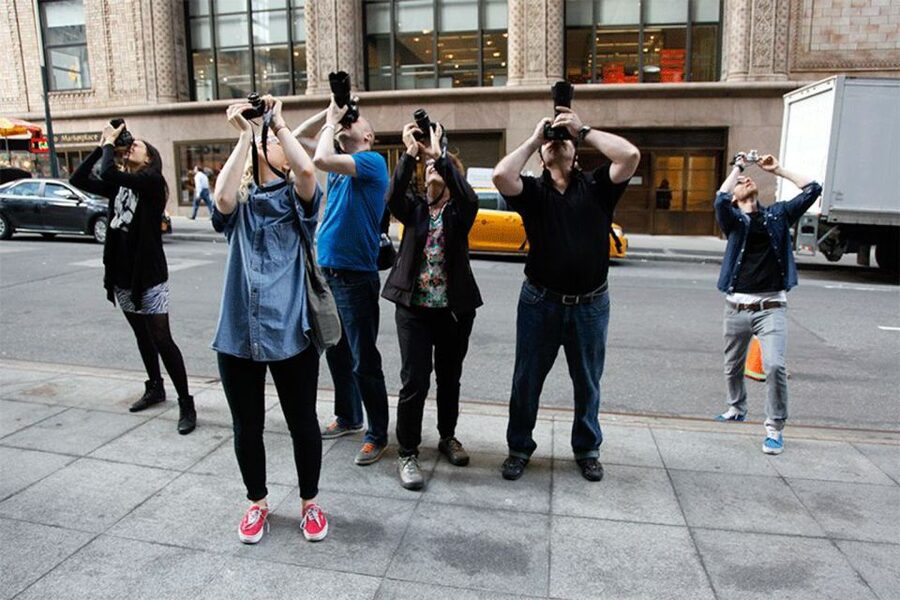
Rockefeller Center is one of the best places on the route to practise architectural composition. Its buildings, open areas, and strong geometry give the guide plenty to work with. You may be shown how to use vertical lines, frame a tall structure, or change your position so the building feels more dramatic.
This is where the tour’s focus on angles becomes useful. A quick snapshot from eye level can look ordinary. A lower or offset viewpoint can change the balance of the frame. The guide can help you notice those choices while you are standing in front of the subject.
Radio City Music Hall adds another landmark with a different visual character. Instead of treating it as a quick photo stop, the workshop encourages you to think about the shape and detail of the building. You may find that the most useful lesson is not a camera setting at all, but learning when to step back, shift sideways, or wait for a cleaner arrangement.
The route is fast-paced, so you should not expect unlimited time at each site. That is a fair trade for covering several parts of Manhattan in one session, but it means you need to listen closely and be ready to shoot when the guide gives you a useful position.
Working with the Empire State Building
The Empire State Building is a familiar subject, which makes it a good test of your skills. Almost everyone arrives with an idea of what an Empire State Building picture should look like. The guide helps you move beyond that first idea.
You can work on how much of the structure to include, where to place it in the frame, and how surrounding buildings affect the composition. The lesson about lines and angles has a clear purpose here. A skyscraper can dominate a picture, but the right perspective gives it shape and energy.
The tour is also useful if you are unsure how to photograph tall buildings. One participant specifically valued learning how to shoot buildings in a way they had not tried before. That is a practical benefit, especially if your usual city photos end up looking like postcards.
Do not expect a long architectural lecture. The emphasis is on taking pictures and getting direct help. You will likely gain more from trying several approaches than from hearing a long explanation of theory.
More Photography Tours in the USA
- Manhattan Architecture Photography Tour
★ 5.0 · 24 reviews - From Waikiki: Best of Oahu Photo Tour with Pickup
★ 4.9 · 274 reviews - The Ultimate LA and Hollywood Photo Tour
★ 5.0 · 233 reviews - Beautiful Colors of Hawaii Photo Tour
★ 5.0 · 165 reviews
Taking the subway between photo stops
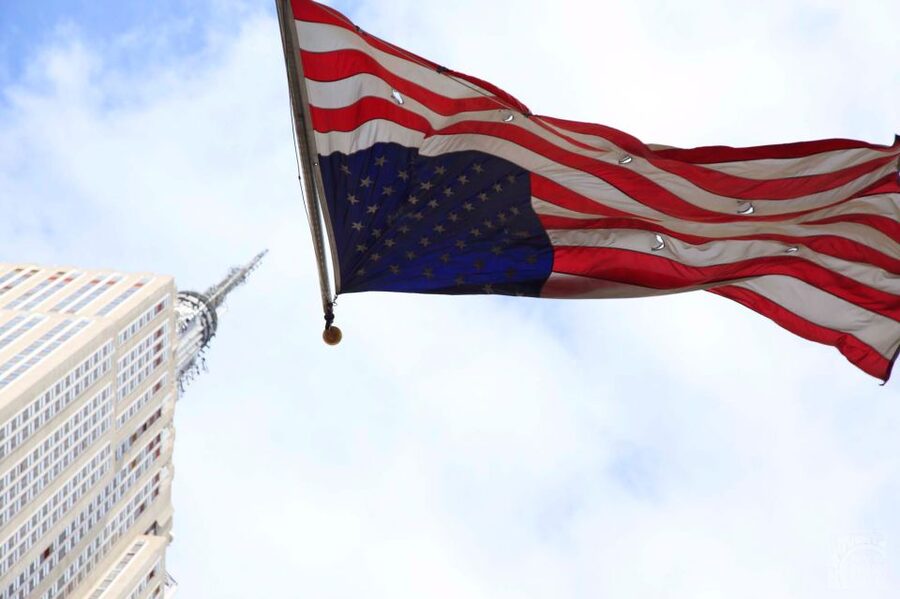
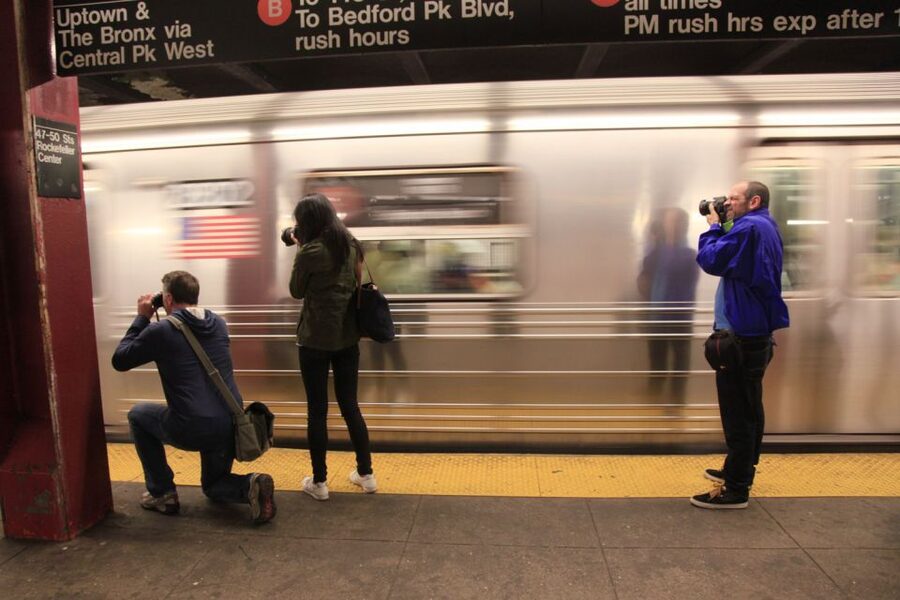
The subway is part of the route, not merely a way to save time. Moving by public transit lets the experience connect different Manhattan areas during a three-hour window.
You will need to be comfortable with a fast-moving city tour. The subway adds stairs, platforms, transfers, and the need to keep your equipment secure. It also means this activity is not suitable for wheelchair users, despite the general accessibility label attached to the booking information. The specific instructions make clear that the subway portion prevents wheelchair access.
There is also an important fare detail. The activity information says subway fare is included, but a participant reported needing to pay separately and advised having a MetroCard or credit card ready. Because those instructions conflict, I would budget for your own subway fare and confirm the current arrangement before departure. It is a small expense, but being prepared keeps you from losing time at the station.
Central Park and the Manhattan skyline
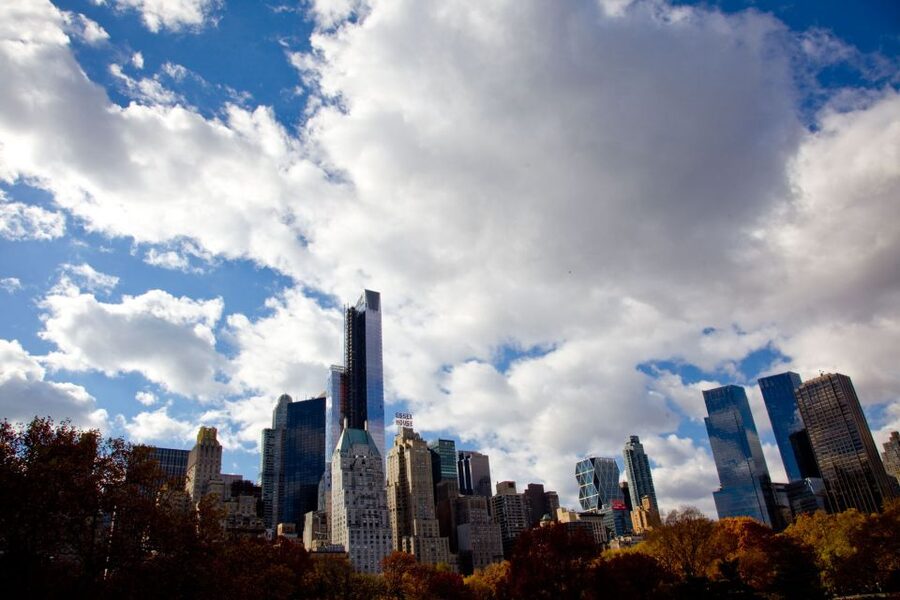
Central Park changes the visual rhythm of the tour. After photographing dense urban architecture, you get a chance to frame the Manhattan skyline from a more open setting.
The skyline stop is one of the most useful parts of the route because it teaches distance and layering. Instead of pointing straight up at one building, you can consider how the skyline sits against the park and how much foreground to include. The guide can help you decide where the image has its strongest balance.
This section may appeal most to people who want variety in their photographs. You are not limited to close building studies. You can work with a wider city view and think about how a landmark fits into its surroundings.
The weather can affect this stop. The tour has gone ahead in rainy conditions, and that may give you moody skies or reflections, but it also makes equipment protection and comfortable clothing more important. The experience does not promise perfect light, so pack for the forecast rather than for an ideal photo day.
What the photography coaching really offers
The instruction is built around observation and practice. You are encouraged to use lines and angles, choose better positions, and bring familiar places to life. That makes the tour useful even if you own a simple camera or rely on a phone with manual controls.
Beginners should not feel out of place. The workshop is suitable for all levels of photography experience, and the small group format gives you room to ask basic questions. You can learn how to approach a building, arrange a frame, and make a deliberate choice instead of pressing the shutter at random.
More experienced photographers may find the biggest value in feedback. A professional can point out an awkward line, a weak angle, or a better way to use the surrounding space. You may not leave with a new camera technique for every situation, but you should have more ways to assess a city scene.
The experience also has a social benefit without turning into a large group event. With no more than eight people, you can compare approaches and still receive individual attention. If the group is very small, such as two people, the guide may have even more time to help you set up a shot.
Zim, one of the photographers associated with the tour, has been described as friendly and clear when explaining her expertise. That combination matters. Technical advice is much easier to use when it is delivered in plain language and connected to the scene in front of you.
Is $125 a fair price?
At $125 per person, this is more expensive than a standard self-guided walk. You are paying for the professional photographer, the guided route, the instruction, and the convenience of connecting several major sights in three hours.
The price makes the most sense if you want to improve your photography while seeing Manhattan. If you only want quick pictures of the Empire State Building and Rockefeller Center, you can do that for free. If you want help creating better pictures and understanding why one angle works better than another, the fee has more value.
The small group limit strengthens the case for the price. Eight people is still enough for a group feel, but it is small enough for questions and corrections. A smaller group can offer even more direct attention, though group size may vary by departure.
Subway costs should be treated as a possible extra because the supplied information is inconsistent. Meals, camera rental, and other transportation are not included. You need to bring your own camera, as rental equipment is not provided.
Who should book this experience?
I would choose this tour if you want a structured introduction to photographing New York. It suits a first-time visitor who wants more than a standard sightseeing route, a beginner who needs practical guidance, or an experienced photographer looking for fresh ways to frame familiar buildings.
It also works well for anyone who learns by doing. You will not spend the whole session listening to a lecture. You will walk, stop, adjust, shoot, and move on.
You may want a different activity if you dislike brisk walking, public transit, or changing locations. The schedule is compact, and there is no promise of slow, leisurely time at every landmark. It is also not appropriate for wheelchair users because of the subway travel.
Bring a camera you already know how to operate, even if it is a phone. The tour is about composition as much as technical settings, so expensive equipment is not presented as a requirement. Dress for the weather, protect your camera if rain is expected, and keep your gear light enough to carry comfortably.
Booking flexibility and practical details
The tour lasts three hours and is conducted in English by a live guide. It allows free cancellation up to 24 hours before the start time, and you can reserve now and pay later, which helps if your New York schedule is still changing.
Gratuities are not included, so plan for that separate cost if the guide provides useful instruction and personal help. The experience provider is New York City Photo Safari.
The overall score is 5 out of 5 from 11 ratings, with especially strong praise for the instruction, the fun of the experience, and the quality of the photographs people were able to make. One participant expected only three to five good pictures and ended up with more. That is a useful way to judge the tour: success is not taking hundreds of images, but learning how to come away with a handful you truly like.
Should you book the New York photography tour?
Book it if you want to photograph Manhattan landmarks with guidance rather than simply collect snapshots. The combination of Rockefeller Center, Radio City Music Hall, the Empire State Building, Central Park, and a professional instructor gives you a focused way to see the city.
Skip it if you want a slow sightseeing walk, dislike the subway, or need full wheelchair access. Also confirm the subway fare before you go, since the information is not consistent.
For the right person, $125 is a fair price for a small-group workshop that doubles as a compact Manhattan introduction. You leave with new ways to frame the city, not just a list of places you passed.
FAQ
How long is the photography tour?
The tour lasts three hours.
Where does the tour meet?
The meeting point is at 34th and Madison in New York City.
Which landmarks are included?
The route includes Rockefeller Center, Radio City Music Hall, the Empire State Building, and sites in Central Park, including a chance to photograph the skyline.
Is the tour suitable for beginners?
Yes. The photography workshop is appropriate for all levels of photographic experience.
What language is the tour conducted in?
The live tour guide speaks English.
Is subway travel part of the tour?
Yes. The tour uses the New York City Subway between parts of the route.
Is subway fare included?
The activity information says subway fare is included, but one participant reported paying separately. Bring a MetroCard or a credit card and confirm the current arrangement before the tour.
Is the tour wheelchair accessible?
No. The specific instructions state that it is not wheelchair accessible because the route uses the subway.
What is included in the $125 price?
The price includes a professional photographer as your instructor and guide. Camera rental, meals, and other transportation are not included, and gratuities are separate.
More Three-Hour Trips around New York City
- 3 Hour Sunrise Photo Tour with Malasada
★ 5.0 · 81 reviews - Aurora Photography Tour 3 HOURS
★ 5.0 · 74 reviews - 3 Hours Private Original Venice Photo Walk
★ 5.0 · 57 reviews - From Kanab: 3-Hour Peek-a-Boo Slot Canyon Hiking/Photo Tour
★ 4.9 · 25 reviews
Just added around New York City
- Private Professional Vacation Photoshoot in New York City★ 5.0 · 2 reviews
- NYC: Surprise Proposal Photoshoot – Capture the Yes Forever★ 5.0 · 13 reviews
- New York: Photoshoot in NYC Central Park 5th Ave★ 5.0 · 16 reviews
- New York: Photoshoot in NYC DUMBO BROOKLYN BRIDGE★ 4.8 · 8 reviews
- New York: Professional Photoshoot at Brooklyn Bridge★ 4.8 · 46 reviews
- New York: Times Square Professional Photoshoot★ 4.9 · 20 reviews
- New York City: professional photoshoot Dumbo or Central Park★ 5.0 · 6 reviews
- New York City or Brooklyn: Photoshoot in Iconic Locations★ 4.0 · 4 reviews
Photography Tours, compared.


Browse the lists this shoot appears in