
Review · PHOTOGRAPHY TOURS
Photography Walking Tour in Birmingham
Photography can change how you see Birmingham. This 90-minute walk turns familiar city sights into photo lessons, with practical help on angles, framing, symmetry, reflections, and editing. I like the way the tour uses a phone rather than demanding expensive equipment, and I like the mix of grand civic buildings, modern architecture, and canal views. The small group, capped at 15, should also make it easier to ask questions.
The price is just $6.84 per person, which is excellent value if you want a short introduction to both Birmingham and phone photography. You should know, though, that this is a walking lesson rather than a full historical tour, and the experience depends on good weather. A cancellation caused by poor weather or too few bookings can mean changing plans.
What makes this Birmingham photo walk worth your time
- Practical phone-camera tuition: You learn how to use grid lines, angles, focus, depth, foreground, background, and editing settings.
- Seven central Birmingham stops: The route links Victoria Square, Chamberlain Square, the Library of Birmingham, the ICC, Brindley Place, Ikon Gallery, and The Cube.
- A useful mix of subjects: You photograph civic buildings, modern architecture, street scenes, canals, reflections, and architectural details.
- Friendly personal guidance: Guides such as Paul and Sancha have helped people feel at ease while trying unfamiliar camera settings.
- A compact 90-minute route: You get a good city-centre introduction without giving up half a day.
- No camera purchase required: You use your own phone, while a professional camera is not included.
Starting in Victoria Square with the right angle
The meeting point is outside Birmingham Museum & Art Gallery in Chamberlain Square, with the tour beginning at 11:00 am. From there, the opening stop is Victoria Square, one of the city’s best-known public spaces.
This is a sensible place to begin. You have major civic buildings, statues, and broad open views that give a new photographer several subjects at once. Your guide introduces the group and shows you how to look for stronger angles rather than simply pointing your phone and tapping the shutter.
You may also hear historical details about the Victoria statue, the council building, and Birmingham’s Town Hall. That history matters because it gives your photographs some context. Instead of taking a random building shot, you start to notice how a structure relates to the square around it.
The stop lasts about 10 minutes. That is long enough for a few useful demonstrations, but not long enough for a full lesson in composition. If you already know the basics of phone photography, you may find this opening section quite simple. For beginners, it is a clear start.
More Photography Tours in the UK
- Private Tour: Night Photography Tour in London
★ 5.0 · 48 reviews - Private Night Photography Tour in London
★ 5.0 · 29 reviews - Photography Tour walking the back streets of London’s West End (3 hours)
★ 5.0 · 24 reviews
Chamberlain Square and the art of framing buildings
At Chamberlain Square, the emphasis shifts to framing. You learn how to place a building within the phone screen and decide what belongs in the picture.
This sounds basic, but framing is one of the quickest ways to improve an ordinary city photograph. A building can look flat when photographed straight on. A slight change in position can bring a foreground object into the image, create a stronger edge, or make the structure feel taller.
The tour is especially useful for people who usually take quick snapshots. You are encouraged to slow down, check the edges of the screen, and think about the balance between the subject and the surrounding space.
This stop also connects naturally with the nearby museum and civic centre. You are not sent to an isolated photography spot. You are learning in the middle of Birmingham, where pedestrians, signs, stonework, and modern features can all affect the final image.
The Library of Birmingham and layered composition
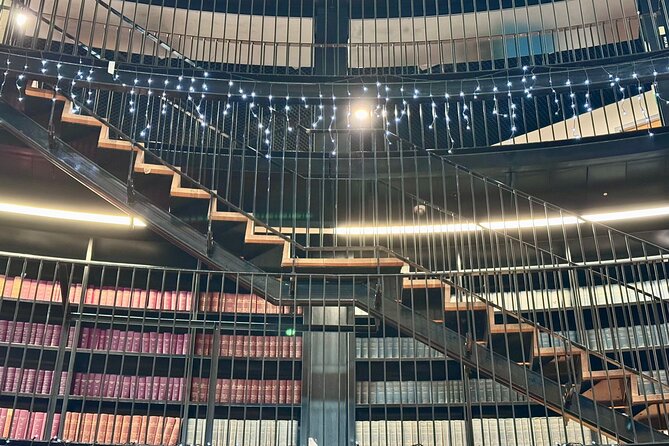
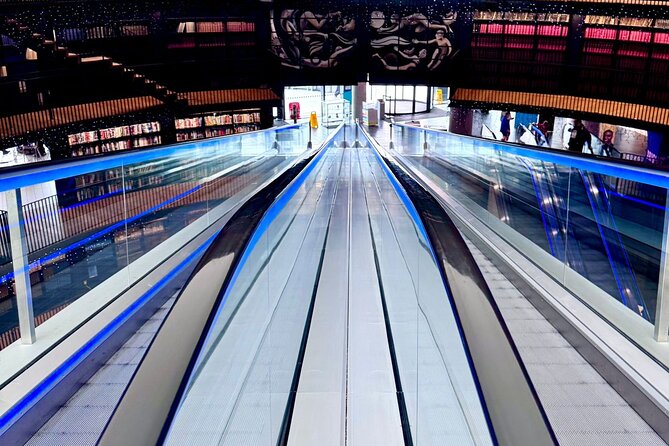
The Library of Birmingham provides a more detailed lesson in foreground and background. The building’s bold exterior gives you plenty to work with, and the guide helps you decide how much of the structure should fill the frame.
Foreground and background are easy terms to hear and forget. Seeing them applied to a large building makes the idea more useful. You might place part of a railing, pavement, or nearby architectural detail in front of the library, then use the building as the larger subject behind it.
The guide may also point out unusual viewpoints, including the library roof terrace. The exact route can vary, so you should not assume every extra location is guaranteed. Still, the city-centre setting gives you several chances to photograph the library from different heights and directions.
This is one of the better stops for learning that a good image does not always show the whole building. Cropping, partial views, and layered shapes can often create a more interesting result than a standard front-facing picture.
Street photography around the ICC
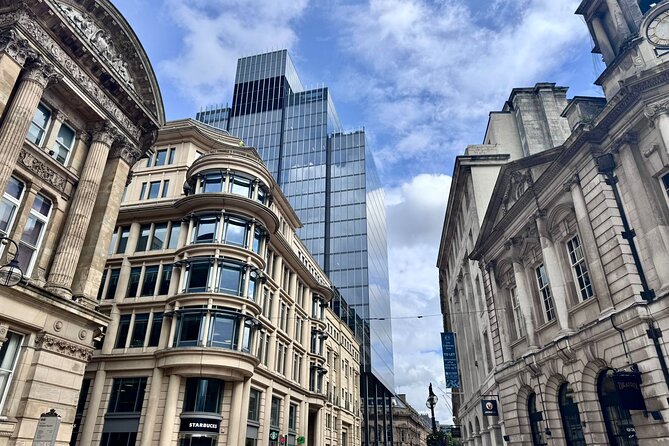
The International Convention Centre Birmingham is the setting for street photography, focus, and depth. Here, the subject is not only the building. It is also the relationship between architecture, people, movement, and open public space.
Street photography can make beginners nervous. You may wonder if you are pointing the phone at people in an awkward way or worry that your images will look messy. A guide can help you look for shapes, lines, contrasts, and moments rather than simply chasing a perfect landmark shot.
The focus lesson is also practical. Phones often choose their own focus point, but tapping the screen can change what looks sharp. You may also learn how depth affects a photograph, with some elements appearing close and others fading into the distance.
About 15 minutes is allocated here. That gives you time to try several images, though it will not turn you into a street photographer in one morning. The value comes from learning a method you can repeat later in Birmingham or at home.
Same place, a different kind of shoot:
- Guided 60-Minute Photography and sightseeing Tour in Edinburgh
★ 5.0 · 193 reviews - London: Private Photoshoot with Video Clip Option
★ 4.8 · 182 reviews - Professional Photoshoot in London Photographer
★ 5.0 · 102 reviews - Private landmarks photoshoot for families and couples
★ 5.0 · 92 reviews
Brindley Place and canal symmetry
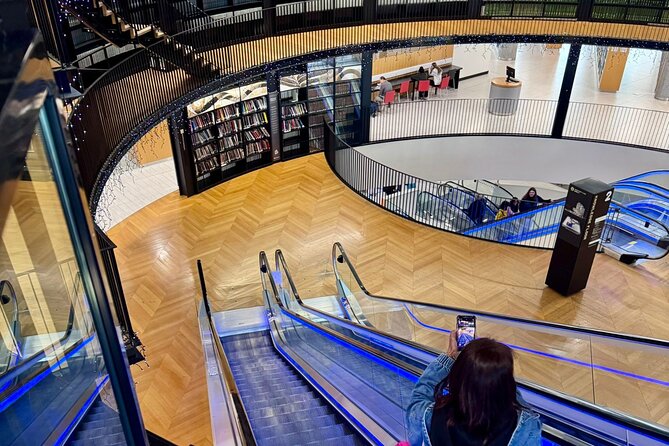
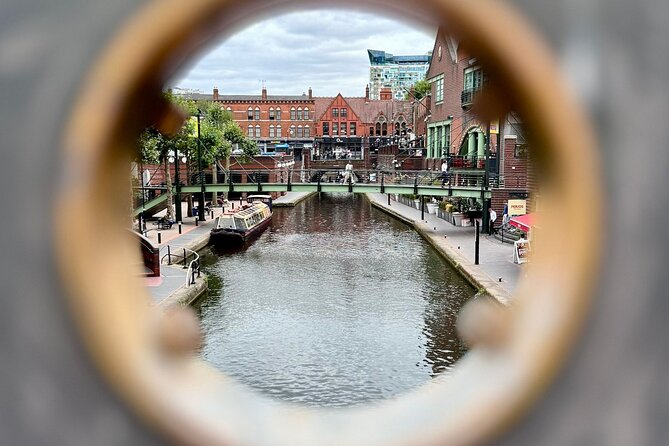
Brindley Place brings a change of mood and subject. The canals offer long lines, repeating shapes, and reflections, making this a strong location for learning symmetry and leading lines.
Leading lines guide the eye through an image. A canal edge, railing, bridge, or row of buildings can draw attention toward a chosen point. The guide shows you how to use those lines rather than letting them sit randomly in the frame.
Symmetry works well around water, especially when buildings or bridges reflect on the surface. Reflections may change with the light and movement on the canal, so you get a useful lesson in waiting for the right moment. You may also discover that a slightly off-centre composition gives a more natural result than trying to make everything perfectly equal.
This part of the walk adds welcome variety. After civic squares and large buildings, the canal offers quieter views and more control over the composition. It is also a good place to try scenic photographs that do not look like standard postcard images.
Ikon Gallery and reflections with your phone
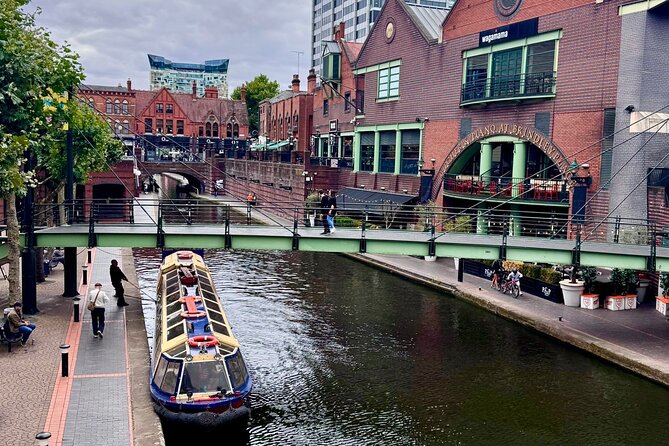
At Ikon Gallery, the focus turns to reflection shots. The guide explains how to use the back of your phone to find and capture reflections.
This is a clever lesson because it asks you to notice surfaces that you might normally ignore. Glass, polished materials, water, and smooth architectural details can all create distorted or partial images. Reflection photography can also help you make an abstract picture from an ordinary building.
The tour may introduce ideas for black-and-white images here or in nearby locations. Abstract architectural shots often work well without color because the eye pays more attention to shape, texture, light, and shadow.
The stop lasts about 10 minutes, so you will probably try a handful of angles rather than spend a long time perfecting one image. That suits the format. You are collecting techniques to use later, not producing a finished photography portfolio during the walk.
The Cube and the final architectural challenge
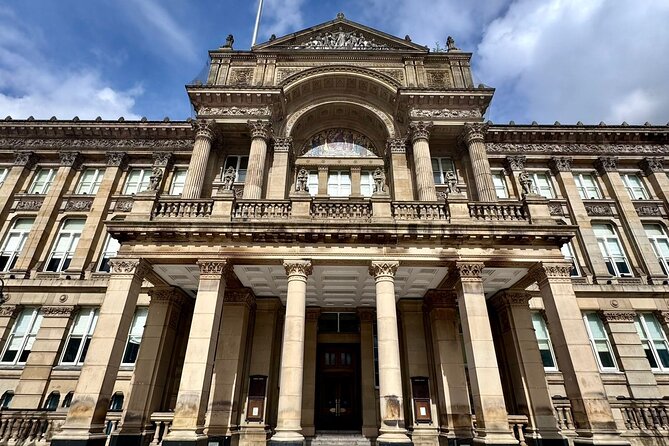
The Cube is the last listed stop. Its distinctive shape makes it a natural subject for a lesson in finding the best angle.
Large modern buildings can look dull when photographed from eye level. The guide helps you look for a viewpoint that gives The Cube more shape and presence. You may try moving to one side, changing the height of the phone, or using nearby lines to lead toward the building.
This final exercise brings together several ideas from earlier in the walk. You are thinking about framing, perspective, symmetry, and the relationship between foreground and subject. It also gives you a memorable final image from the route.
The tour ends at 196 Wharfside Street, near the canal and Brindley Place area. That is useful if you plan to continue exploring the city centre on foot, though you should remember that the start and finish are different locations.
What the guides add to the experience
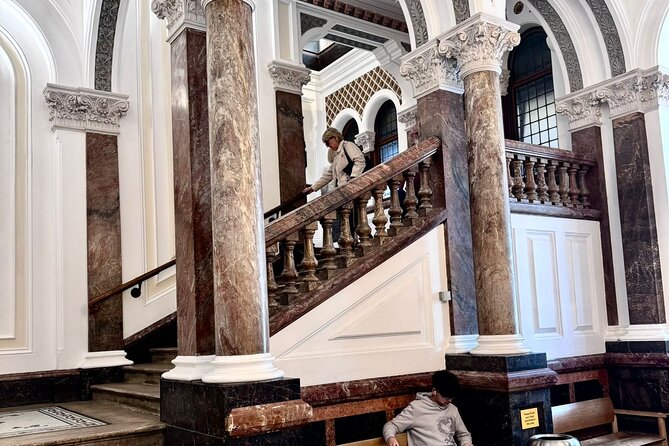
The guide is central to the value here. You are not simply walking between Birmingham landmarks and taking pictures on your own. The guide demonstrates camera functions, suggests angles, and shares stories about the buildings.
Paul has been praised for explaining iPhone editing tools in a clear, friendly way. Useful tips include turning on the camera grid for more accurate central compositions and learning what contrast, highlights, and shadows do in the editing controls.
Those settings can sound technical, but they are practical once you see them used. Contrast affects the difference between light and dark areas. Highlights control the brightest parts of an image, while shadows affect darker sections. Even a small adjustment can make a phone photograph look less flat.
Sancha has also led the walk, helping people feel comfortable experimenting with new angles. That relaxed tone matters. Photography lessons can become stiff if the guide makes you feel that every picture must be perfect. Here, the emphasis appears to be on trying, checking, and trying again.
The guide may also add extra places or stories beyond the seven main stops. Colmore Row, Pigeon Park, the Black Sabbath Bridge, and a restaurant with a camera feed viewed by QR code have all featured during city walks. These additions should be treated as possible extras rather than fixed promises, since the route and guide may vary.
How much Birmingham history will you get?
You will hear historical facts and local stories, but this is not designed as a detailed city-history tour. The information supports the photography lesson.
That balance works well for a first visit. You get enough background to understand why a building or square matters, then move on to photographing it. If you want long talks about Birmingham’s industrial development, political history, or cultural life, you should choose a dedicated history walk instead.
I like the way the tour connects old and new Birmingham. Civic buildings and statues appear alongside the Library of Birmingham, convention centre, canals, galleries, and The Cube. That gives you a broad visual introduction to the city centre in a short time.
People who already know Birmingham may also find something useful here. One person who had been born in the city used the walk to see recent changes and discover new ways to photograph familiar streets. That is a good sign for local residents who want a fresh project rather than a standard sightseeing tour.
Price, group size, and practical value
At $6.84 per person, this is unusually inexpensive for a guided city activity. The price is easy to justify if you want friendly instruction, a short orientation to central Birmingham, and a set of techniques you can use after the tour.
The value is strongest for beginners. You are paying less for formal photography training and more for a lively introduction, personal suggestions, and a chance to practise in real locations. The guide is included, but a professional camera is not, so bring your own phone or camera equipment.
The group can have up to 15 people. That is still small enough for a guide to check on participants, though personal attention will vary depending on the group and how many people need help. If you want a private lesson with constant one-to-one feedback, this is not the right format.
The tour lasts about 90 minutes, with stops ranging from 10 to 15 minutes. Wear comfortable shoes and keep your phone charged. You will be walking through the city centre and stopping often, so a portable battery could be useful, though one is not listed as included.
The experience is offered in English and uses a mobile ticket. It is near public transport, service animals are allowed, and most people can take part. Free cancellation is available up to 24 hours before the start time. Changes or cancellations made inside that period are not accepted for a refund.
Good weather is required. If the tour is cancelled because of poor weather or because the minimum number of bookings is not met, you are offered another date, another experience, or a full refund. It is sensible to check your email before setting out, particularly if you are visiting Birmingham for only one day.
Who will enjoy this walk most?
I would recommend it to:
- First-time Birmingham visitors who want a quick city-centre introduction.
- People who take photos on an iPhone or other phone but use only the basic settings.
- Couples, friends, and families looking for a low-cost activity.
- Local residents who want to photograph familiar places differently.
- Beginners who prefer hands-on advice to a formal classroom lesson.
- Social media users looking for stronger architectural and street images.
It may be less suitable if you want a long historical tour, a private photography session, or a route covering Digbeth and the Jewellery Quarter. The 90-minute format is focused on central Birmingham, so it cannot cover every interesting district.
Should you book the Birmingham Photography Walking Tour?
Yes, if you want a cheap, friendly way to see central Birmingham and improve your phone photographs. The strongest reasons to book are the practical guidance, the range of photo subjects, and the chance to learn from guides such as Paul and Sancha in a relaxed setting.
I would not book it as your only Birmingham history experience. I would also keep your expectations realistic: you will learn useful tools and composition ideas, but you will not receive professional-camera training or a full photography course.
For $6.84, the risk is low. Bring a charged phone, come ready to experiment, and treat the walk as both a city introduction and a lesson in seeing ordinary streets more carefully. That is where this experience offers its best value.
FAQ
How long does the photography walking tour last?
The tour lasts approximately 1 hour and 30 minutes.
Where does the tour start?
It starts at Birmingham Museum & Art Gallery, Chamberlain Square, Birmingham B3 3DH, UK.
What time does the tour begin?
The listed start time is 11:00 am.
Where does the tour finish?
The tour ends at 196 Wharfside Street, Birmingham B1 1RN, UK.
What photography equipment do I need?
A professional camera is not included. You should bring your own phone or camera if you want to take photographs during the walk.
Is the tour suitable for beginners?
Yes. The tour teaches basic techniques such as framing, angles, symmetry, reflections, focus, depth, foreground, background, and phone editing.
What happens if the weather is poor?
The experience requires good weather. If it is cancelled because of poor weather, you are offered a different date or a full refund.
Just added around the UK
- Ultimate introduction to photography in Central London★ 5.0 · 19 reviews
- Street Photography Workshops in London★ 5.0 · 6 reviews
- Private Tour: Photography Walking Tour from Trafalgar Square to Covent Garden★ 5.0 · 5 reviews
- Shoreditch Street Art Private Photography Tour including Brick Lane★ 5.0 · 5 reviews
- South Bank Photography Tour – Small Group★ 5.0 · 2 reviews
- PRIVATE PHOTOSHOOT in London★ 5.0 · 6 reviews
- Professional Private Photoshoot in London★ 5.0 · 63 reviews
- Private Photoshoot in London★ 5.0 · 17 reviews
Photography Tours, compared.



Browse the lists this shoot appears in