
Review · STREET PHOTOGRAPHY TOURS
Hanoi street photography workshop with Fujifilm Global Ambassador
Hanoi reveals itself one frame at a time. This six-hour workshop pairs a walk through Hoan Kiem and the Old Quarter with practical coaching from Chu Viet Ha, a leading Vietnamese street photographer and Fujifilm Global Ambassador. I like the small group size, limited to six people, and the chance to photograph ordinary Hanoi life rather than simply look at monuments. I also like that the session ends with a café workshop, where you can discuss your pictures instead of rushing off after the walk.
The main drawback is the $398 price, which is high for a half-day activity in Hanoi. You are paying for personal instruction from a specialist, not transportation or a full-day sightseeing tour. The value will be strongest if you already use a camera, want direct feedback, or hope to improve your eye for street photography.
Key points to know before booking
- Early start at 7:00 am: You begin around Hoan Kiem Lake while local residents practice Tai Chi and exercise.
- Small group of six or fewer: The size gives Chu Viet Ha room to offer individual advice on composition, light, angles, and timing.
- A real Old Quarter route: The walk includes Dinh Liet, Ta Hien, Ham Buom, O Quan Truong Gate, Dong Xuan Market, Hang Dong, and Hang Thiec.
- Photography rather than sightseeing: The focus is on how to depict Hanoi’s spirit, not on checking off major attractions.
- Café workshop included: The final session runs from 10:45 am to 12:30 pm and includes coffee or tea.
- Weather matters: The experience requires good weather, with a new date or full refund offered if poor conditions force cancellation.
Why this workshop is different from a standard Hanoi walk
Many Hanoi walks show you where to go. This one is about how to look. Chu Viet Ha guides you through familiar city scenes and explains why one angle works better than another, how changing light affects a picture, and when to wait for the right moment.
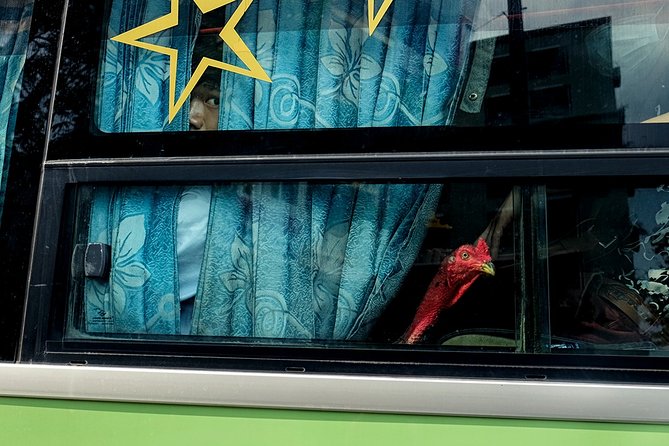
That difference matters. Street photography is not only about finding an unusual subject. Hanoi supplies plenty of activity, but a good image still depends on timing, framing, and restraint. A person crossing a lane, a shopkeeper preparing for the day, or a group exercising beside the lake can all make a strong photograph if you position yourself well.
The small group is a major advantage here. With no more than six people, you should have a reasonable chance to ask questions and receive comments on your work. A larger group would make this sort of teaching less useful, especially when the instruction depends on small choices of angle and distance.
You should also know what this is not. It is not an air-conditioned city tour, and no vehicle is provided. You walk for several hours through central Hanoi, so sensible shoes and a willingness to keep moving are important. The focus is photography, not a long historical lecture or a checklist of famous buildings.
More Photography Workshops and Lessons in Hanoi:
- Paris Photography Masterclass – Private Photography Lesson
★ 5.0 · 112 reviews - 2-Hour Photography Class While Touring Downtown Santa Fe, Smart Phones Welcome!
★ 5.0 · 108 reviews - Unique Rome by Night, Photo Tour and Workshop Under the Stars
★ 5.0 · 96 reviews
Hoan Kiem Lake at 7:00 am
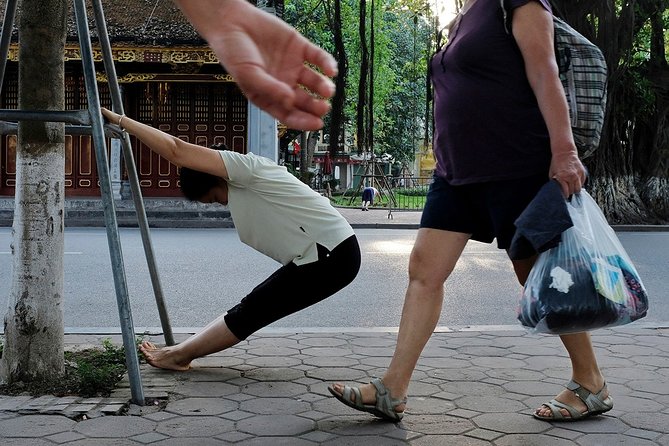
The workshop begins at 3b P. Lê Thái Tổ, near Hoan Kiem Lake, at 7:00 am. That early hour shapes the whole experience. Hanoi is already active, but the day is still beginning, giving you a chance to photograph residents doing Tai Chi and exercising around the water.
This is a useful first lesson in street photography because the scenes are ordinary and unposed. You are not being led to a staged performance. Instead, you watch for movement, gestures, spacing, and the relationship between people and the open area around the lake.
Chu Viet Ha also uses this opening walk to talk about Hanoi and explain how to capture the right moment. I like the order of the morning: first you watch, then you start taking pictures, and only after that do you move into tighter streets where the pace becomes more demanding.
The early start does require commitment. If you prefer slow mornings or have been out late in Hanoi, 7:00 am may feel abrupt. Yet the timing is part of the value. You are seeing a different side of the city than you would during a midday visit, and the morning activity gives you clear subjects to practice on right away.
From Dinh Liet to Dong Xuan Market
From Hoan Kiem, the route moves into the Old Quarter along streets such as Dinh Liet, Ta Hien, and Ham Buom. These lanes give you a different kind of photographic challenge. The space is tighter, the background can be more complicated, and people, signs, shop fronts, and traffic may all compete for attention in one frame.
This is where instruction about composition and angle becomes practical. You may need to decide whether to include the whole setting or isolate one detail. You may find that taking a few steps to one side changes the background completely. Ha’s role is to help you notice those choices instead of pressing the shutter at the first interesting thing you see.
The route then passes through O Quan Truong Gate and continues toward Dong Xuan Market. The gate provides a clear visual transition between sections of the Old Quarter, while the market area offers more subjects and changing layers of activity.
The attraction here is variety. You are not confined to one type of scene, and you can practice responding to different light, movement, and distances. The limitation is that the walk is active and the schedule is fairly tight. From 8:15 to 9:45 am, you cover several areas, so this is not designed for lingering over every shop or taking a long break.
If you want a gentle introduction to Hanoi’s streets, the pace may feel brisk. If you want to make photographs and receive guidance in real conditions, the movement is useful. You keep encountering new situations instead of repeating the same exercise in one quiet spot.
The Old Quarter’s Hang streets from 9:45 am
Hanoi’s Old Quarter is known for streets whose names begin with Hang, meaning merchandise, followed by the name of the goods once sold there. That naming system gives the walk a strong sense of place without turning it into a formal museum visit.
Some streets still trade in the goods associated with their names. The route includes Hang Dong and Hang Thiec, where you can look for details connected to the old craft and commercial life of the quarter. These streets are valuable for photography because they offer more than general street scenes. You may find signs, tools, materials, shop displays, and working spaces that help explain what makes one lane different from the next.
Chu Viet Ha’s guidance is especially useful here because a street can look visually crowded at first. He can help you find a clean frame inside the clutter, choose a better angle, or wait until a person gives the picture a sense of scale and purpose.
This part runs from 9:45 to 10:45 am. It is a good point in the morning to apply the ideas introduced beside the lake and on the earlier streets. You are no longer only looking for something interesting. You are making decisions about light, balance, timing, and the story a picture suggests.
More Street Photography Tours in Hanoi:
- Hanoi Street Photography with a Pro – Phone & Camera
★ 5.0 · 27 reviews - Hanoi Street Photography in a Vintage Community
★ 5.0 · 6 reviews - Cultural Hanoi Photo Walk – A Street Photography Tour
★ 5.0 · 6 reviews - Tokyo Cyberpunk Street Photo Tour
★ 5.0 · 165 reviews
A café workshop from 10:45 am to 12:30 pm
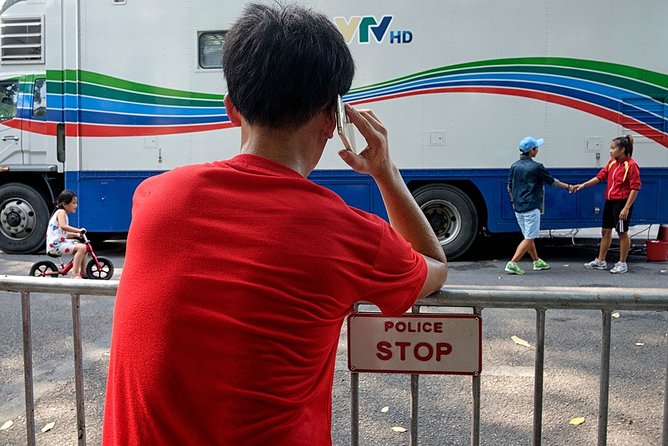
The final section takes place in a café and lasts about an hour and 45 minutes. Coffee or tea is included, which is a small but welcome touch after the walking portion.
The café session is one of the strongest features because it gives the workshop a proper ending. You have time to review your pictures, ask follow-up questions, and consider what worked or failed. Direct feedback is particularly useful in street photography, where it can be difficult to understand why one frame feels stronger than another.
One participant, Susan, came as a lifestyle family photographer from the United States and wanted help with street photography, a style she found difficult. Her experience points to an important benefit of this format: the class is not only for beginners. Someone with experience in another type of photography can still use focused instruction to improve timing and observation in public spaces.
You should not expect a formal classroom with a long technical presentation. The workshop is built around the morning walk, then uses the café to discuss the work made during that walk. If you want to spend the full six hours on camera settings alone, this may not be the right fit. If you want to connect settings with real scenes, the structure makes sense.
What Chu Viet Ha teaches in the streets
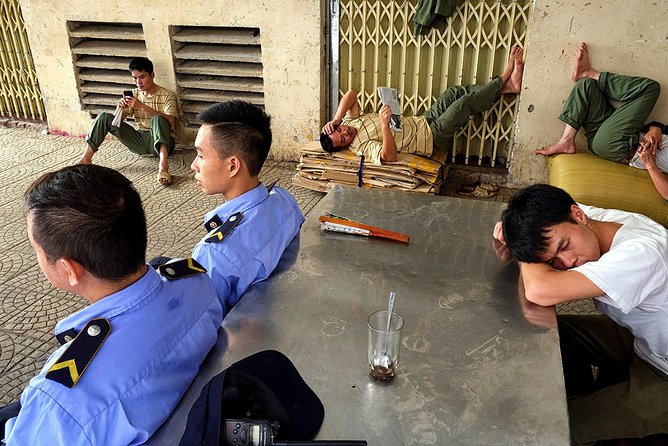
The instruction covers the building blocks that make street photographs work:
- Composition: How people, buildings, signs, and open space fit within the frame.
- Light: Where light falls and how it changes the mood or clarity of a scene.
- The right angle: How your position can simplify a busy background or create stronger layers.
- Timing: When to wait for movement, a gesture, or a person to enter the frame.
- Hanoi’s spirit: How to make an image feel connected to the city rather than merely show a random street.
These are broad skills, but the setting makes them concrete. A street photographer cannot control the subject, the weather, or the exact moment. You learn to adjust your position and attention instead.
The session is led by Chu Viet Ha, described as one of Vietnam’s best street photographers and a Fujifilm Global Ambassador. That background is a meaningful reason for the price. You are not simply paying for someone to guide you between places. You are paying for access to a working photographer’s way of seeing.
Still, a famous instructor does not guarantee that every participant will receive the same amount of attention. The group limit of six helps, but your result will also depend on how actively you ask questions and show your work. Bring specific problems you want to solve, such as weak composition, missed moments, or uncertainty about photographing people.
Is $398 a fair price?
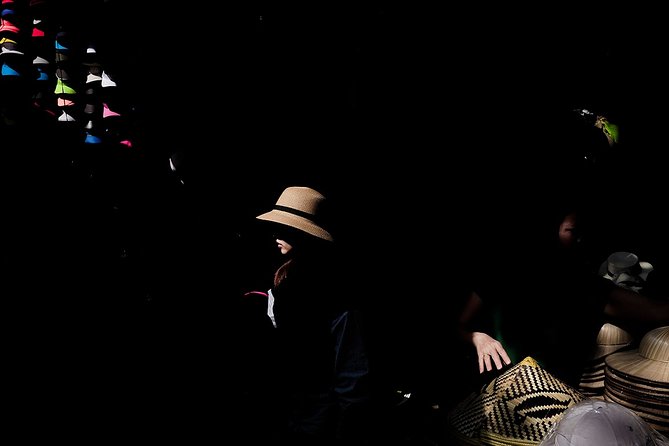
At $398 per person, this is an expensive Hanoi activity. It does not include an air-conditioned vehicle, a meal, or a full day of sightseeing. Only coffee or tea is listed as included.
The price makes more sense when you consider the format: about six hours, a maximum of six participants, direct access to a specialist photographer, a carefully chosen walking route, and a café review session. A private or very small photography lesson can cost more in many cities, so the cost is not out of line for a specialist workshop. It is simply not aimed at the casual visitor who wants a cheap morning walk.
I would consider it good value if you already own a camera and care about improving your photographs. It may also suit a serious phone photographer, although the information provided does not specify camera requirements. If you mainly want to see Hanoi’s sights, you can spend far less on a regular walking tour and use the savings for food or another activity.
Group discounts may improve the calculation if you are booking with companions. The experience is capped at six people, so ask about the available group rate before booking if you are traveling with friends or family.
Practical matters before you go
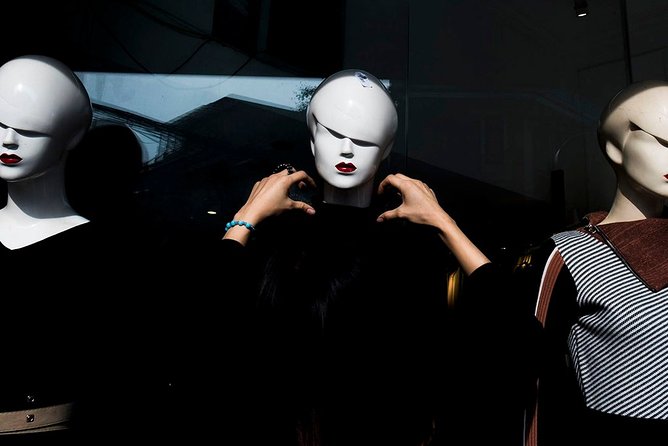
You meet at 3b P. Lê Thái Tổ in the Hang Trong area of Hoan Kiem District. The activity ends back at the same meeting point, so you do not need to arrange a separate return transfer.
The route is near public transportation, but the workshop itself is on foot. A moderate level of physical fitness is recommended. You should be comfortable walking for the morning, standing while composing pictures, and moving through city streets without an air-conditioned vehicle.
The 7:00 am start is fixed, so plan your morning carefully. Arriving late could mean missing the Hoan Kiem section, which is one of the most distinctive parts of the workshop.
The booking confirmation is issued at the time of booking. Cancellation is free up to 24 hours before the start time. Cancellations or changes made within 24 hours are not accepted for a refund. Since the activity requires good weather, poor conditions may lead to a new date or a full refund. If the minimum number of participants is not reached, you are offered another date or experience, or a full refund.
Who will get the most from this morning
I would recommend this workshop to:
- Photographers who want practical coaching rather than general sightseeing.
- Visitors who enjoy candid city scenes and want help with timing and composition.
- People who value a small group and direct access to an experienced instructor.
- Family, lifestyle, or portrait photographers hoping to build confidence in street work.
- Visitors who can handle an early start and several hours of walking.
I would hesitate to recommend it to someone who has no interest in photography, wants a relaxed schedule, or expects transportation between stops. The $398 cost is hard to defend if the camera is only an afterthought.
The workshop also suits repeat visitors to Hanoi especially well. If you have already seen Hoan Kiem Lake and the Old Quarter, this gives you a new purpose for returning to familiar streets. You stop looking only for landmarks and begin noticing gestures, patterns, light, and small details.
Should you book the Chu Viet Ha workshop?
Book it if photography is one of the main reasons you want to experience Hanoi. The combination of an early morning around Hoan Kiem Lake, the Old Quarter’s named trade streets, Dong Xuan Market, and a final café critique gives you a useful six-hour progression. You start with open space, move into crowded lanes, then finish by examining what you made.
The strongest reasons to choose it are Chu Viet Ha’s specialist instruction, the group limit of six, and the chance to photograph real daily life. The main reasons to skip it are the high cost, the walking, and the fact that transport and a meal are not included.
For a dedicated photographer, this is a focused and personal way to see Hanoi. For everyone else, a less expensive city walk will likely offer better value.
FAQ
How much does the Hanoi street photography workshop cost?
The price is $398 per person. Group discounts are available.
How long does the photography workshop last?
The experience lasts approximately six hours, from 7:00 am until about 12:30 pm.
Where does the workshop begin and end?
It begins at 3b P. Lê Thái Tổ, Hàng Trống, Hoàn Kiếm, Hanoi, and ends back at the same meeting point.
What is included in the price?
Coffee and/or tea are included. An air-conditioned vehicle is not included.
How many people can join the workshop?
The activity has a maximum of six travelers.
Can I cancel for a full refund?
Yes. You can cancel at least 24 hours before the local start time for a full refund. Poor weather or failure to meet the minimum number of participants may also result in a new date or a full refund.
Just added around Hanoi
- Ultimate Hanoi Photography Tour★ 5.0 · 19 reviews
- Vietnam Fishing village photography tours★ 5.0 · 3 reviews
- Instagram Tour Duong Lam Ancient Village with Train Street Visit★ 5.0 · 3 reviews
- Private Photo Session with a Local Photographer in Hanoi★ 5.0 · 2 reviews
- Tho Ha Handicaft Village – Private Hanoi Photo Tour★ 5.0 · 2 reviews
- Photography Tour to Tho Ha – The rice paper making village★ 5.0 · 4 reviews
- Hanoi by Night Photo Tour★ 5.0 · 4 reviews
- Photo Tour to Capture The Vanishing Craft of Making Fish Traps★ 5.0 · 31 reviews
Street Photography Tours, compared.

Learn the art of street photography in the heart of Montmartre!
Read our review →
Hanoi Street Photography with a Pro – Phone & Camera
Read our review →
Street photography with your smartphone, tour of Budapest
Read our review →
Cultural Hanoi Photo Walk – A Street Photography Tour
Read our review →Browse the lists this shoot appears in