
Review · PHOTOGRAPHY TOURS
Hanoi On the Tracks Photo Tour
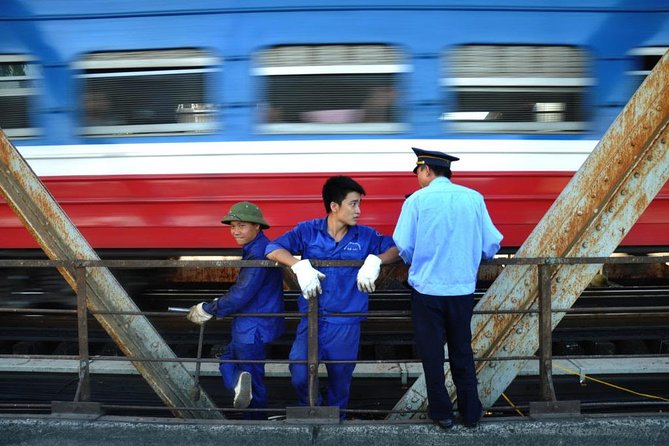
Wake Hanoi before the crowds arrive. This four-hour photo walk follows the railway between Hanoi Railway Station and Long Bien Station, where homes, markets, cafés, parks, and daily work sit close to the tracks. It offers a look at Hanoi that feels far removed from the usual sightseeing circuit.
I like the small-group format, which gives you time to ask questions and receive direct advice. I also like the mix of photography and local life: you are not simply waiting for a train photo, but visiting markets, speaking with residents, and practicing street photojournalism. The main drawback is the 5:30 am start, which may be rough after a late arrival or a busy night in Hanoi.
Your guide is a professional photographer, and the personal instruction appears to be the strongest part of the experience. Guides named in past outings include Tung, Fuong, and William. Advice has covered both DSLR cameras and iPhones, so you do not need expensive equipment to take part.
Key things to know before booking
- The tour starts at 5:30 am, giving you access to Hanoi’s railway district as local life begins.
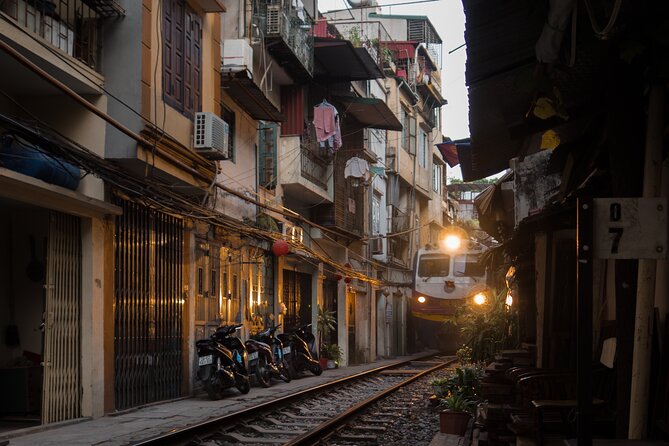
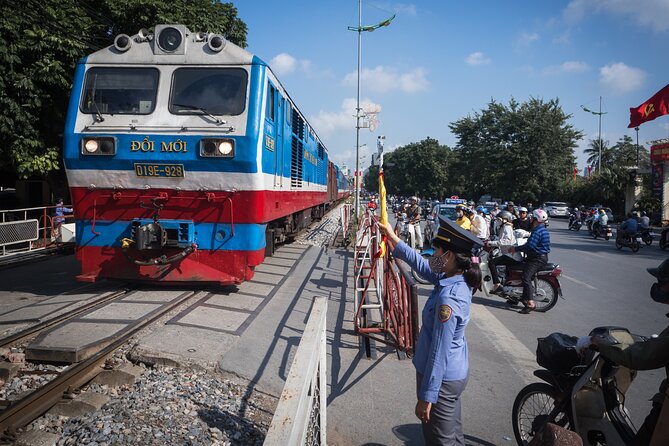
- The railway is an active photographic setting, with the chance to capture a train moving between houses.
- Photography instruction is practical, with tips on technique, framing, and street photojournalism.
- Markets, lakes, parks, and cafés are part of the route, adding cultural detail beyond the railway itself.
- Hotel pickup and drop-off are included, useful for an early start in an unfamiliar city.
- Your group is private, so only the people in your booking take part.
Why the railway offers a different view of Hanoi
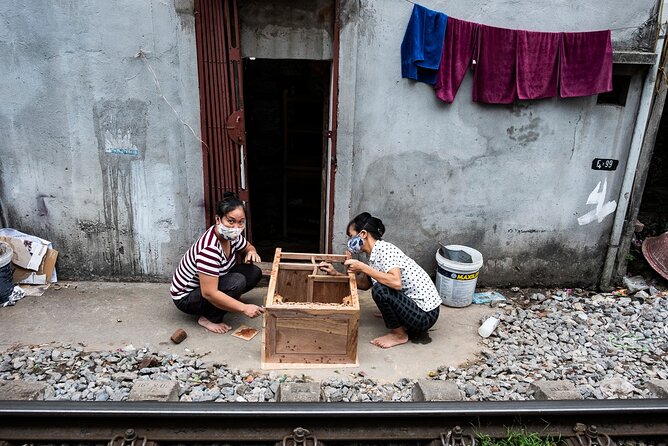
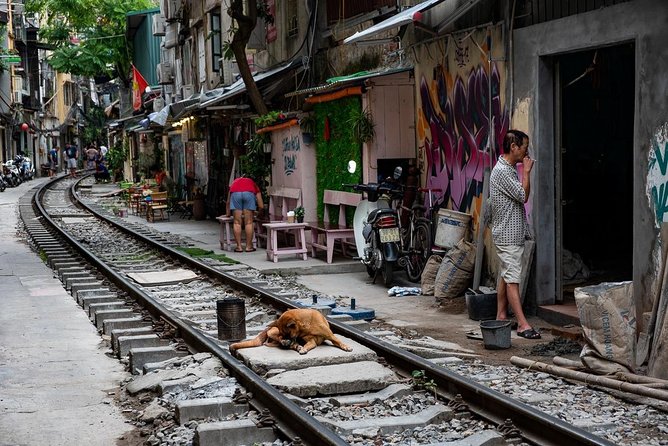
Hanoi’s railway corridor gives you a close look at ordinary city life. Houses and workplaces sit along the route, and people begin their day near the tracks. That setting makes this more than a train-spotting outing. The railway becomes a line through neighborhoods where daily routines are easy to observe and photograph.
The tour focuses on the stretch between Hanoi Railway Station and Long Bien Station. You will see the railway from ground level rather than from a passing carriage, giving you time to notice details that disappear from a train window.
The setting is described as gritty, local, and largely free of the tourist cafés and social-media crowds found at Hanoi’s better-known railway photo spots. That matters if you want photographs with a stronger sense of place. You are not simply copying the same image seen on every postcard. You are working with markets, streets, people, and changing morning light.
Of course, the railway district is not polished. That is part of its appeal, but it also means you should expect an urban working environment rather than a tidy sightseeing attraction. The experience depends on looking closely and staying open to ordinary scenes.
More Photography Tours in Vietnam
- Hanoi Explorer Photo Tour
★ 5.0 · 40 reviews - Photo Tour to Capture The Vanishing Craft of Making Fish Traps
★ 5.0 · 31 reviews - Ultimate Hanoi Photography Tour
★ 5.0 · 19 reviews
A 5:30 am start gives the tour its character
The early departure is both the best feature and the hardest part of the day. At 5:30 am, Hanoi is beginning to wake. Markets open, local residents start their routines, and parks and lakes fill with people exercising or enjoying the first part of the day.
This timing lets you photograph a city in transition. You may see stalls being prepared, early shoppers moving through markets, or residents starting their morning near the railway. These scenes offer more variety than a tour that arrives later, when the streets are already crowded and the day is fully underway.
You should plan the night before. Since pickup and drop-off are included, the tour removes much of the transport worry, but you still need to be ready at the agreed pickup point. A 5:30 am start also means you should avoid booking this immediately after a late-night arrival if you want to make the most of the photography coaching.
The tour lasts about four hours. That is long enough to explore several kinds of locations without taking up the whole day. You can finish with plenty of time left for Hanoi’s other sights, food stops, or a slower afternoon.
Hanoi Railway Station and the first photographs
The outing begins at Hanoi Railway Station, with hotel pickup included. From there, you move into the railway area and begin looking for photographs that show how people live and work beside the tracks.
The first stage is not just about waiting for a train. Your photographer guide helps you identify useful viewpoints and interesting moments. This is valuable if you often arrive somewhere with a camera but are unsure what deserves attention. Instead of photographing at random, you can learn to look for relationships between people, buildings, movement, light, and the railway itself.
One of the main visual possibilities is a train passing between the houses. That scene gives you a clear photographic subject, but the setting around it matters just as much. The surrounding homes and working spaces help explain the image.
A good guide can also help you respond quickly. Street photography often gives you only a short moment, and the tour is designed to help you practice that kind of observation. You may be using a DSLR, a phone, or another camera, and past instruction has included help for both serious camera users and people working with an iPhone.
The exact photographic advice will depend on your equipment and ability. That is an advantage of a private group. You are not locked into a general lecture designed for a large crowd.
Morning markets show Hanoi at working speed
The market portion gives the tour a useful change of pace. Instead of keeping your attention fixed on the tracks, you enter a place where people are buying, selling, preparing, and moving through their morning routines.
The timing matters here. A market just waking up has a different feel from one visited in the middle of the day. You can practice photographing activity as it develops, rather than simply collecting posed portraits or static objects.
This is also where the tour’s street photojournalism angle becomes clearer. The guide can help you think about how to approach people, when to wait, and how to make a photograph that says something about the setting. You are encouraged to talk directly with local people, which adds a human element to the outing.
You should not expect a formal photography classroom. The learning happens while you walk and photograph. Fuong, one of the named guides, is described as bringing a journalistic photographer’s perspective to the experience. That sort of guidance can help you use your camera in unfamiliar ways instead of relying on the same habits at every destination.
The market visit may be especially useful if you want to improve candid photography. You can practice finding a story in a small moment, such as a transaction, a gesture, or the relationship between a person and their surroundings.
More Photography Tours in Hanoi:
- Hanoi Long Bien Sunrise Photo Tour
★ 5.0 · 16 reviews - Into the Thieves Market Hanoi Photo Tour
★ 5.0 · 10 reviews - Cultural Hanoi Photo Walk – A Street Photography Tour
★ 5.0 · 6 reviews - Photography Tour to Tho Ha – The rice paper making village
★ 5.0 · 4 reviews
Lakes, parks, cafés, and local morning life
The route also includes lakes and parks where local Hanoians begin their day. These areas provide a break from the tight railway corridor and give you a wider range of subjects.
Parks can offer people-focused images, open views, and a sense of the city’s morning rhythm. Lakes change the visual structure of the walk, giving you reflections, wider compositions, and more space around your subjects. Cafés add another layer of ordinary life, though food and drinks are not included in the tour price.
This variety is one of the tour’s strengths. A four-hour walk focused only on railway tracks could become repetitive. By combining the railway with markets, parks, lakes, and cafés, the guide can help you work with different types of light, distance, and composition.
You may also find that the less dramatic scenes produce the better photographs. A train passing between houses is an obvious subject. A quiet park or a morning market can tell you more about how Hanoi works day to day.
The route is therefore suited to people who want to photograph a place rather than simply photograph a landmark. If your goal is one perfect train image and nothing else, the wider route may feel like extra walking. If you want context, it adds real value.
What the photography coaching is really worth
The $144 price per person is not a bargain walking tour. Its value depends on how much you want from the photography instruction and the private arrangement.
You are paying for a professional photography guide, hotel pickup and drop-off, a four-hour route, and a private activity limited to your own group. You are also getting access to a part of Hanoi that can be harder to understand without local direction. For someone who already takes photography seriously, direct coaching can justify the higher cost.
The instruction is not limited to camera settings. The experience includes finding good spots, working in public places, talking with local people, and handling street photojournalism situations. That broader help may be more useful than a short technical lesson.
The value is also stronger if your group has mixed equipment or ability. One person can use a DSLR while another uses an iPhone, and the guide can offer advice suited to each. A past outing with Tung included help for both kinds of photographer, which suggests you do not need professional gear to benefit.
For a person who does not care much about photography, the price is harder to defend. You would still get a guided look at the railway area and morning markets, but the main point of the tour is learning to make better photographs. If that is not part of your plan, a standard walking tour may offer better value.
Private groups make the early morning easier
The booking is private, meaning only your group participates. That makes a difference in a photography setting. You can stop when a scene develops, ask for help with your camera, and spend more time on subjects that interest you.
A large group would make this type of outing less flexible. It would be harder to position everyone, share advice, or speak with people in the market without getting in the way. The private format also suits couples or friends with different photography levels.
The small setting does not guarantee a completely private lesson for every person if your group is large. Still, the format is more personal than a standard city tour. One person who happened to be the only participant received what was effectively a private guiding session with William, but you should not assume you will always be alone.
Group discounts are offered, though the available information does not specify the discount amount. If you are booking with friends or family, it is worth checking the final rate before paying.
Who will enjoy Hanoi On the Tracks most
I would choose this experience for several kinds of visitors:
- You enjoy photography and want feedback while working in real streets.
- You prefer local neighborhoods to polished tourist attractions.
- You want a guided way to visit the railway corridor.
- You use a phone camera and want help making stronger images.
- You are comfortable starting before sunrise.
- You prefer a private group rather than a large scheduled tour.
It is also a good fit for someone who wants cultural contact without committing to a full-day excursion. Four hours gives you a focused morning and leaves the rest of your day open.
I would think twice if you dislike early starts, dislike walking through working urban areas, or want a relaxed sightseeing trip with no photography instruction. The railway district is the subject, not just a backdrop. You will get more from the outing if you are willing to stop, observe, and try new ways of taking pictures.
The experience is listed as suitable for most people, with no health restrictions stated. Even so, anyone concerned about walking or the early hour should consider their own comfort before booking.
Practical details that affect your decision
The tour begins at 5:30 am and lasts roughly four hours. Hotel pickup and drop-off are included, which is particularly useful at that hour. You do not need to arrange separate transport to the starting point, though you should confirm the pickup details after booking.
Food and drinks are not included. Since the tour starts early, plan accordingly, but the supplied information does not specify whether a meal stop is scheduled. Cafés may form part of the route, but any purchases are your responsibility.
A mobile ticket is available, and confirmation is provided when you book. The experience is dependent on good weather. If poor weather causes a cancellation, you will be offered another date or a full refund.
Free cancellation is available up to 24 hours before the start time. Canceling less than 24 hours before departure does not qualify for a refund, and changes inside that window are not accepted. The cut-off follows local Hanoi time.
The experience is booked an average of 98 days ahead, so advance planning is sensible, especially if you have fixed dates or want a particular morning.
Should you book this Hanoi photo tour?
Book it if you want more than a quick photograph of Hanoi’s railway. The best part is the combination of a distinctive neighborhood, an early market visit, and direct photography help from a professional guide. Tung, Fuong, and William have each been associated with especially personal instruction, including advice for both DSLR users and iPhone photographers.
Skip it if you mainly want a low-cost walk or cannot face a 5:30 am start. At $144 per person, the experience earns its price through private guiding, hotel transfers, and practical coaching rather than through the number of sights visited.
For a photographer, couple, or small private group looking for a more grounded morning in Hanoi, this is a strong choice. Bring the camera you actually use, arrive ready to observe, and treat the railway as part of a living neighborhood rather than a single photo stop.
FAQ
Where does the Hanoi On the Tracks Photo Tour take place?
The tour explores the stretch of railway between Hanoi Railway Station and Long Bien Station in Hanoi, Vietnam.
What time does the tour start?
The tour starts at 5:30 am.
How long does the experience last?
It lasts approximately four hours.
Is hotel transportation included?
Yes. Hotel pickup and drop-off are included.
Is this a private tour?
Yes. Only your group participates in the activity.
Is a professional photography guide included?
Yes. A professional photography guide leads the experience.
Can I use an iPhone instead of a DSLR camera?
Yes. Photography instruction has been provided to people using both DSLR cameras and iPhones.
Are food and drinks included?
No. Food and drinks are not included.
Is the tour suitable for most people?
The experience states that most people can participate and that there are no health restrictions listed.
What happens if bad weather cancels the tour?
You will be offered a different date or a full refund if the experience is canceled because of poor weather.
Just added around Hanoi
- Ultimate Hanoi Photography Tour★ 5.0 · 19 reviews
- Vietnam Fishing village photography tours★ 5.0 · 3 reviews
- Instagram Tour Duong Lam Ancient Village with Train Street Visit★ 5.0 · 3 reviews
- Private Photo Session with a Local Photographer in Hanoi★ 5.0 · 2 reviews
- Tho Ha Handicaft Village – Private Hanoi Photo Tour★ 5.0 · 2 reviews
- Photography Tour to Tho Ha – The rice paper making village★ 5.0 · 4 reviews
- Hanoi by Night Photo Tour★ 5.0 · 4 reviews
- Photo Tour to Capture The Vanishing Craft of Making Fish Traps★ 5.0 · 31 reviews
Photography Tours, compared.


Browse the lists this shoot appears in