
Review · PHOTOGRAPHY TOURS
Heidelberg at Night – Photo Walk
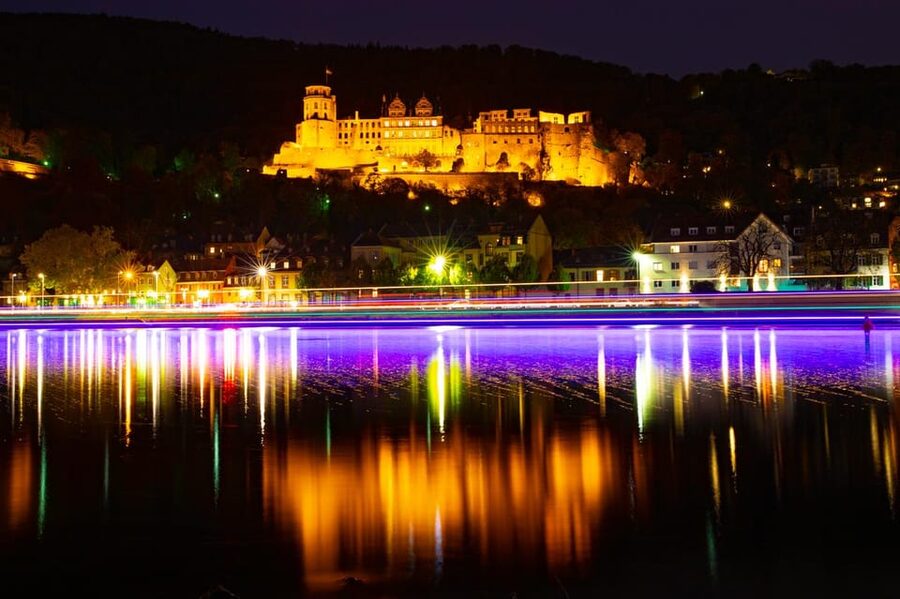
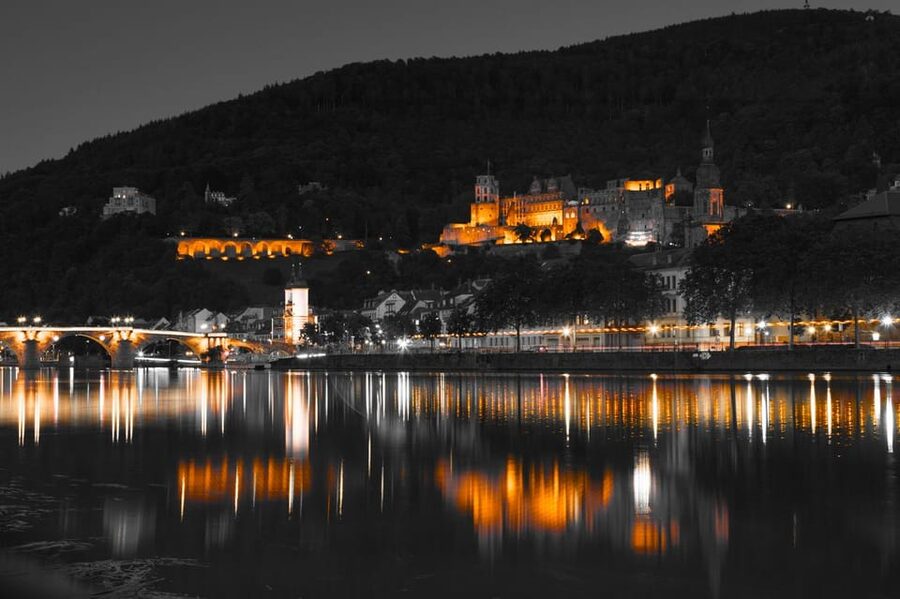
Blue hour gives Heidelberg its magic. This four-hour walking tour pairs the city’s best evening views with practical coaching from an experienced photographer, taking you from the Philosophenweg to Heidelberg’s Old Town, the Old Bridge, Heidelberg Castle, Heiliggeistkirche, and the Neckar Valley. I especially like the generous time at each viewpoint and the relaxed, creative approach to photography. I also like that you can use anything from a good phone camera to a full SLR setup.
The main thing to consider is the walk itself. The route covers about 6 kilometers and includes steep ascents and descents, so it is not a casual flat stroll. You also need a tripod, a flashlight, suitable shoes, and weather-ready clothing if you want to make the most of the low-light photography.
Key points at a glance
- Blue-hour timing: The walk begins around sunset, with the exact start adjusted to the day’s light.
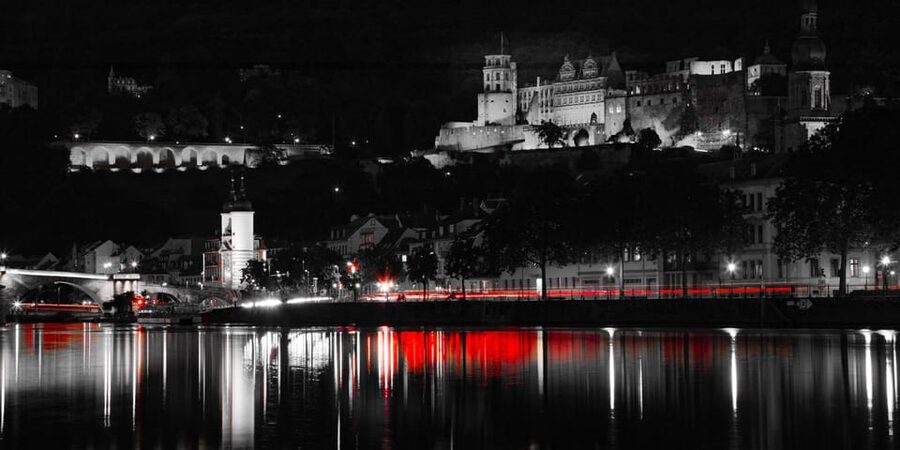
- Classic Heidelberg views: Photograph Heidelberg Castle, the Old Bridge, Heiliggeistkirche, the Market Square, Kornmarkt, and the Neckar Valley.
- About 6 kilometers on foot: Expect some steep uphill and downhill sections along the Philosophenweg and through the Old Town.
- Hands-on camera coaching: Photographer Sven offers help with composition, camera settings, and creative techniques.
- Works for several skill levels: Beginners, hobby photographers, and experienced photographers can adapt the session to their own level.
- Small-group or private format: A private version can use flatter paths and adjust the route to your needs.
Why evening is the right time for Heidelberg
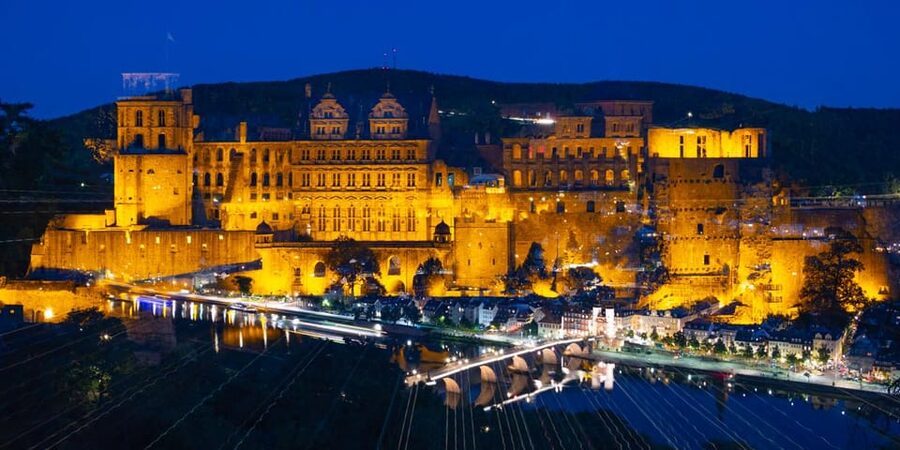
Heidelberg is photogenic in daylight, but the city changes character as the sun drops. The blue hour gives you a narrow window when the sky still holds color, while streetlights, windows, and illuminated landmarks begin to glow. That mix is especially useful for photographs of the Old Town and the Neckar River.
The timing matters here. This is not a tour that starts at a fixed afternoon hour and ends before the best light arrives. The start is adjusted to sunset, so you can work through the changing conditions rather than rush straight into darkness. Exact starting times vary by date, so check availability when booking.
I like this format because you get several kinds of photographs in one outing. Early images can show the fading sky and broad views across Heidelberg. Later photographs can focus on lit buildings, reflective water, shadow, and long exposure effects.
There is one tradeoff: weather and light cannot be guaranteed. Clouds, rain, haze, or a less colorful sunset may change the mood. That is simply part of outdoor photography, but you should book this for the instruction and access to good viewpoints, not for a promised postcard sky.
More Photography Tours in Germany
- BERLIN PHOTO TOUR with a professional Photographer from Berlin
★ 5.0 · 44 reviews - Berlin U Bahn Cinematic Photography Tour
★ 4.9 · 9 reviews - Private photo tour in Cologne
★ 5.0 · 9 reviews
Starting at Neuenheimer Marktplatz
The meeting point is Neuenheimer Marktplatz, at the Perfect Light Photo Art Gallery on Ladenburger Straße 21. The walk also ends there, which is helpful if you arrive with a small bag or camera case. Luggage can be stored safely at the start and finish point, and a toilet is available there.
That practical setup removes a little evening stress. You do not need to carry everything through the city, and you can use the facilities before setting out. There is no toilet during the walk, so plan accordingly.
The starting point in Neuenheim also places you close to the route toward the Philosophenweg. Before the group leaves, you should be ready with your camera, tripod, flashlight, and any extra clothing you need. Once the light starts changing, stopping to unpack equipment can cost you useful shooting time.
The experience is offered in English or German. Private tours and small groups are available, which matters for a photography outing. A smaller group gives you more room to set up a tripod and more time to ask about your own camera rather than waiting through a long line of questions.
The Philosophenweg and the first wide views
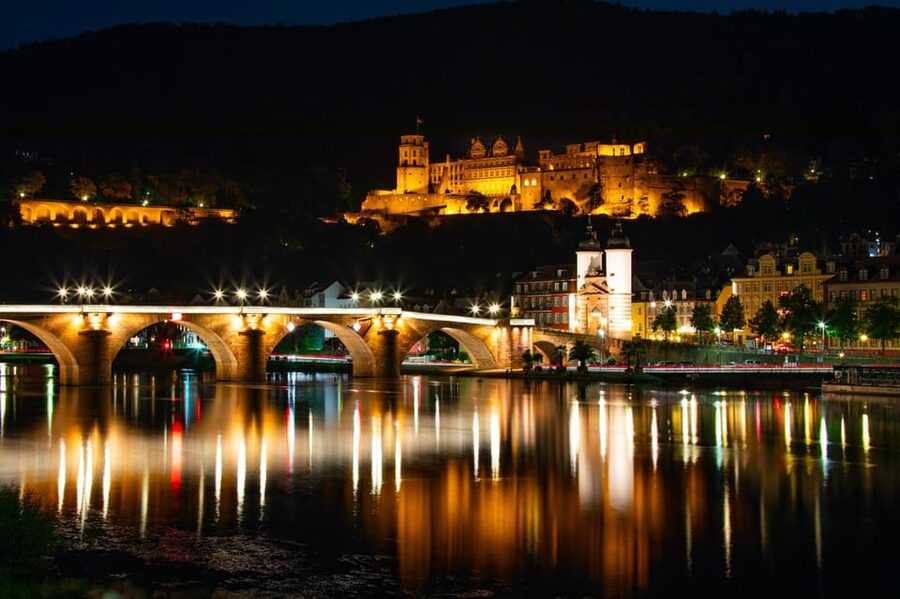
The Philosophenweg is the key opening section because it gives you broad views toward Heidelberg’s Old Town and castle. This is where the blue hour can show the whole city in one frame, with the Neckar Valley adding depth beyond the historic center.
You will need to pay attention to your footing. The route includes steep sections, and carrying a camera bag and tripod makes uphill and downhill walking more demanding. Comfortable shoes are not optional decoration here. Wear footwear that feels secure on uneven or sloping paths.
At the first viewpoints, the guide can help you decide how much of the scene to include. A wide lens is useful for the full view, while a medium or telephoto focal length can isolate the castle, bridge, or church. The recommended focal range is about 16 mm to 200 mm, though you can create many strong images with a more modest lens or a phone.
This part of the walk is also a good test of your equipment. If you normally use automatic settings, you may learn why the camera chooses certain exposures and when a manual adjustment gives you more control. If you already photograph regularly, you can use the time to test framing, focus, and longer exposures.
Heidelberg Castle and the Neckar Valley at blue hour
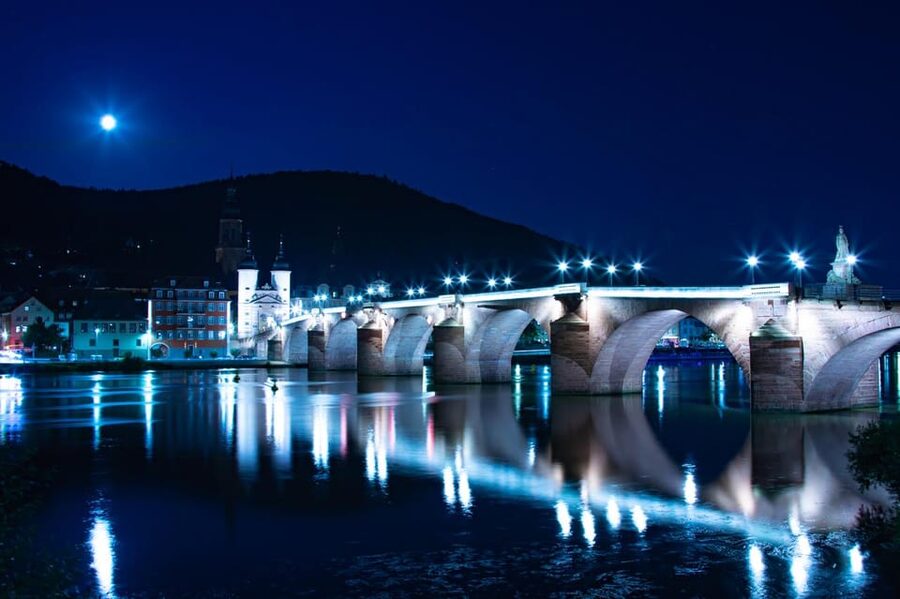
Heidelberg Castle is one of the main subjects of the walk. Seen from above or across the valley, it gives you a strong focal point with the Old Town and surrounding hills around it. At blue hour, the castle can look very different from a bright daytime photograph, especially as artificial lights begin to appear.
The Neckar Valley helps create a sense of scale. Instead of photographing only a single building, you can work with layers: foreground slopes, the city below, the castle, and the darker valley beyond. The guide’s role is useful here because the best composition may not be the most obvious one.
A tripod becomes important as the light fades. Long exposures let you use a lower ISO and keep more detail in darker parts of the frame. They also give you time to experiment with shutter speed, which is one of the creative parts of the session.
If you are carrying a phone, you are not left out. A good cell phone camera can capture the main views, though the coaching will be most useful if you can control exposure or use a night mode. The key point is to bring equipment you already know. This is not a good evening to learn the basic buttons on a brand-new camera.
Same place, a different kind of shoot:
- Hamburg: Private Couples’ Photoshoot and Walking Tour
★ 4.9 · 212 reviews - Berlin: Fotografiska Photography Exhibition Ticket
★ 4.6 · 168 reviews - Berlin Museum of Photography Entry Ticket
★ 4.5 · 88 reviews - Berlin Essentials: Private Photoshoot at Berlin’s top sites
★ 4.8 · 75 reviews
Crossing into Heidelberg’s Old Town
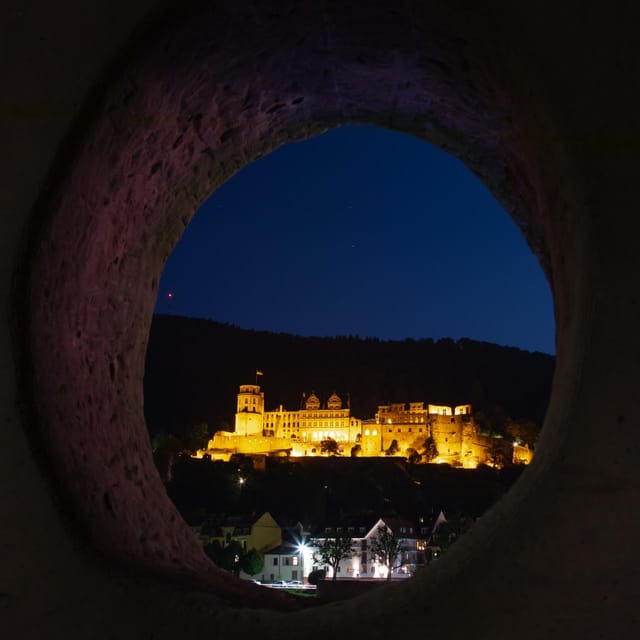
After the hillside viewpoints, the route continues toward the historic center and its narrow alleyways. The change is useful for photography. You move from wide, distant views to tighter compositions made from façades, street details, doorways, and pools of evening light.
The Old Town portion includes the Old Bridge, Market Square, Heiliggeistkirche, and Kornmarkt. These are not quick photo stops where you raise a camera, take one picture, and move on. The four-hour schedule leaves room to try different angles and to work through the technical problems that appear in low light.
The narrow streets can make composition more demanding. Buildings may compete for attention, and bright lamps can create harsh highlights. That is exactly where guidance can help. You might find a stronger image by waiting for a cleaner angle, shifting your position, or using a longer focal length rather than trying to fit everything into one wide frame.
The walk also gives you a chance to see Heidelberg beyond its famous postcard views. The major sights provide the structure, but the smaller streets and unexpected angles are where your own photographs may become more personal.
The Old Bridge, Heiliggeistkirche, and Kornmarkt
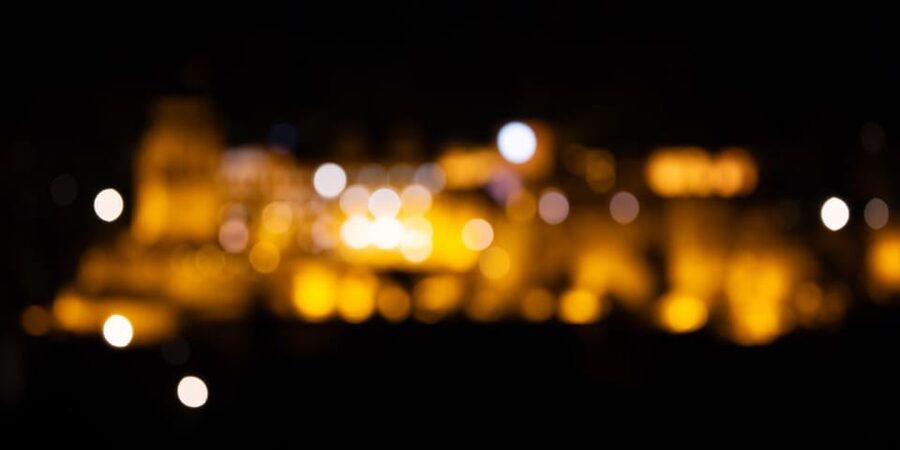
The Old Bridge is one of Heidelberg’s defining subjects, and it works well in evening light. You can photograph its stone structure, the river setting, or the relationship between the bridge and the castle. A tripod gives you more options once the light is low, especially if you want a calm, detailed image rather than a bright, grainy snapshot.
Heiliggeistkirche adds a different type of subject. Its architecture and position in the Old Town make it useful for vertical compositions and closer studies. The Market Square provides another change in scale, with the church and surrounding buildings giving you several ways to frame the scene.
Kornmarkt is also included in the walking tour. Together, these stops keep the evening from becoming a single repeated view of the castle. You get architecture, streets, river scenery, distant views, and night lighting in one route.
You should not expect every location to be equally quiet or easy to photograph. Old Town streets can be visually crowded, and the best framing may take patience. The guide can suggest creative options, but you still need to work around the conditions of the evening.
What the photography coaching adds
The strongest reason to book this is the instruction. The experience is not simply a guided walk to famous sights. It is designed to help you make better use of the light, your camera, and the time available.
Photographer Sven is named in the experience feedback, and the comments about his approach are specific: he gives tips on the subject and camera settings, allows plenty of time and quiet for photography, and adjusts his help to each person’s previous experience. That makes the tour suitable for a first-time night photographer as well as someone who already knows the basics.
You may work on:
- Choosing a useful viewpoint rather than accepting the first angle
- Setting aperture and shutter speed manually
- Using a tripod for long exposures
- Handling the change from blue hour to full darkness
- Finding new perspectives on familiar sights
- Trying creative techniques instead of taking only standard postcard images
The pace sounds particularly important. Night photography can become frustrating when a guide rushes everyone from one stop to the next. Here, you have time to test an idea, check the result, and try again. That helps you remember the technique after the tour ends.
The coaching is not limited to advanced photographers. Beginners can get help with the basic settings, while experienced users can ask more specific questions about composition and creative methods. The tour is best suited to people who enjoy making images, not only collecting sightseeing stops.
Equipment, tripods, and what to wear
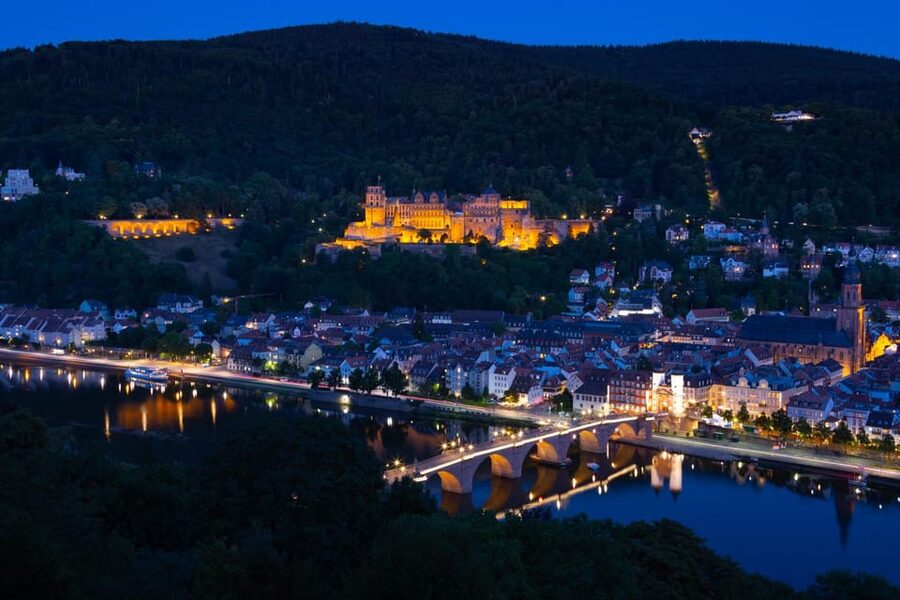
Bring a camera you already understand. The provider says a good cell phone camera can work, while an SLR with interchangeable lenses gives you more control. Ideally, your camera should allow manual aperture and shutter-speed settings.
A lens range from about 16 mm to 200 mm is suggested, but that is an ideal rather than a strict requirement. A wide-angle lens helps with broad views from the Philosophenweg. A medium or telephoto range can bring the castle, bridge, or church closer without forcing you to stand in the perfect spot.
A tripod is necessary for the intended long exposures in blue hour and low light. If you do not have one, a tripod can be rented by prior arrangement. A ball head is suggested for rental equipment, which can make it easier to adjust the camera precisely.
You should also bring a small flashlight or headlamp. This is useful for checking your footing and handling equipment after sunset. Add comfortable shoes, weatherproof clothing, food, and drink if needed. A storage device is also listed among the recommended items, so bring one if you expect to transfer or back up images.
Professional image editing is not included. That is worth noting if you expect finished, polished files rather than guidance on capturing them. The experience focuses on the walk, the photographs, and the coaching. Optional equipment rental and professional editing cost extra.
Is $93 a fair price?
At $93 per person, this is more expensive than a standard city walking tour. The price makes more sense if you value the combination of a guided Heidelberg visit, evening timing, photography instruction, and several hours of practice.
You are paying for about four hours, an experienced photographer, a route designed around the best views, and enough time to stop and work on your own images. A normal sightseeing tour may show you the same landmarks, but it is unlikely to pause while you adjust a tripod or explain why a certain shutter speed works better.
The value is strongest for beginners and keen hobby photographers who want direct help. If you already know exactly how you want to photograph Heidelberg and only need directions to viewpoints, you may find the price harder to justify. You can still use the walk to discover angles, but the coaching is the main reason to choose this experience.
Small-group and private options can also change the value. A private route can be tailored to your needs and can use only flatter paths, which may be important if hills are a concern. The private version is not the same outing, so check the available format and price before booking.
Free cancellation is available up to 24 hours before the experience, and you can reserve now and pay later. Those terms give you some flexibility, but the weather limitation remains: no provider can guarantee a certain sunset or clear sky.
Who should book the Heidelberg night walk?
I would choose this if you want to combine sightseeing with a real chance to improve your photography. It suits a solo photographer, a couple with similar interests, or a small group that does not mind spending time in one place to get a better image.
It is also a good match for mixed skill levels. The guidance can be adjusted for people with little experience, hobby photographers, and more advanced users. The relaxed atmosphere and generous shooting time are repeated strengths, and the experience is designed for people who enjoy experimenting.
You should think twice if you dislike hills, carry heavy equipment, or want a fast overview of Heidelberg. The 6-kilometer route includes steep climbs and descents, and there is no toilet along the way. People with mobility impairments are not considered suitable for this route.
If the terrain is the concern but the photography appeals to you, ask about the private tour with flatter paths. That option allows the route to be adapted to individual needs.
My verdict: a strong choice for patient photographers
Book the Heidelberg at Night Photo Walk if you want more than a quick look at the city’s famous sights. The combination of sunset timing, castle and bridge views, Old Town streets, and hands-on camera help gives you a useful four-hour session rather than a simple evening stroll.
The best reasons to go are the time to experiment and the quality of the locations. The main cautions are the steep route, the need for a tripod and flashlight, and the fact that weather may not provide perfect light.
For a beginner, this could turn a confusing night shoot into a manageable one. For an experienced photographer, it offers a well-planned route and fresh angles on familiar Heidelberg subjects. At $93, it earns its price when you use the coaching. Bring comfortable shoes, arrive ready for changing light, and treat the evening as a photography workshop with a beautiful city attached.
FAQ
Where does the Heidelberg at Night Photo Walk start and finish?
It starts and ends at Neuenheimer Marktplatz, at the Perfect Light Photo Art Gallery, Ladenburger Straße 21, 69120 Heidelberg.
How long is the photo walk?
The experience lasts about four hours and covers approximately 6 kilometers on foot.
What sights are included?
The route includes views of Heidelberg Castle, the Old Bridge, the Old Town, Heiliggeistkirche, the Market Square, Kornmarkt, the Philosophenweg, and the Neckar Valley.
Does the walk begin at sunset?
The walk starts around sunset, with the start time adjusted to the sunset for that date.
What camera equipment should I bring?
Bring a camera you know how to use. A good cell phone camera is acceptable, while a camera with manual aperture and shutter-speed control is ideal. A focal length range from about 16 mm to 200 mm is recommended.
Is a tripod required?
A tripod is necessary for long exposures during blue hour and in low light. A tripod with a ball head can be rented by prior arrangement.
Is the route suitable for people with mobility impairments?
No. The route is about 6 kilometers and includes steep ascents and descents. A private tour with flatter paths can be arranged for individual needs.
More Evening Trips around Germany
- Berlin by Night: Private Photoshoot at Illuminated Cityscape
★ 4.8 · 7 reviews - Heidelberg: Sunset Photo Walk
★ 5.0 · 2 reviews - Rhodes: E-bike Highlights Sunset or Morning Photo Tour
★ 4.9 · 351 reviews - Cappadocia Sunrise & Sunset Horse Tour with Photography
★ 4.9 · 348 reviews
Just added around Germany
- Instagram tour of Cologne with a private photographer★ 5.0 · 2 reviews
- Instagram Tour in Berlin★ 5.0 · 2 reviews
- Heidelberg: Sunset Photo Walk★ 5.0 · 2 reviews
- Discover Berlin Underground through Mobile Photography★ 5.0 · 5 reviews
- Berlin: Ticket for Photography Exhibitions at C/O Berlin★ 4.5 · 39 reviews
- Bonn: Private Drone Photoshoot Experience★ 5.0 · 3 reviews
- Berlin: Private Photo Walk with Professional Photographer★ 4.5 · 2 reviews
- Berlin: Premium 60-Minute Photoshoot at Iconic Landmarks★ 5.0 · 2 reviews
Photography Tours, compared.

Browse the lists this shoot appears in