
Review · TOKYO PHOTO TOURS & PHOTOSHOOTS
Tokyo Ryogoku Sumo Morning Practice + Photo Shoot with Wrestlers
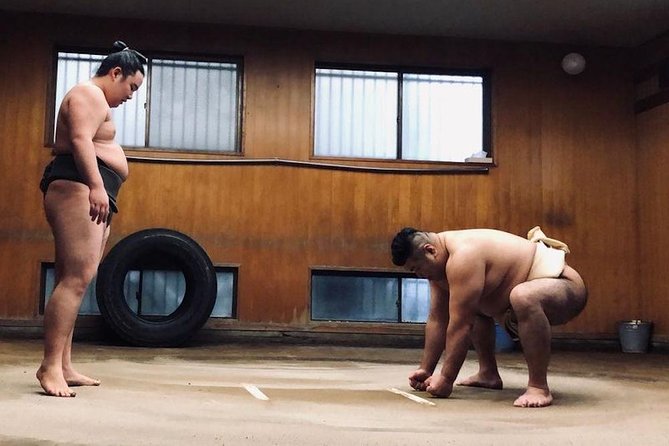
Sumo practice is not staged for your camera. This two-hour Ryogoku experience brings you close to wrestlers during real morning training, and I like the rare access to a sumo stable and the chance to see the athletes work without a show built around tourists. The small group, capped at seven people, also helps keep the visit personal. The main drawback is that you may sit quietly on the floor for more than an hour, and photography with the wrestlers is never guaranteed.
I also like the way the tour gives you a local guide to explain what you are seeing before and after practice. Guides such as Mayu, Masao, Ayaka, Yumiko, and others have helped visitors understand training rules, stable life, rankings, and the physical demands of the sport. Still, the quality of the explanation can vary, and some sessions offer only a short introduction.
Key details before you book
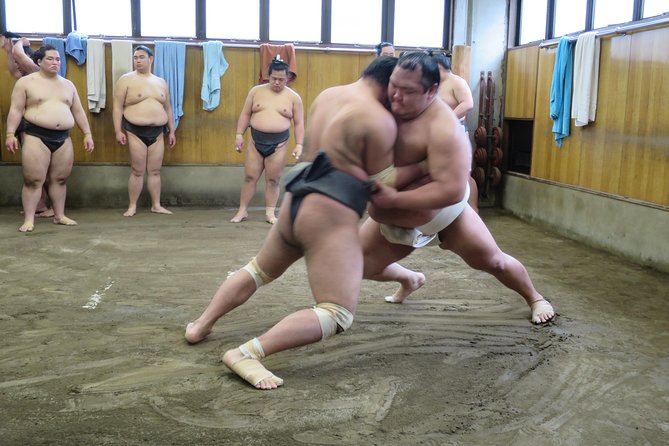
- Real morning training: You watch wrestlers practice in a working stable, not a staged demonstration.
- Close-up view: You may sit only a few feet from the action, though seating is first come, first served.
- Small group size: The tour accepts a maximum of seven people, although a large booking may be split between stables.
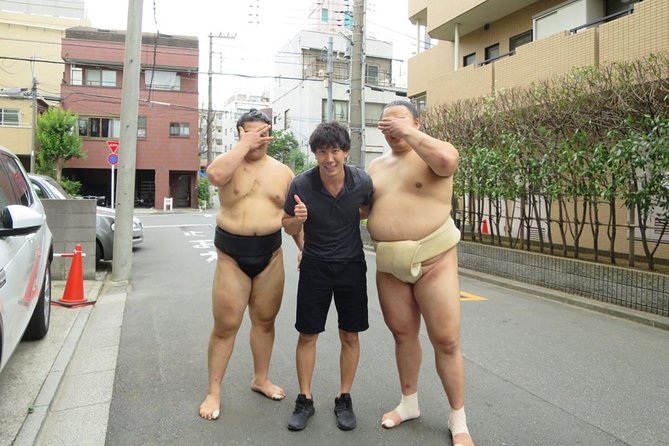
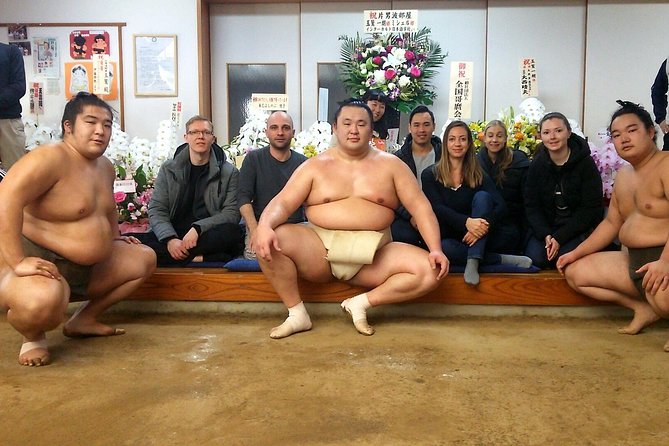
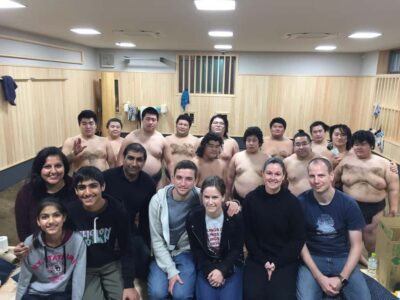
- Photo opportunity: Tour photos are included, and wrestlers may pose with you after practice if the stable permits it.
- Strict etiquette: You must remain quiet, follow stable rules, and stay on permitted tatami areas.
- Early start: Meet at 8:00 a.m. at the JR Ryogoku Station East Exit, with no tolerance for being more than 15 minutes late.
Why Ryogoku is the right place for sumo
Ryogoku is Tokyo’s sumo district. The area around the station is home to sumo stables, the Ryogoku Kokugikan arena, and places tied to the sport’s daily life. You are not simply watching a match here. You are seeing how wrestlers prepare long before tournament day.
That distinction matters. A tournament has lights, crowds, music, formal ceremonies, and a clear winner. Morning practice is quieter and more severe. Wrestlers repeat movements, work through exercises, and practice bouts with serious focus. One of the pleasures of this tour is seeing the discipline behind the public sport.
The tour does not enter the Kokugikan for a match. Instead, your guide walks you through the sumo neighborhood after the stable visit. The walk to the arena takes about 10 minutes, and the guide may point out nearby cultural sights along the way. One particularly memorable route included Ekōin, a temple connected with honoring the dead, giving the morning a useful link between old Tokyo customs and modern sumo life.
More Early-Start Trips around Tokyo:
- Tokyo Sumo Morning Practice Tour w/ Ring-Side Seat + Photo Shoot
★ 5.0 · 93 reviews - Exclusive Sumo Morning Practice in Tokyo with Photo Opportunity
★ 5.0 · 68 reviews - Barcelona: Paddleboarding at Sunrise. Includes: instructor, photos, equipment
★ 4.7 · 570 reviews
Meeting at 8:00 a.m. near JR Ryogoku Station
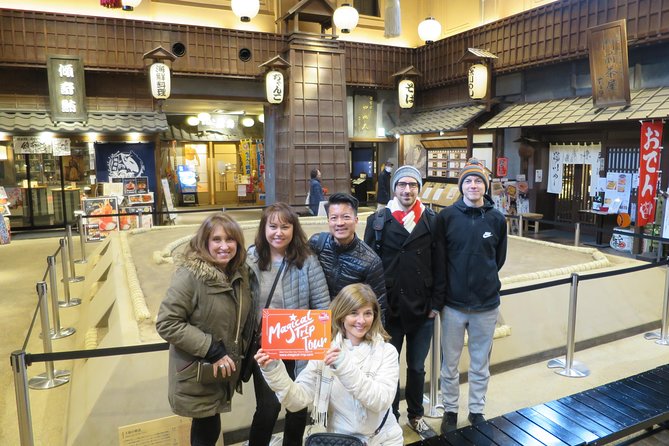
The meeting point is at Re.Ra.Ku Ryōgoku Ekimae beneath the JR station tracks at the East Exit. Your guide carries a red or orange MagicalTrip board, making the group easier to spot.
Pay close attention to the station name. Ryogoku has two stations, and the meeting point is at JR Ryogoku Station, not Ryogoku Station on the Oedo Line. This is the sort of small Tokyo detail that can turn an easy morning into a sprint.
I would arrive early. The tour starts on time because entering a stable after practice begins can disturb the wrestlers. If you are more than 15 minutes late after the meeting time, you cannot join, reschedule, or receive a refund. That rule feels strict, but it makes sense in a working training space where silence and routine matter.
The guide usually gives an introduction before the walk. This is when you can learn basic facts about sumo, stable organization, wrestler rankings, and what you should expect inside. The best guides use this time well. Yumiko, for example, prepared the group carefully and added written notes during practice to help explain the movements.
The walk to the stable can vary
After meeting, you walk with your guide to a sumo stable. The walk takes roughly five to 30 minutes, depending on which stable is available that morning. That variable is important. You are not guaranteed a particular stable, and the final location can affect how far you walk and how long you spend getting there.
The group may visit different stables if there are many people booked that day. The tour maximum is seven, but several tour groups or other approved visitors may also be present. Seating inside is first come, first served, so arriving on time helps, though it does not promise a front-row place.
Some people have been seated two or three rows back after arriving later than other groups. You can still see the practice, but the sense of being right beside the wrestlers is stronger from the front. There is no extra seating upgrade listed, so your best advantage is punctuality.
Inside the stable, silence matters
The stable is the heart of the experience. You enter with your guide and sit in the permitted tatami areas while the wrestlers train. Other parts of the stable are off-limits, and you must not wander beyond the areas assigned to the group.
This is not a performance. You may watch warm-ups, exercises, and practice bouts, depending on the day’s schedule. Some sessions include intense one-on-one training, while others may focus more on general preparation. The practice can last about an hour and a half, but it sometimes runs longer, even close to two hours.
You are expected to remain quiet during the session. Rules about masks, photography, and sitting position can vary by stable. Some groups have been allowed to take photos during practice, while others have been told to wait until the end. The stable has the final word, not the tour company.
You may also be unable to use the toilet during practice. Go before entering. It is a simple instruction, but sitting quietly for a long stretch makes it worth taking seriously.
A few more photo experiences around Tokyo worth a look
- Tokyo: Kimono Dressing, Walking, and Photography Session
★ 4.9 · 427 reviews - Best Go Kart Experience in Shibuya Crossing with Iconic Photos
★ 5.0 · 348 reviews - Tokyo Cyberpunk Street Photo Tour
★ 5.0 · 165 reviews - Tokyo by Night Photography Tour (Private Option Available)
★ 5.0 · 151 reviews
What makes the training so compelling
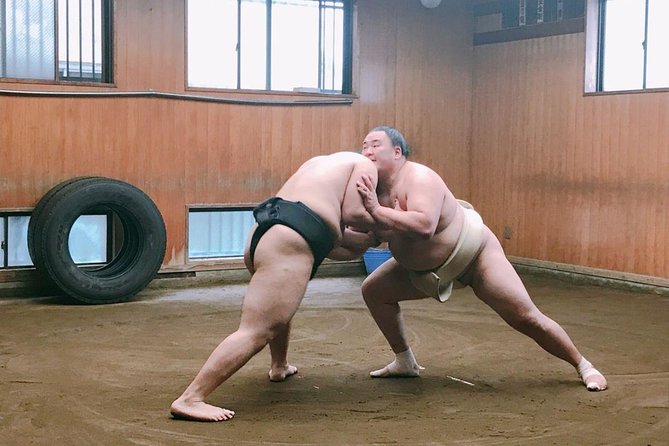
The best part is the physical closeness. You might be only a few feet from wrestlers who are training at full effort. You can see the repetition, concentration, contact, and recovery in a way that a stadium seat cannot provide.
I also like that the experience reveals more than wrestling technique. The setting can show the rules of stable life, the importance of hierarchy, the care given to routine, and the serious approach to cleanliness and preparation. One visitor was struck by the physicality, respect, hierarchy, business side, and hygiene involved in the session.
Your guide may explain the number of stables, how wrestlers are ranked, and how training fits into preparation for tournaments. A good guide turns unfamiliar movements into something you can follow. You may begin by seeing only large athletes pushing and lifting. By the end, you can start to recognize warm-ups, repeated techniques, and practice bouts.
The amount of explanation is not perfectly consistent. Some guides provide a strong overview before entering and answer questions afterward. Other groups have received little more than a short introduction. If learning about sumo is your main goal, ask questions when the practice ends and choose a tour date that gives enough time around the session.
Photos with wrestlers are a bonus, not a promise
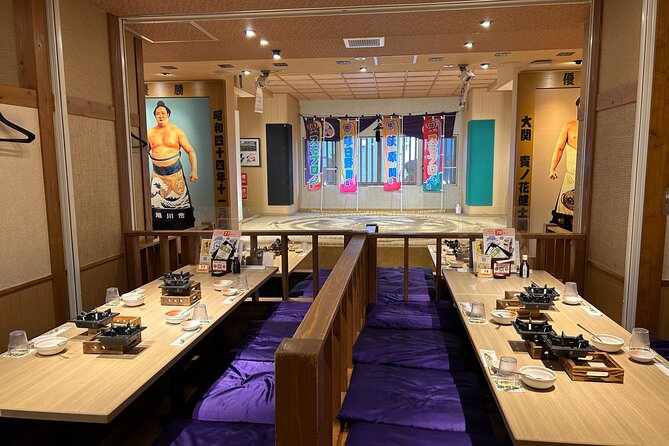
The experience includes tour photos, and some visitors have been able to pose with wrestlers after practice. That can be a terrific souvenir because it records a rare moment that most people cannot arrange on their own.
But you should treat photos as a possible extra, not the central reason to book. The stable decides if photography is allowed and if wrestlers will pose. A stable may ban all images during practice, restrict cameras until the session ends, or refuse posed photos for reasons outside the tour company’s control.
This is also why you should avoid comparing your rules with those of other people inside the stable. Another group may have different permission, or it may be visiting under a separate arrangement. Follow the instructions given to your group. The wrestlers are working, not performing for a crowd.
The Ryogoku Kokugikan stop adds useful context
After practice, the guide walks you through Ryogoku toward the Kokugikan area. The listed stop lasts about 10 minutes, so do not expect a full arena tour or a long museum visit.
Even so, the walk helps place the stable in context. You have just watched the daily work behind sumo, and now you see the neighborhood connected with official tournaments. For someone unfamiliar with the sport, this short connection can make the morning feel less like an isolated visit to a private building.
The guide then walks you back to the original meeting point. The advertised duration is about two hours, but practice may run longer. Plan some flexibility afterward, especially if you have a timed reservation elsewhere.
Is $98.16 a fair price?
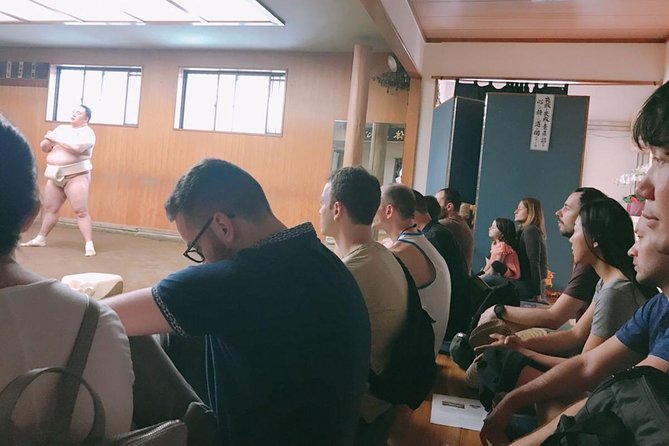
At $98.16 per person, this is not a cheap way to spend two hours in Tokyo. The price pays for access arranged through a local operator, a guide, and the chance to enter a sumo stable that can be difficult to approach without help.
The value depends on what you want. If you only want to see sumo once, a tournament ticket may offer more spectacle and a longer day around the sport. If you want a close look at training and wrestler routine, this visit offers something a match cannot.
The tour is strongest for people who value access over entertainment. There may be no lunch, no formal demonstration, and no polished presentation. One person even felt the stable visit could have been arranged for less, especially when other people were present under different rules. That criticism points to a real issue: the experience is only good value if the guide adds useful context and the stable provides a substantial practice session.
On the other hand, several guides have made a major difference. Mayu was praised for explaining sumo’s past and present. Masao helped visitors understand the sport and provided a memorable visit. Ayaka gave a clear introduction before the walk, and Yumiko used written notes to explain the practice. When the guide is prepared, the price feels easier to justify.
Who should book this morning tour?
I would recommend it most strongly to:
- People who want to see authentic sumo training rather than only attend a tournament
- Sports fans interested in repetition, technique, and physical preparation
- First-time visitors who want a guide to explain sumo customs
- Visitors comfortable sitting on a floor in silence for a long period
- Solo participants, since you spend much of the session quietly watching
- Anyone staying near Ryogoku who can manage an early start
I would hesitate if you need comfortable chairs, frequent bathroom access, or a tightly timed itinerary. I would also think twice if your main goal is a guaranteed photo with a wrestler. That depends on the stable’s decision.
Children under 12 cannot enter. Everyone else should be prepared for a traditional, rule-bound setting. Summer mornings can be hot and humid, so bring water and wear a hat before entering the stable.
Practical ways to get more from the visit
Arrive early, not just on time. This protects you from station confusion and gives you a better chance of front seating.
Wear clothes that let you sit on the floor comfortably. Most stables do not provide chairs, and you may remain seated for an hour and 20 minutes or longer.
Use the bathroom before the tour begins. You may not be allowed to leave during practice.
Keep your phone away until your guide confirms photography is allowed. The stable’s rules come first, even if another group appears to be taking pictures.
Listen carefully to the introduction, then ask questions after practice. The best educational value often comes from understanding what you just watched rather than expecting a long lecture before it begins.
Leave room in your schedule. A session can finish later than planned if training continues.
Should you book the Ryogoku sumo practice tour?
Book it if you want a close, quiet look at the work behind Japan’s national sport. The chance to sit near active wrestlers during real training is unusual, and a strong guide can add useful insight into rankings, stable life, rules, and preparation.
Skip it if you want a polished show, guaranteed photos, or a comfortable seated tour with a fixed end time. This is a respectful visit to a working stable, and that means strict rules, changing schedules, floor seating, and occasional uneven guiding.
For the right visitor, the rough edges are part of the point. You are not watching sumo packaged as a stage act. You are watching athletes train, and that is exactly why this small Ryogoku experience can become one of the more memorable mornings in Tokyo.
FAQ
Where does the sumo morning practice tour meet?
Meet at Re.Ra.Ku Ryōgoku Ekimae beneath the JR Ryogoku Station tracks at the East Exit. The guide holds a red or orange MagicalTrip board.
Which Ryogoku station should I use?
Use JR Ryogoku Station. Do not go to Ryogoku Station on the Oedo Line.
What time does the tour start?
The tour starts at 8:00 a.m. You should arrive before the start because the group cannot wait for late arrivals.
How long does the experience last?
The advertised duration is about two hours. The practice can sometimes run longer, so the tour may finish later than expected.
Can children join the tour?
Only people aged 12 and over can enter the sumo morning practice. Children under 12 are not allowed inside.
Can I take photos during practice?
Photography depends on the sumo stable. The stable decides if photos of the wrestlers or posed photos with them are allowed.
Do I need to sit on the floor?
You may need to sit on the floor because most stables do not provide chairs. You may remain seated for more than an hour, and seating is first come, first served.
What happens if the stable cancels practice?
The stable can change or cancel practice because of its tournament schedule or the wrestlers’ condition. If the operator cancels the booking for that reason, you receive a full refund or may be offered another date.
Just added around Tokyo
- Asakusa Kimono/Yukata Rental & Photography_Tsutsuji★ 5.0 · 12 reviews
- Asakusa Kimono Photography Tour★ 5.0 · 8 reviews
- Personal Travel and Vacation Photographer Tour in Tokyo★ 5.0 · 19 reviews
- Travel Tokyo with Your Own Personal Photographer★ 5.0 · 43 reviews
- Tokyo: Private photo shoot★ 5.0 · 31 reviews
- Tokyo: Photo Shoot with a Private Vacation Photographer★ 5.0 · 53 reviews
- Tokyo: Evening Photography Tour★ 4.8 · 61 reviews
- Tokyo:Genuine Tea Ceremony, Kimono Dressing, and Photography★ 5.0 · 33 reviews
Tokyo Photo Tours & Photoshoots, compared.
Kimono Dressing, Walking, and Photography Session
Read our review →
Best Go Kart Experience in Shibuya Crossing with Iconic Photos
Read our review →
Tokyo by Night Photography Tour (Private Option Available)
Read our review →
Sumo Practice Tour with Ring-Side Seat and Photoshoot
Read our review →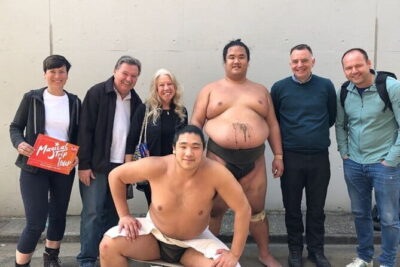
Tokyo Sumo Morning Practice Tour w/ Ring-Side Seat + Photo Shoot
Read our review →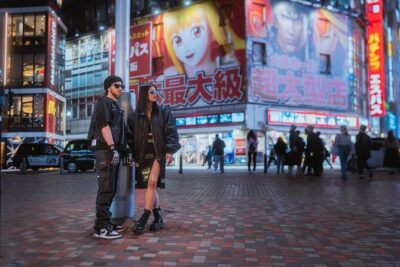
Tour with Pro Tokyo Photographer and take Edgy Unique Portraits
Read our review →Browse the lists this shoot appears in