Review · PHOTOGRAPHY WORKSHOPS & LESSONS
Unique Photo Tour and Workshop in Rome Dusk to Dawn
The Eternal City looks best after midnight. This small-group workshop lets you photograph Rome from night through dawn, with professional guide Giulio D’Ercole leading you by car and on foot to landmarks that are usually packed by day. I like the maximum group size of four, and I like the chance to practice real camera skills instead of simply collecting snapshots. The main catch is the $420.08 price and a seven-hour schedule that runs through the night.
You should also arrive ready to work. This is not a sightseeing ride with a few quick photo stops. You will handle tripods, manual settings, long exposures, light balance, and composition while Giulio gives advice on the spot. The pace and late hour suit serious beginners and intermediate photographers best, though families have also found the experience engaging.
Key reasons to consider this Rome photo workshop
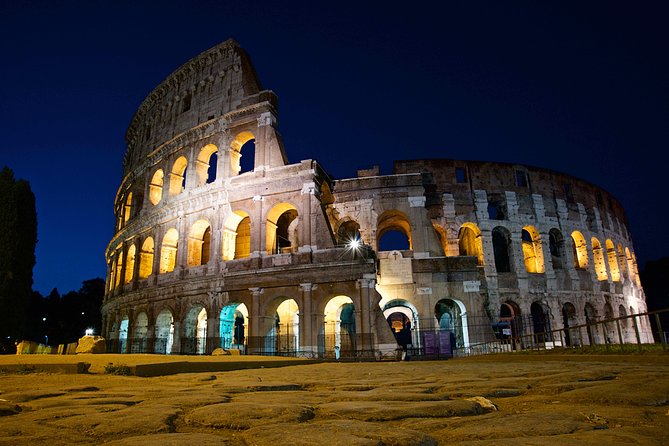
- Rome after dark: Photograph the Colosseum area, Trevi Fountain, St. Peter’s Square, and other landmarks with far fewer people around.
- Night-to-dawn practice: Learn how settings and composition change as the light moves from darkness to blue hour and sunrise.
- Only four people: A tiny group gives you a much better chance to ask questions and get help with your own camera.
- Private transportation: You spend less time crossing Rome between locations and more time shooting.
- Real technical coaching: Practice ISO, aperture, shutter speed, white balance, manual mode, tripod setup, and long exposures.
- Equipment rental available: If you do not have a camera, a Nikon camera and tripod kit can be rented for €50, payable in cash.
Why Rome looks different after 10 pm
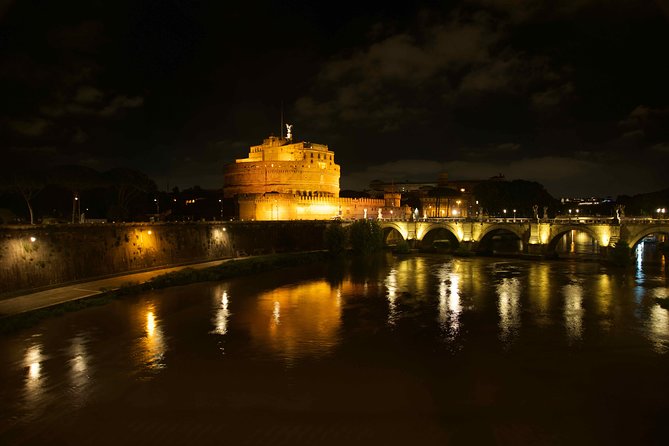
Rome is a difficult city to photograph in the middle of the day. The famous squares fill with people, tour groups, scooters, and harsh sunlight. At night, the same places become easier to frame. You can pay attention to arches, reflections, stone textures, symmetry, and warm pools of artificial light instead of trying to crop strangers out of every picture.
The workshop starts at 10 pm at Castel Sant’Angelo, opposite the Bridge of Angels on Lungotevere Castello. Hotel, Airbnb, or home pickup is available by request. Otherwise, you meet at the castle entrance.
I appreciate the way the experience combines driving with walking. Rome’s historic center is compact in places, but the full route covers many separate neighborhoods and monuments. Private transport makes it practical to reach distant stops such as the Baths of Caracalla, then return to central squares without losing large chunks of the night.
The small group matters just as much. With no more than four people, you are not fighting for space around the guide or waiting while a dozen cameras are adjusted. Giulio can look at your settings, help you set up a tripod, and comment on the image you are actually making.
More Photography Tours in Italy
- Rome: Vespa Photo Tour with Historic City Highlights
★ 5.0 · 395 reviews - Rome: Vespa Photo Tour with City Center Pickup
★ 5.0 · 239 reviews - Rome Night Photo Tour
★ 5.0 · 109 reviews
The photography skills you will practice
The workshop is aimed at passionate beginners who are ready to leave automatic mode, as well as intermediate photographers who want better night work. You will practice manual mode, ISO control, aperture, shutter speed, and white balance in real conditions.
Night photography often makes small technical mistakes obvious. A shutter speed that is too short can leave a scene dark. A high ISO may brighten the image but add unwanted grain. Bright monuments and dark streets can also confuse automatic exposure. The benefit here is immediate practice, followed by advice while you are standing in front of the subject.
Long exposures are a central part of the session. With a tripod and a steady setup, you can record more light and create a cleaner image. Giulio also explains how to balance natural and artificial light, which becomes especially useful as the sky shifts from black to blue.
Composition receives equal attention. You may work with leading lines, symmetry, foreground interest, and layers. These are not abstract classroom ideas. Rome supplies them in abundance through bridges, piazzas, columns, domes, fountains, and narrow streets.
The final stage is the change from night to dawn. Blue hour can give the sky enough color to separate buildings from the background, while early sunlight changes the mood again. The exact light depends on the season and weather, but the larger lesson is useful: the best setting for a monument at 1 am may not be the best setting an hour before sunrise.
An optional image review after the tour is available for more detailed critique. That extra feedback is useful if you want to understand not just which images worked, but why.
Castel Sant’Angelo, St. Peter’s, and the river
The opening stop is Piazza del Campidoglio, Michelangelo’s carefully designed square on the Capitoline Hill. Its geometric paving and balanced buildings make it a natural place to work on symmetry and lines. At night, the controlled shape of the piazza can be easier to photograph without daytime crowds.
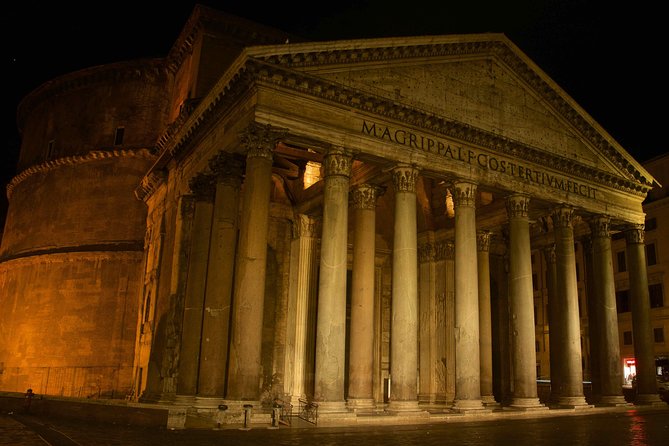
The Pantheon gives you a different challenge. Its ancient façade and broad columns demand attention to vertical lines and proportion. You may want a wide lens, but the group’s small size helps you take time to find a workable angle rather than grabbing the first record shot.
Piazza Navona is one of Rome’s most recognizable public spaces. Its long shape, fountains, and surrounding façades offer opportunities for layered compositions. The open piazza also gives you room to experiment with how much of the surrounding architecture belongs in the frame.
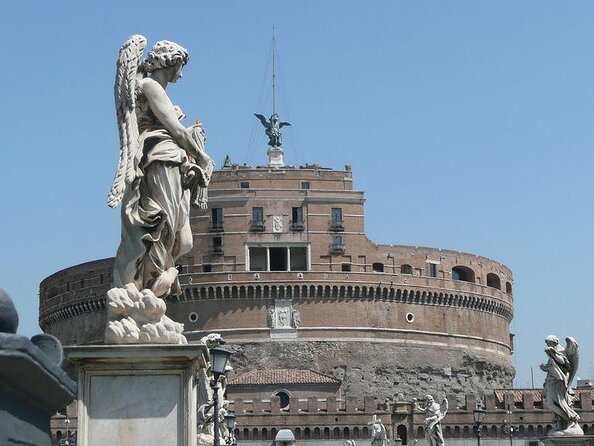
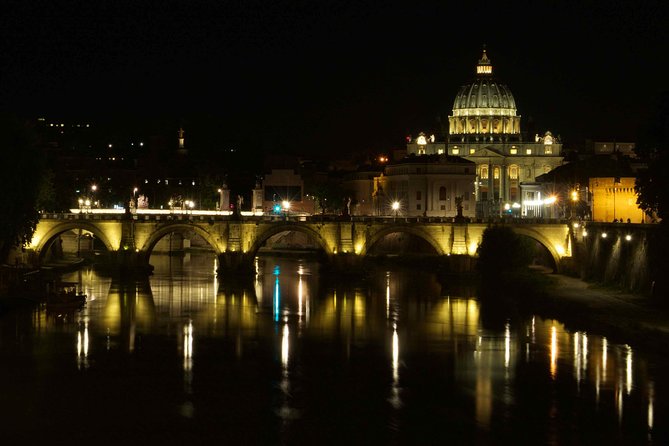
At the Museo Nazionale di Castel Sant’Angelo, you photograph one of Rome’s most memorable silhouettes near the starting point. The monument’s heavy cylindrical form works well in night light, especially when you want a strong subject rather than a delicate architectural detail.
St. Peter’s Square is a major payoff. The grand colonnade and basilica create a wide, formal composition, and the late hour can make the scale easier to appreciate. One family particularly enjoyed reaching the Vatican near sunrise, and the stop can be a fitting final major landmark when the light begins to change.
Ancient Rome by night: Teatro di Marcello to the Baths
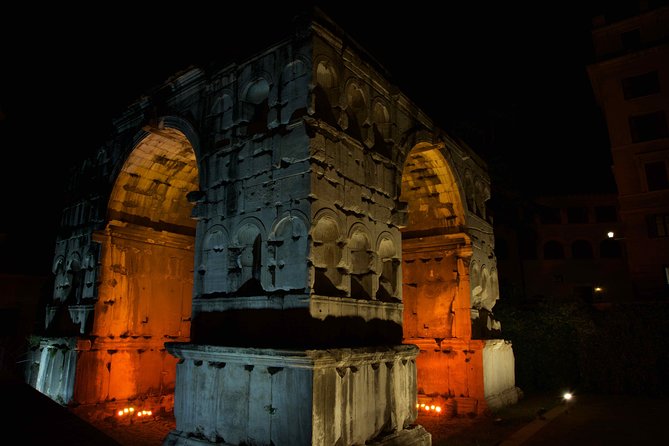
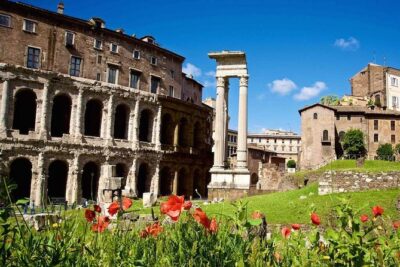
Teatro di Marcello is a useful stop for photographers who want more than the standard postcard views. Its curved ancient arches offer texture, repetition, and strong lines. You can work on framing a single architectural detail or including the surrounding street to show how old and modern Rome sit together.
Piazza Venezia gives you a broad urban scene and a chance to handle competing light sources. Large monuments, road lighting, and darker side streets can make exposure tricky. That is exactly the kind of situation where on-the-spot coaching is more useful than a fixed list of camera settings.
Isola Tiberina brings the river into the route. Water can add reflections and a sense of depth, but it also makes exposure and focus less predictable. This is a good place to practice patience and look for a composition that uses the river as more than background decoration.
Rione Parione shifts the mood from major monuments to Rome’s smaller streets. The district can help you practice layering, foreground interest, and framing in tighter spaces. You may find that these photographs feel more personal than another straight-on image of a famous façade.
Tempio di Vesta offers a compact ancient subject with columns and curved stone forms. Smaller monuments are useful in a workshop because they force you to think about detail and placement rather than relying on sheer scale.
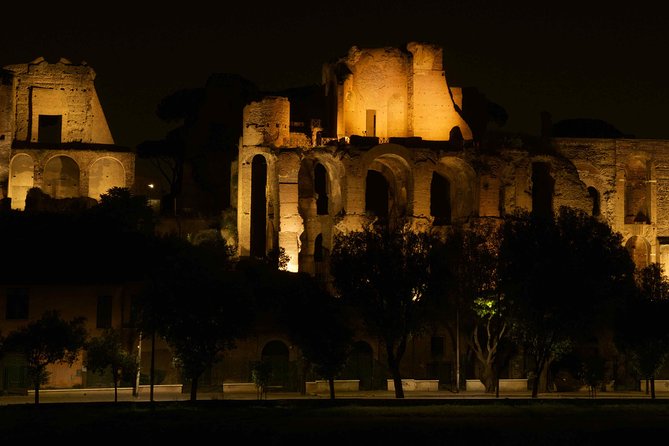
The Terme di Caracalla provide a powerful ancient setting. The remains are expansive and visually weighty, so you can work with wide compositions as well as repeated masonry and shadow. This stop also shows the value of private transport, since it lies away from the tight cluster of central squares.
More Photography Tours in Rome
- Unique Rome by Night, Photo Tour and Workshop Under the Stars
★ 5.0 · 96 reviews - Vespa Rome Photography Tour by Local
★ 5.0 · 67 reviews - Rome by Day, Beauty and History Unique Photo Tour and Workshop
★ 5.0 · 36 reviews
Trevi Fountain and the final light
The final listed stop is Fontana di Trevi. In daylight, it is one of Rome’s most crowded photo locations. Visiting during the overnight schedule gives you a better chance to study the fountain’s sculpture, water, and stone without the usual wall of people.
Trevi is not automatically easy to photograph. It is bright, detailed, and surrounded by dark areas, so your exposure can be fooled by the white stone and illuminated water. It is a good place to apply the lessons from earlier stops, particularly light balance, shutter speed, and composition.
The route includes many famous sights, but it is not only a checklist. The value comes from seeing how each setting demands a different approach. A formal square calls for symmetry. A fountain asks you to control bright highlights. The river rewards reflections. A narrow neighborhood street depends on framing and layers.
Because the experience lasts about seven hours and begins at 10 pm, the final section reaches the hours when the light starts changing. The precise order and amount of time at each stop may vary with conditions, but you should expect a long night rather than a quick evening outing.
What the guide adds to the experience
Giulio D’Ercole is both the driver and professional photographer guide. His local knowledge helps with route planning, viewpoints, timing, traffic, and the changing position of the sun. His guidance is not limited to camera controls. He also shares background about Rome’s landmarks as you move between locations.
The most useful feature is the real-time help. You can ask about a setting, adjust your tripod, take a frame, and then receive a practical correction. That is much easier to remember than reading about ISO or white balance before your trip.
Giulio is also patient with different experience levels. One family included a nine-year-old who stayed engaged through the night, while other participants used the time for serious technical practice. That does not make the tour a standard family activity, but it shows that the guide can keep the experience friendly rather than overly formal.
The guide has also taken photographs of participants during the route. If you want pictures of yourself and your companions in Rome, you may find that a pleasant extra, though the main focus remains teaching you to make your own images.
Is $420.08 a fair price?
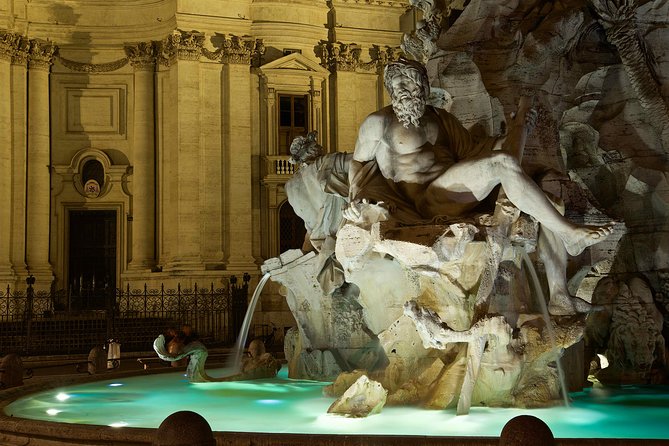
At $420.08 per person, this is expensive compared with a basic walking tour or a general night sightseeing outing. You are paying for a private-style experience limited to four people, a professional photographer, private transportation, and a seven-hour route through the night.
The value improves if you already own a camera and want focused instruction. You are not paying only to be driven past monuments. You get repeated practice with manual controls, long exposures, composition, and light changes. A serious beginner could come away with both better photographs and a clearer understanding of how to make them.
The price is harder to justify if you only want a few attractive vacation pictures. In that case, a shorter photo walk may be enough. The schedule also asks you to give up a full night of sleep, and the experience requires good weather. It is best suited to someone who sees the workshop itself as a major part of the trip.
If you do not have a camera, Nikon gear and a tripod can be rented for €50 per kit, payable in cash. Confirm the equipment details when booking so you know what is available for your needs.
Who should book this overnight workshop?
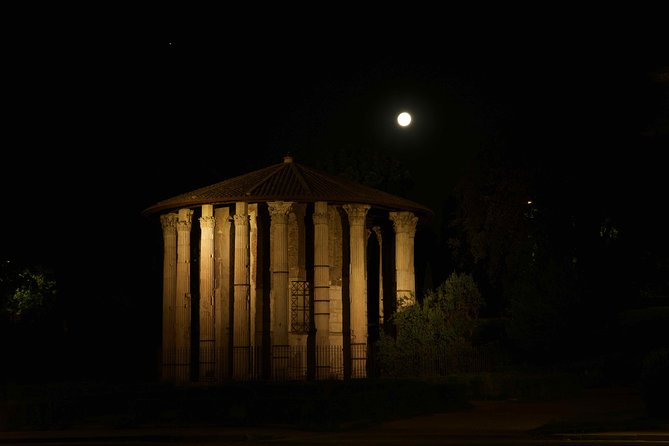
I would choose this experience if you want Rome photographs that are less ordinary than daytime snapshots. It fits photographers who enjoy learning by doing, especially those who are comfortable spending seven hours moving between locations and waiting for the right light.
It is also a good option for couples or a small family who want both instruction and personal images. The group limit keeps the setting relaxed, and private transport removes some of the strain of covering distant parts of Rome at night.
I would think twice if you dislike late nights, need a fixed sightseeing timetable, or want a leisurely meal-focused tour. The route is long, the schedule is demanding, and the photography work requires attention. You should also keep the weather policy in mind: poor conditions can lead to a different date or a full refund.
Free cancellation is available up to 24 hours before the start time. Changes or cancellations made less than 24 hours before the start are not accepted for a refund.
My verdict on Rome from dusk to dawn
I like this workshop because it gives you access to a quieter Rome while teaching skills you can use long after the trip. The strongest features are Giulio’s patient coaching, the tiny group, private transport, and the rare chance to photograph major sights from nighttime into early morning.
Book it if you want instruction, not just transportation, and if the thought of working in manual mode sounds appealing. Skip it if you want a short, casual evening tour or if $420.08 feels too high for a photography-focused activity. For the right photographer, the chance to photograph Rome with the streets unusually calm can justify both the price and the lost sleep.
FAQ
Where does the Rome photo workshop start?
It starts at the entrance of Castel Sant’Angelo, opposite the Bridge of Angels on Lungotevere Castello, at 10 pm.
Is hotel pickup available?
Yes. Pickup can be arranged from your hotel, Airbnb, or home upon request. Otherwise, you meet at Castel Sant’Angelo.
Where does the experience end?
The activity ends back at the meeting point.
How long does the workshop last?
The experience lasts approximately seven hours and runs from the 10 pm start through the overnight period toward dawn.
How many people can join?
The maximum group size is four travelers.
Is transportation included?
Yes. Private transportation is included, along with a professional photographer guide.
Can I rent camera equipment?
Yes. Customers without cameras can rent Nikon gear and a tripod for €50 per kit. Payment is made in cash.
What happens if the weather is poor?
The experience requires good weather. If it is canceled because of poor conditions, you will be offered another date or a full refund.
More Photography Workshops and Lessons in Rome
- Paris Photography Masterclass – Private Photography Lesson
★ 5.0 · 112 reviews - 2-Hour Photography Class While Touring Downtown Santa Fe, Smart Phones Welcome!
★ 5.0 · 108 reviews - Elevate Your Photography – Barcelona Private Tour & Workshop
★ 5.0 · 78 reviews - Edinburgh Photography Masterclass – Private Photography Lesson
★ 5.0 · 40 reviews
More Photography Workshops and Lessons in Italy
- Rome Photography Masterclass – Private Photography Lesson
★ 5.0 · 67 reviews - Venice Photography Masterclass – Private Photography Lesson
★ 5.0 · 46 reviews
Just added around Rome
- Golf cart tour in Rome & Professional Photoshoot★ 5.0 · 2 reviews
- Rome : Golf cart tour & Professional Photoshoot★ 4.5 · 13 reviews
- Professional Photoshoot in the Eternal City Rome★ 5.0 · 19 reviews
- Explore city on Vespa with Professional Photographer★ 5.0 · 3 reviews
- Expert Photographer of Rome with Guide★ 5.0 · 7 reviews
- Electric Tuk-Tuk Photography Service of Rome★ 5.0 · 3 reviews
- Early morning photoshoot at The Trevi Fountain★ 4.4 · 36 reviews
- Cinematic Photoshoot in Rome★ 5.0 · 42 reviews
Photography Workshops & Lessons, compared.
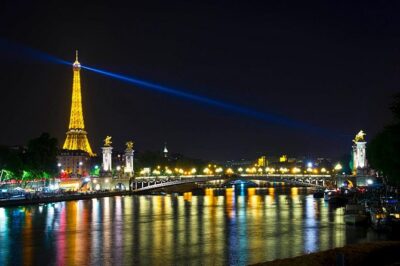
Paris Photography Masterclass – Private Photography Lesson
Read our review →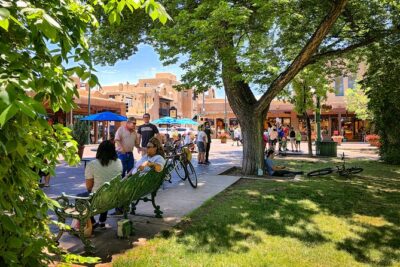
2-Hour Photography Class While Touring Downtown Santa Fe, Smart Phones Welcome!
Read our review →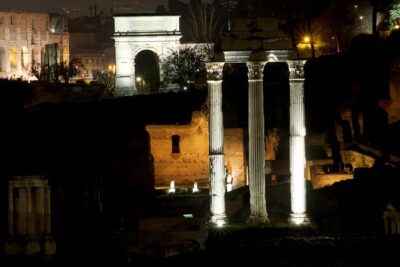
Unique Rome by Night, Photo Tour and Workshop Under the Stars
Read our review →
Elevate Your Photography – Barcelona Private Tour & Workshop
Read our review →
Rome Photography Masterclass – Private Photography Lesson
Read our review →
Venice Photography Masterclass – Private Photography Lesson
Read our review →
Edinburgh Photography Masterclass – Private Photography Lesson
Read our review →