
Review · PHOTOGRAPHY TOURS
Heritage Delhi Photography Walk (2 Hours Guided Walking Tour with Rickshaw Ride)
Delhi rewards a camera that is ready before you are. This two-hour walk links Safdarjung Tomb, Lodhi Garden, and Lodhi Art District, with a short cycle rickshaw ride between sights. I like the focused route and the chance to photograph places many first-time visitors could miss, especially the changing mix of old monuments, gardens, neighborhood streets, and painted walls. The main drawback is that the low price does not cover entrance fees, and the tour does not include hotel pickup.
I also like the small maximum group of 12, which should make it easier to ask questions and get photography help. Guides such as Saumya and Shika have received especially warm praise for adjusting the start time, including arranging a golden-hour outing, but you should confirm your exact meeting time and guide before setting out.
Key points at a glance
- Three very different photo settings: A Mughal-era tomb, a large historic garden, and a modern street-art district give you plenty of visual variety in only two hours.
- Golden-hour timing can matter: Saumya helped one participant choose a late-day start for softer light, so ask about the best time for your visit.
- A cycle rickshaw adds local flavor: The ride between sights is part of the experience, not just a way to get around.
- Guided access to overlooked corners: Your storyteller can point out lanes, buildings, people, and details you might pass without noticing.
- A modest starting price: At $18.62 per person, the tour offers good value if you want a guide and photo ideas, but entrance fees are extra.
- Simple meeting and ending points: You begin at the Safdarjung Tomb ticket counter and finish at Lodhi Gardens and the Lodhi street-art area.
Why this short Delhi photo walk works
Delhi can feel too large to photograph well in a single outing. You have grand monuments, leafy parks, crowded roads, painted walls, old homes, and ordinary scenes of daily life. Without a plan, you may spend most of your time getting from one place to another.
This walk keeps the route tight. The three stops are close enough to fit into two hours, yet each has a different visual character. Safdarjung Tomb gives you symmetry and stonework. Lodhi Garden adds trees, flowers, open paths, and historic tombs. Lodhi Art District then shifts the mood toward large-scale public art and modern Delhi.
I see the guide as the main value here. You are not simply being led from one landmark to the next. The stated focus includes photography tips, local stories, and conversations about both the historic and modern sides of the city. That can help you notice small details instead of collecting only the standard monument shot.
The group limit of 12 is useful. It is not a private photo lesson, but it is small enough that you should have a reasonable chance to ask about composition, timing, and what to photograph next. If photography is your priority, tell the guide at the beginning. The more clearly you explain what you want, the more useful the walk is likely to be.
More Photography Tours in India
- Same Day Taj Mahal Photography Tour by Car
★ 5.0 · 31 reviews - Delhi Street Photography Tour
★ 5.0 · 11 reviews - Private Tour: Delhi Photography Tour
★ 5.0 · 7 reviews
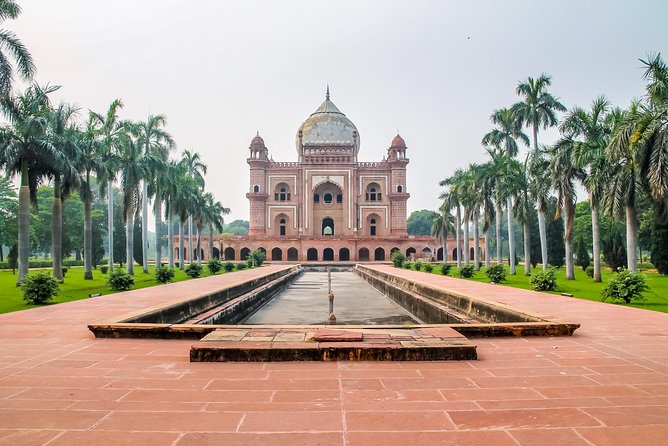
Safdarjung Tomb: a strong opening frame
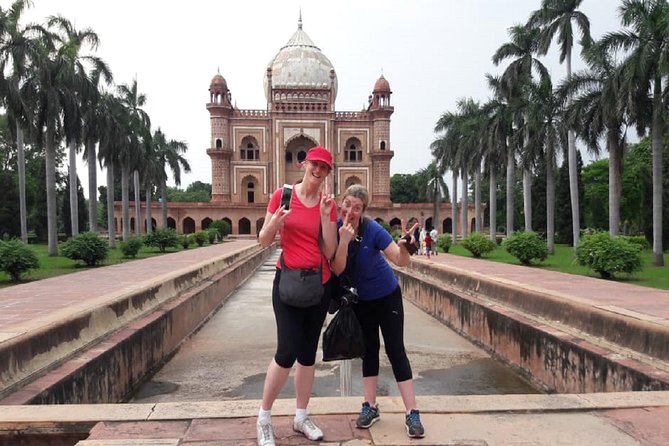
The walk begins at the ticket counter for Safdarjung Tomb, officially at H6Q6+WR5 near the Airforce Golf Course and Delhi Race Club in New Delhi. This is an important practical detail. You need to make your own way there, since hotel pickup and drop-off are not included.
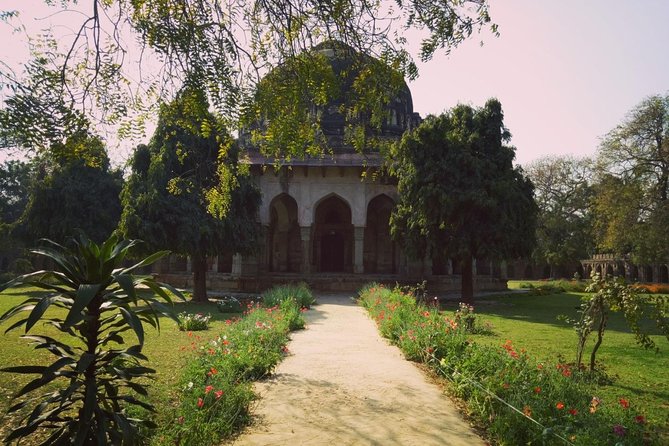
The tomb was built in the late 18th century as the mausoleum of Safdarjung. Its formal design gives you the kind of subject that works well for photography: broad architectural lines, a central structure, and details that reward a slower look. Your guide can help you think about angles and framing rather than simply telling you the monument’s name.
You have about 30 minutes here. That is enough for a focused visit, but not a long architectural study. You may want to arrive with your camera ready, since a third of the tour can pass quickly once you have taken the obvious front-facing picture.
Admission is not included. The price is low partly because you pay entry separately, so keep that in mind when comparing this walk with a more expensive option that includes tickets. The extra cost may be modest, but it is still part of your real budget.
The tomb is also a useful first stop because it gives the guide a chance to understand your pace. If you enjoy architectural detail, say so. If you prefer candid street scenes and people, say that too. The experience is described as a photography walk, not a formal history lecture, so your priorities should shape the conversation.
Lodhi Garden: one hour among tombs and trees
The largest portion of the tour takes place in Lodhi Garden, where you have about one hour. This is the heart of the route for anyone who wants variety in a single setting.
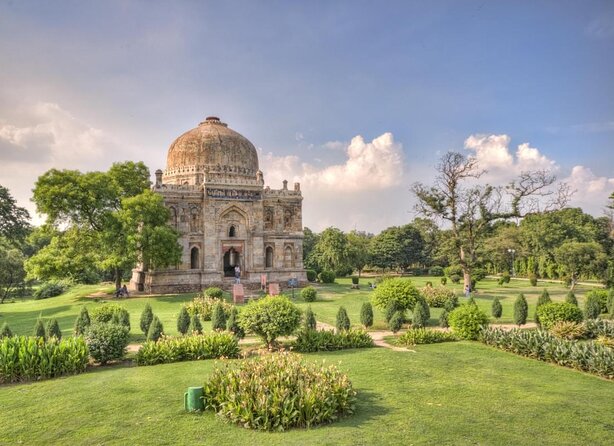
The garden combines open green space with monuments from Delhi’s past. You can photograph the Rose Garden, Sikandar Lodi Tomb, and Shah Sayyid Tomb, along with trees and flowers in different shades. That gives you more than one type of subject: close-up plant details, wide garden views, architectural patterns, and weathered stone.
I like this part of the route because it offers a break from a monument-only visit. A tomb can give you strong lines and texture, but a garden lets you change your approach. You might work on color, contrast, framing through branches, or the relationship between old buildings and the surrounding park.
The one-hour timing is generous compared with the other stops, though it can still go quickly if you stop often. If you use a phone, ask for help with framing and light. If you carry a larger camera, you may want to decide in advance whether you care more about architecture, plants, or people. Trying to photograph everything can leave you with many ordinary images instead of a few memorable ones.
The garden also offers a chance to hear the stories connected with the tombs. The guide is expected to explain the background of each point and the culture and daily life around it. That context matters because a photograph of an old building becomes more meaningful when you understand why it is there and how it fits into Delhi’s past.
Still, do not expect a full historical tour of every monument in the garden. The time is limited, and the purpose is to combine photography with storytelling. I would treat the historical information as helpful context rather than the main reason to book.
The cycle rickshaw ride between old and new Delhi
A cycle rickshaw ride is included as part of the route. It is described as a classic Indian form of transportation, and it adds a local touch that a standard air-conditioned vehicle would not provide.
The ride also changes the rhythm of the outing. You move from walking among monuments and gardens to seeing the city from a lower, slower position. That can give you a different view of streets and buildings, though the supplied details do not specify the exact distance or length of the ride.
There is no air-conditioned vehicle included. That should not surprise you, since this is a walking tour with a rickshaw transfer rather than a sightseeing drive. If you are sensitive to heat, plan your clothing and water accordingly. The tour requires good weather, and poor weather can lead to a new date or a full refund.
The rickshaw is not the main reason I would book this experience, but it fits the tour well. You get a practical transfer and a small taste of local transport without turning the outing into a vehicle-based city tour.
More Photography Tours in New Delhi:
- Delhi: Heritage Photography Tour
★ 3.5 · 6 reviews - Tromso: Northern Lights Photography Tour
★ 4.2 · 843 reviews - Barcelona E-Bike Photography Tour
★ 5.0 · 843 reviews - Tromsø: Northern Lights Photography Tour
★ 4.8 · 788 reviews
Lodhi Art District: a modern finish
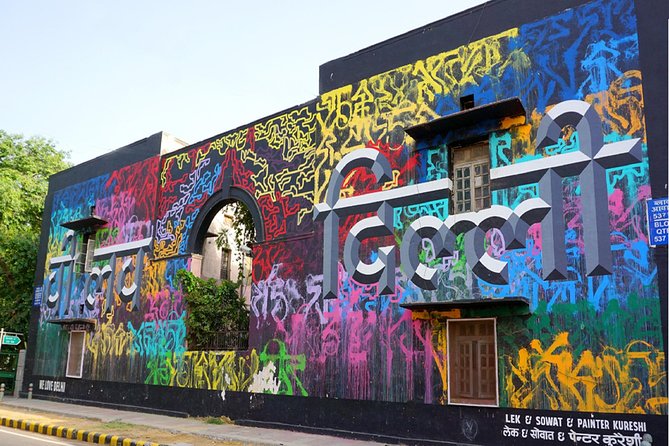
The final 30 minutes take you to Lodhi Art District, where painted walls present a sharp contrast to the tombs and garden. The artwork covers themes such as nature, the origin of the world, life, and death.
This is the most obvious modern part of the walk. It also gives you a chance to use different photography skills. Monument photography often depends on symmetry and structure. Murals ask you to consider color, scale, texture, and how people or passing vehicles relate to the wall.
The art district is a strong ending because it keeps the tour from becoming a repeat of Delhi’s usual monument circuit. You finish with public art rather than another formal building. That makes the route feel broader and more connected to present-day Delhi.
The tour ends at Lodhi Gardens, with the final location described as the Lodhi street-art street. Check the exact end point with your guide, especially if you have another booking afterward. The experience lasts about two hours, but walking speed, photo stops, and local conditions can affect the precise finish.
Timing, guides, and the best light
Photography depends heavily on timing. One of the most useful details connected with this experience is that Saumya helped arrange a golden-hour start. The participant reported getting the best pictures at that time and also learned that the tomb is illuminated at night.
You should ask about the day’s best start time before the walk. A late-afternoon departure may give you softer light, but the ideal choice depends on the date and what you want to photograph. If your main goal is Safdarjung Tomb, ask whether the available timing suits the monument. If you care most about the garden, you may prefer a time that gives the trees and flowers a different quality of light.
Shika has also been praised for communicating before the tour to find a suitable time. That suggests the guide may be willing to discuss timing rather than simply assign a fixed hour, though you should confirm what is possible when booking.
The guide language listed is English and other languages. Saumya received particularly strong personal praise, including for both photo and food outings, while Shika was described as pleasant and helpful. Since guide assignments can change, consider the names useful examples rather than a guarantee that one specific person will lead your walk.
What $18.62 really gets you
At $18.62 per person, this is an inexpensive way to add structure to a Delhi visit. You receive a guide, photography suggestions, local conversation, a cycle rickshaw ride, and a route through three distinct locations.
The value is strongest if you are new to Delhi or prefer not to plan your own photo route. You are paying for direction and access to a carefully chosen sequence, not for an expensive camera workshop. The listed price does not include entrance fees, transportation to the start, hotel pickup, or hotel drop-off.
Group discounts are available, which could make the cost even more appealing if you are booking with friends or family. The maximum group size is 12. That is small enough for a social outing, though anyone seeking one-on-one instruction should ask if a private option exists.
I would compare the total cost rather than the headline price. Add your entry fee, transport to Safdarjung Tomb, and any onward transport after the walk. Even after those extras, the tour can be good value because a local guide may help you use two hours far better than you would on your own.
Who should book this experience?
I think this walk suits first-time photographers in Delhi, casual phone photographers, and anyone who wants a manageable introduction to the city’s visual contrasts. It also works well for people with only a short stay who want more than one kind of sight without committing to a full-day excursion.
You should book it if you enjoy stories as much as pictures. The guide’s role includes explaining the meaning and background of the places you visit, so the walk is about understanding Delhi as well as recording it.
It may be less suitable if you want a long, technical photography class. Two hours across three stops leaves limited time for detailed camera instruction. It may also frustrate anyone who expects door-to-door transport or included entrance tickets.
The route requires walking, outdoor time, and good weather. Most people can participate, but you should plan around the conditions on the day. A mobile ticket is provided, and confirmation arrives at booking.
Free cancellation is available until 24 hours before the start time. Cancellations or changes made inside that window are not refunded or accepted. If bad weather cancels the activity, you can choose another date or receive a full refund.
Final call: is this Delhi photo walk worth booking?
I would book this experience if you want a low-cost, compact route with genuine visual variety. Safdarjung Tomb, Lodhi Garden, and Lodhi Art District give you three different ways to photograph Delhi, while the rickshaw ride keeps the outing connected to local life.
The strongest reasons to choose it are the helpful timing advice, the small group limit, and the chance to receive guidance from people such as Saumya or Shika. Ask about golden-hour timing before you go, and budget separately for entry fees and transport to the meeting point.
Skip it if you want a private workshop, a long monument visit, or an air-conditioned vehicle. For everyone else, this is a practical two-hour introduction to Delhi through stone, gardens, painted walls, and a camera held ready.
FAQ
How long is the Heritage Delhi Photography Walk?
The experience lasts approximately two hours.
Where does the tour begin?
It begins at the Safdarjung Tomb ticket counter at H6Q6+WR5, Airforce Golf Course, Delhi Race Club, New Delhi, Delhi 110021, India.
Where does the tour end?
The tour ends at Lodhi Gardens, with the final area described as the Lodhi street-art street.
What sights are included?
The route includes Safdarjung Tomb, Lodhi Garden, and Lodhi Art District.
Is transportation included?
A cycle rickshaw ride between sights is included. An air-conditioned vehicle and hotel pickup and drop-off are not included.
Are entrance fees included?
No. Admission fees for historical sites such as Safdarjung Tomb are not included.
What is the cancellation policy?
You can cancel up to 24 hours before the start time for a full refund. Cancellations or changes made less than 24 hours before the start time are not accepted for a refund. If poor weather cancels the experience, you can receive a full refund or choose another date.
More Two-Hour Trips around New Delhi
- Santorini 2h Private Flying Dress Photoshoot with Transportation
★ 5.0 · 357 reviews - Procida Island Tour by Boat 2h 15m with Swimming and Underwater Photos
★ 5.0 · 344 reviews - Hallstatt: 2-Hour Guided Walking Tour with Photographer
★ 5.0 · 152 reviews - 2-Hour Photography Class While Touring Downtown Santa Fe, Smart Phones Welcome!
★ 5.0 · 108 reviews
More History Tours around New Delhi
- New Delhi: Guided Night Photography & Heritage Tour of Delhi
★ 5.0 · 5 reviews - Rome: Vespa Photo Tour with Historic City Highlights
★ 5.0 · 395 reviews - Hanbok Photoshoot and History Tour at Gyeongbokgung Palace
★ 5.0 · 276 reviews - Beacon Hill Boston History + Photo Walking Tour (SMALL Group)
★ 5.0 · 163 reviews
Just added around New Delhi
- From Delhi: Sunrise Taj Mahal Tour with Professional Photographer★ 5.0 · 3 reviews
- Private Taj Mahal Tour with Professional Photographer – All Inclusive★ 5.0 · 2 reviews
- From Delhi: Private Taj Mahal Photoshoot in Indian Ethnic Attire★ 5.0 · 5 reviews
- Delhi Street Photography Tour★ 5.0 · 11 reviews
- Unlock Delhi’s Secrets: Food and Photography Full Day Tour★ 5.0 · 5 reviews
- Delhi Diaries Private Instagram Tour★ 5.0 · 9 reviews
- Private Tour: Delhi Photography Tour★ 5.0 · 7 reviews
- From Agra: Taj Mahal Guided Tour With Professional Photos★ 5.0 · 6 reviews
Photography Tours, compared.







Browse the lists this shoot appears in