
Review · TOKYO PHOTO TOURS & PHOTOSHOOTS
Exclusive Sumo Morning Practice in Tokyo with Photo Opportunity
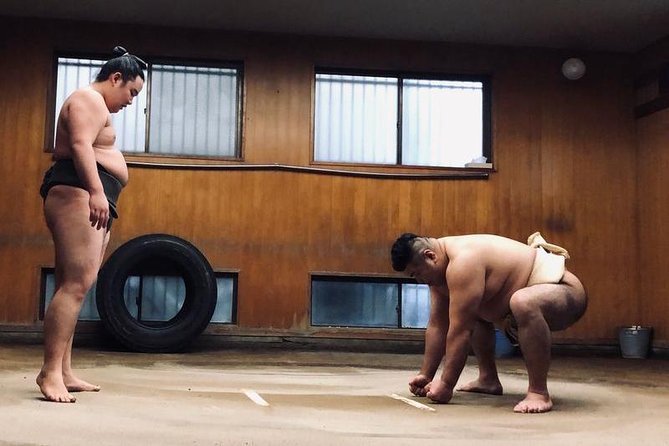
Sumo gets serious before breakfast. This two-hour morning visit near Tokyo Skytree gives you a rare look inside a working sumo stable, where wrestlers warm up, train, and face one another without the polish of a tournament show. I like the small group of up to 10 people, which makes the guide’s explanations easier to follow, and I like that the tour fits neatly into a busy Tokyo morning. The main drawback is seating: places are first come, first served, so arriving late can put you two or three rows back.
I also appreciate the chance to take photos with the wrestlers and, when permitted, with the full stable and its sensei. Guides such as Hana, Kentake, and Yuki have been praised for clear English and useful explanations of sumo customs, training, and philosophy. Still, practice can feel repetitive after about an hour, and this is not a substitute for the noise and ceremony of a full tournament.
Key points to know before booking
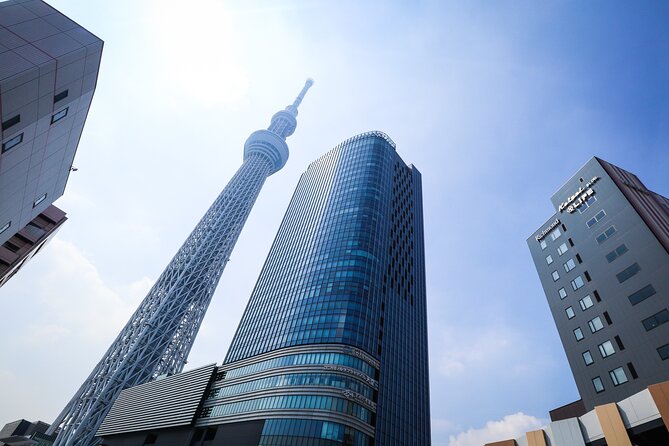
- Watch real morning training near Tokyo Skytree: You see wrestlers warm up and spar inside a working stable, not a staged demonstration.
- Arrive early for better seating: Seating is first come, first served, and late arrivals may sit two or three rows from the front.
- Expect a quiet, respectful setting: Only the tatami areas are open to visitors, and the training deserves your full attention.
- Meet at Oshiage Station at 8:00 am: The meeting point is at the taxi stand inside the station rotary.
- Keep your morning free for about two hours: The practice itself may last around an hour, with time for explanations and photos.
- Bring water in summer: Tokyo heat and humidity can make a morning inside the stable uncomfortable.
Why a sumo stable is different from a tournament
A sumo tournament is the polished public face of the sport. You get formal entrances, a full arena, announced bouts, crowd noise, and a clear contest schedule. At a stable, you see the work that leads to that spectacle.
The wrestlers warm up, repeat drills, and spar with intense focus. The atmosphere is quieter than a tournament, but that quiet lets you notice small details: the seriousness before a bout, the physical force of each clash, and the repeated nature of the training. You are not watching a performance arranged for a sightseeing crowd. You are watching athletes do their daily work.
That distinction matters. If you want dramatic ceremony, a tournament is the better choice. If no tournament fits your Tokyo dates, this practice offers a strong alternative. It also gives you a closer view of the wrestlers than a large arena usually can.
The experience can also change how you think about sumo. It is easy for a first-time visitor to reduce the sport to large bodies colliding. The practice shows the strength, speed, balance, discipline, and control involved. One review put it plainly: the wrestlers are not simply large men, but highly trained fighters. That is exactly the lesson you take away from watching the attacks at close range.
More Early-Start Trips around Tokyo:
- Tokyo Ryogoku Sumo Morning Practice + Photo Shoot with Wrestlers
★ 4.5 · 277 reviews - Tokyo Sumo Morning Practice Tour w/ Ring-Side Seat + Photo Shoot
★ 5.0 · 93 reviews - Barcelona: Paddleboarding at Sunrise. Includes: instructor, photos, equipment
★ 4.7 · 570 reviews
Meeting at Oshiage Station at 8:00 am
The tour begins at the taxi stand in the station rotary at Oshiage Station, in Sumida City. The address is listed as 1-chome 1, Oshiage, and the area is close to Tokyo Skytree.
This is a useful starting point because Oshiage is a central transport point, but station meeting places can still be confusing. One visitor had trouble finding the meeting location at first, so I would allow extra time to get your bearings. Do not assume that arriving at the station entrance means you are already at the taxi stand. Check the station signs and follow the directions to the rotary.
The 8:00 am start is early, but it works well with Tokyo sightseeing. You can finish the activity and still have most of the day for Skytree, Asakusa, Ueno, or another part of the city. The early hour also matches the rhythm of sumo training, which makes the timing part of the experience rather than an inconvenience.
You receive confirmation when booking, and a mobile ticket is accepted. The activity ends back at the meeting point, so you do not need to arrange a separate return transfer.
Walking into the stable near Tokyo Skytree
From Oshiage, the group visits one of the sumo stables around Tokyo Skytree. The exact stable may vary, so you should think of the location as a working training space rather than a public museum with exhibits and signs.
That makes the guide important. You are not simply dropped at a doorway and left to watch. Guides explain what you are seeing and provide context about sumo customs, the wrestlers, and the meaning behind the training. Kentake has been praised for fluent English and detailed explanations, while Yuki has been noted for explaining the background and philosophy in a clear way. Hana has also earned praise for an enthusiastic approach.
The best guides help you understand why the room is quiet, why the wrestlers follow set routines, and how to behave around the training. Sumo is built around discipline and respect, so the visit works best when you treat it as an invitation into a serious workplace.
There are firm limits on where you can go. Only the tatami, or straw-mat, areas are open to visitors. All other parts of the stable are off-limits. This is not a place for wandering around, leaning into the practice area, or trying to get a closer look by moving beyond the permitted space.
Watching warm-ups, drills, and sparring
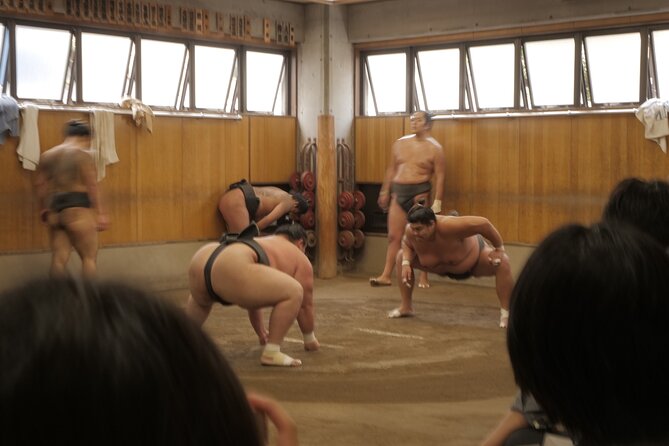
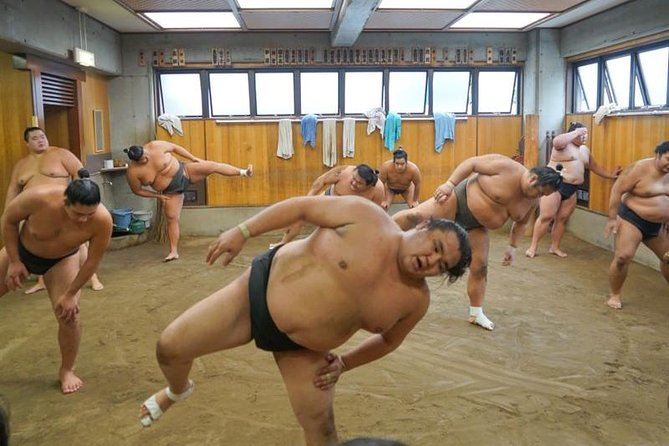
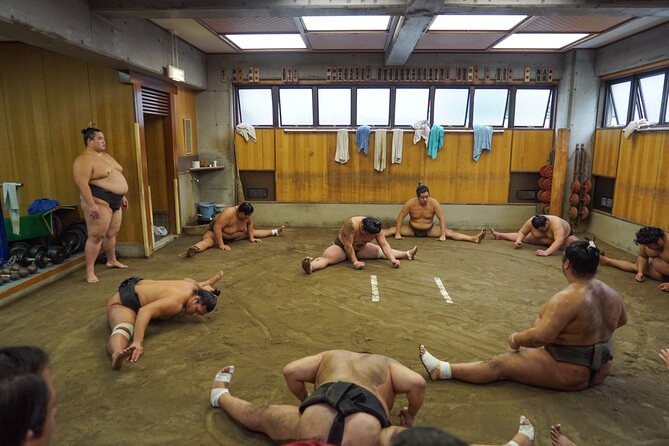
The central part of the morning is the practice itself. You watch wrestlers warm up and spar with one another at close range. The training can look simple at first, but repetition is the point. Sumo relies on timing, balance, leg strength, and the ability to absorb and deliver force.
The attacks are often the most striking part. The wrestlers are young, focused, and physically powerful, and the effort is easy to see. This is not a choreographed show. The concentration and seriousness make the room feel different from a standard cultural presentation.
You may see wrestlers of different ranks practicing in the same stable, though the supplied information does not promise a particular wrestler or a set sequence of bouts. The length of each activity can vary as well. One hour of viewing is generally enough for many people, especially because the practice can become repetitive. The full activity lasts about two hours, allowing time for the guide’s explanation, movement to and from the stable, and the photo opportunity.
I would set your expectations correctly: this is observation, not participation. You will not enter the practice area, try sumo moves, or receive a wrestling lesson. The value comes from proximity and access to a routine that most Japanese people, as well as most international visitors, never see.
A few more photo experiences around Tokyo worth a look
- Tokyo: Kimono Dressing, Walking, and Photography Session
★ 4.9 · 427 reviews - Best Go Kart Experience in Shibuya Crossing with Iconic Photos
★ 5.0 · 348 reviews - Tokyo Cyberpunk Street Photo Tour
★ 5.0 · 165 reviews - Tokyo by Night Photography Tour (Private Option Available)
★ 5.0 · 151 reviews
Photo time with the wrestlers
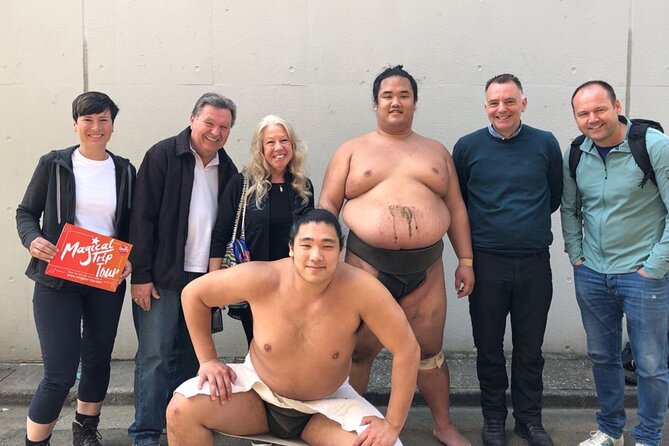
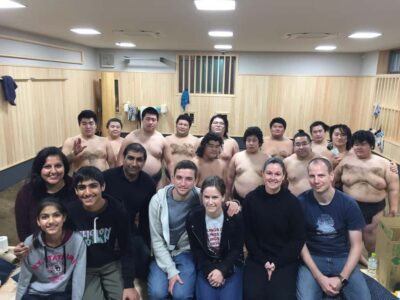
A photo opportunity is included, and the wrestlers may allow you to take pictures with them. Some people have also had the privilege of posing with the whole stable and the sensei at the end.
This is a memorable finish, but it should be handled with care. The training comes first. Follow the guide’s instructions, wait for permission, and keep the photo session orderly. The setting is a working stable, not a photo studio, so the exact arrangement and timing can depend on the stable’s schedule.
For many people, this is the most personal part of the visit. Watching from the tatami is impressive, but standing beside the wrestlers gives you a better sense of their size and presence. It also helps correct the cartoon version of sumo that many first-time visitors carry in their heads.
You should still bring modest expectations. The photo opportunity is offered as part of the visit, but the information does not guarantee a specific number of wrestlers, a particular pose, or a fixed amount of time. The guide and stable staff control the process.
What the two-hour format is really worth
The price is $99.10 per person. That is not a small add-on, especially if you are traveling with a family or group. The value depends on what you want from Tokyo.
For someone who simply wants to see sumo once, the price can feel high for a short activity. The practice itself may provide about an hour of viewing, and the action is not constant. You may watch the same type of drills several times. If you need nonstop entertainment, this may not be the best use of your morning.
For a sports fan or anyone interested in Japanese culture, the price is easier to justify. You are paying for access to a private working environment, a small group, an English-speaking guide, the cultural explanation, and the chance for close-up photos. A tournament ticket may offer more spectacle, but it also follows a fixed schedule and does not necessarily give you the same close view of daily training.
The group limit of 10 is another part of the value. A smaller group makes it easier to hear the guide and ask questions. It does not guarantee a front-row position, however. Since seating is first come, first served, arriving early matters more than the group size alone.
Seating, manners, and practical comfort
Seating is one of the few clear drawbacks. The stable is often visited by several tour companies, so the best places can fill quickly. Late arrivals may be seated two or three rows from the front.
That does not make the viewing impossible, but distance can affect the experience. The closer you are, the easier it is to see expressions, footwork, and the physical impact of each bout. I would treat punctuality as part of the booking, not as a minor detail.
The stable is also not a casual sightseeing venue. You need to remain in the permitted tatami areas and respect the boundaries around the practice space. Keep voices low, follow photography instructions, and avoid treating the wrestlers as props. The guide will help you understand the right behavior.
Summer requires extra care. Tokyo can be very hot and humid, and the tour operator recommends bringing water and wearing a hat to reduce the risk of heat stroke. Even though the training takes place in the morning, the walk to the meeting point and the conditions around the stable can still be demanding.
The activity is near public transportation, and most people can take part. Specific accessibility details are not provided, so if you have mobility needs, contact the provider before booking rather than guessing about the stable layout.
Who will enjoy this sumo morning most
I would recommend this activity to:
- First-time visitors who cannot fit a tournament into their schedule
- Sports fans who want to see training rather than only public competition
- People interested in Japanese customs, discipline, and traditional arts
- Photographers who value a close and unusual portrait opportunity
- Families with older children who can sit quietly and follow stable rules
- Visitors who want a short morning activity near Tokyo Skytree
I would be more cautious if you need a highly active tour. You sit and watch for much of the visit. I would also think twice if you are seeking a long, action-packed program. The practice can repeat, and one hour may be enough for many people.
This is also not the ideal choice if your main goal is a full tournament atmosphere. The activity gives you access and closeness, while a tournament gives you ceremony, competition, and crowd energy. They are different experiences.
Cancellation and booking details
You can cancel for a full refund up to 24 hours before the 8:00 am start time. Cancellations made less than 24 hours before the activity are not refunded, and changes inside that period are not accepted. The cut-off follows Tokyo local time.
The tour is provided by MagicalTrip Inc. Confirmation is issued at booking, and the mobile ticket is convenient for a morning meeting. Because the stable has limited seating and the group is capped at 10, booking ahead is sensible if this is high on your Tokyo list.
FAQ
Where does the sumo morning practice tour meet?
The meeting point is the taxi stand at Oshiage Station, inside the station rotary in Sumida City, Tokyo.
What time does the activity start?
The activity starts at 8:00 am.
How long does the sumo experience last?
The activity lasts approximately two hours, although the practice itself may take around one hour.
Where does the tour take place?
You visit one of the sumo stables near Tokyo Skytree.
How many people can join the tour?
The group has a maximum of 10 participants.
Can I take photos with the sumo wrestlers?
The experience includes a photo opportunity, and visitors may be able to pose with the wrestlers. Some visits also include a group photo with the stable and sensei, but the exact arrangement can vary.
What happens if I arrive late?
Seating is first come, first served. Late arrivals may be seated two or three rows from the front. The activity does not offer access to areas beyond the permitted tatami spaces.
Should you book this sumo practice?
Book it if you want a close look at the work behind sumo, especially if no tournament fits your schedule. The guide’s explanations, small group, and photo opportunity give the visit more substance than simply watching a practice through a doorway.
Arrive early, accept that the training may repeat, and treat the stable with respect. If you do, the $99.10 price buys a rare Tokyo experience: a quiet seat near serious athletes as they prepare for the sport they have devoted their lives to. For culture and sports fans, that is a fair trade for one carefully planned morning.
Just added around Tokyo
- Asakusa Kimono/Yukata Rental & Photography_Tsutsuji★ 5.0 · 12 reviews
- Asakusa Kimono Photography Tour★ 5.0 · 8 reviews
- Personal Travel and Vacation Photographer Tour in Tokyo★ 5.0 · 19 reviews
- Travel Tokyo with Your Own Personal Photographer★ 5.0 · 43 reviews
- Tokyo: Photo Shoot with a Private Vacation Photographer★ 5.0 · 53 reviews
- Tokyo: Private photo shoot★ 5.0 · 31 reviews
- Tokyo: Evening Photography Tour★ 4.8 · 61 reviews
- Tokyo:Genuine Tea Ceremony, Kimono Dressing, and Photography★ 5.0 · 33 reviews
Tokyo Photo Tours & Photoshoots, compared.
Kimono Dressing, Walking, and Photography Session
Read our review →
Best Go Kart Experience in Shibuya Crossing with Iconic Photos
Read our review →
Tokyo Ryogoku Sumo Morning Practice + Photo Shoot with Wrestlers
Read our review →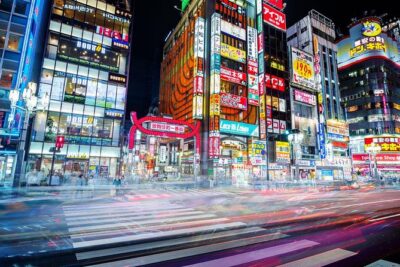
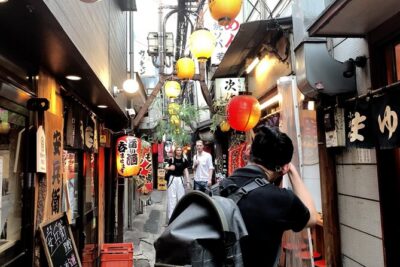
Tokyo by Night Photography Tour (Private Option Available)
Read our review →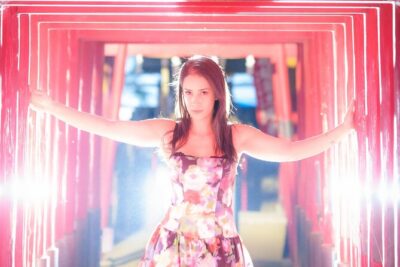
Sumo Practice Tour with Ring-Side Seat and Photoshoot
Read our review →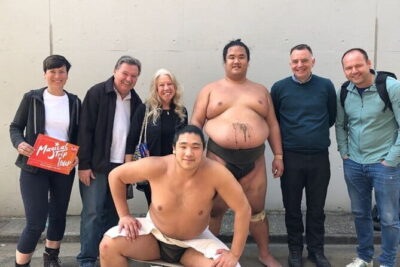
Tokyo Sumo Morning Practice Tour w/ Ring-Side Seat + Photo Shoot
Read our review →Browse the lists this shoot appears in