
Review · PHOTOGRAPHY WORKSHOPS & LESSONS
Beginners Photography Course – Small Group Workshop
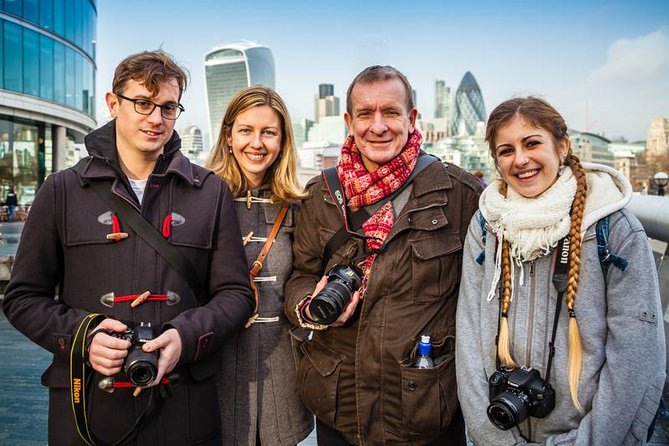
Your camera can do far more than auto mode. This four-hour London workshop combines practical lessons with some of the city’s best photo subjects, making it a useful choice if you want to improve while out walking. I especially like the maximum group size of six and the fact that tutor Lou teaches using your own camera, not a generic model. The main consideration is the price: at $336.07 per person, this is a serious spend for four hours.
I also like the hands-on structure. You practice ISO, shutter speed, aperture, focusing, composition, and light on location rather than sitting through a long indoor lecture. The drawback is that food and drinks are not included, and the course is aimed at beginners, so experienced photographers may find parts of it too basic.
Key points at a glance
- Personal help with your own camera: Tuition is adapted to the camera you bring, even when the group contains different makes and models.
- Only six places: The small group leaves room for individual questions and one-to-one help.
- Real practice in More London: You work with ISO, shutter speed, and aperture at City Hall, then use those skills beside the Thames.
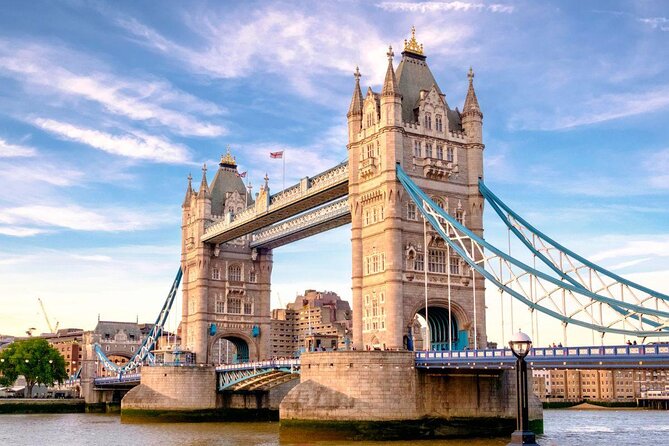
- Three strong London subjects: City Hall, Tower Bridge, and the Tower of London give you varied subjects for composition and framing.
- Built for people stuck on auto: The course explains camera settings in plain language and gives you short tasks to make the lessons stick.
What this London photography workshop is really for
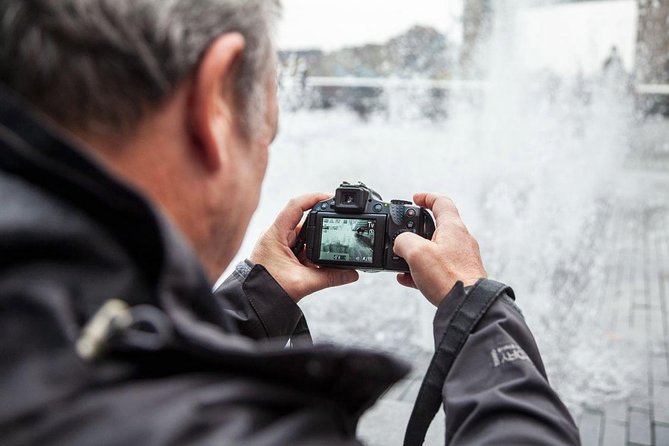
This is not a sightseeing tour with a few camera tips added at the end. It is a practical photography lesson that happens to use central London as its classroom.
You meet near London Bridge Station and walk to the More London area by City Hall. From there, the session moves toward viewpoints of Tower Bridge and the Tower of London. The exact walking route is not described in detail, but the listed stops suggest a compact riverside session rather than a full-day trek across the city.
The course is designed for people who own a digital camera but do not yet feel in control of it. You may have a DSLR or another digital camera with manual settings. You may also be someone who has spent years using auto or scene modes and wants to understand what the other buttons actually do.
That focus is important. A camera manual can explain what aperture means, but it usually does not show you why changing it matters in a real photograph. Here, you make the adjustment, take a picture, look at the result, and try again.
The instructor has taught photography for many years and works with a wide range of cameras. Past students have included people who had inherited a camera, people struggling with an intimidating DSLR, and people who already knew a few basics but wanted to become more independent. That range can work well because the small group allows the teaching to be adjusted.
More Photography Workshops and Lessons in London
- London Photography Masterclass – Private Photography Lesson
★ 5.0 · 6 reviews - Wildlife Photography Workshop in Richmond Park in London
★ 4.5 · 5 reviews - London Smartphone Photography workshop and tour
★ 5.0 · 5 reviews
Why a group of six makes a difference
A maximum of six people is one of the strongest features here. Photography questions are often very specific: where is the focus control on this model, how do I change ISO, why is the shutter speed flashing, or which dial changes the aperture?
In a large class, those questions can get lost. With six people, the tutor has time to look at your camera directly and help you make the change. The course description also promises time for one-to-one tuition, which is useful when your camera menu does not match someone else’s.
The small group does not mean you receive a private lesson. You will still share the tutor’s attention, and the pace needs to suit several people. If one person has never used manual controls and another already understands exposure, the class may move unevenly at times.
Still, this format should be much more useful than a crowded workshop. One former student had a camera problem that required a factory reset, and Lou took time to help sort it out. That kind of practical troubleshooting is hard to get from a standard online lesson.
City Hall and More London: learning the controls first
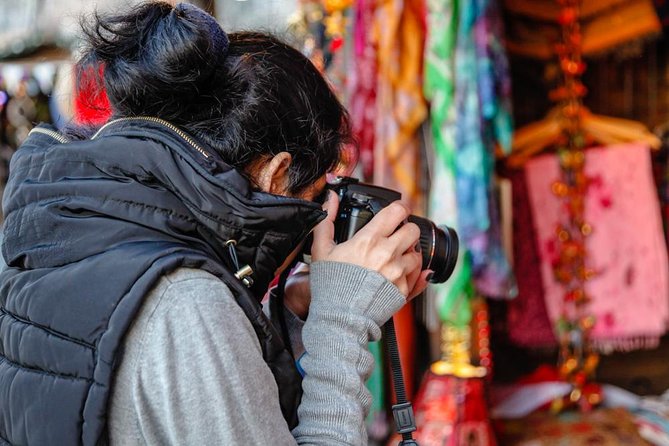
The first stop lasts about two hours, so this is the main teaching block. In the More London area around City Hall, you learn how to use your camera’s key functions and settings while working with actual subjects around you.
The central trio is ISO, shutter speed, and aperture. These settings control how your camera records light, but they also affect the look of the photograph. The course uses short assignments so you can see those effects instead of trying to memorize definitions.
You may be asked to alter one setting, take a picture, and compare the result with a frame made using another setting. This is the right way to learn because the changes become visible and useful. You begin to see how a faster or slower shutter speed affects movement, how aperture changes the area that appears sharp, and how ISO helps when light levels shift.
The tutor also discusses white balance, which one previous participant continued to practice after the class. White balance affects the color cast of a picture, so learning to control it can help you avoid photographs that look too blue, too yellow, or otherwise unlike the scene you saw.
This first section should suit you if camera terminology has always felt confusing. Several past participants described leaving with a clearer sense of how the settings work together, not just a list of isolated controls.
The setting itself helps. City Hall and More London give you architectural lines, open riverside views, and different ways to frame a subject. You are not practicing on test charts. You are making photographs that already have travel value.
Tower Bridge: composition, focus, and light
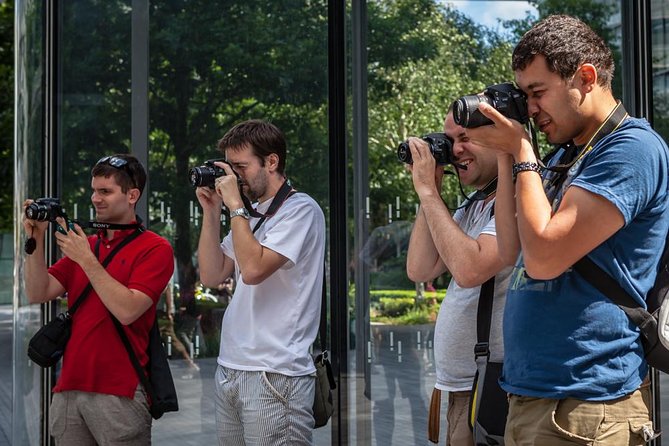
The Tower Bridge stop lasts about 30 minutes and gives you a strong subject across the river. The bridge’s towers, suspension elements, and position over the Thames create obvious lines and shapes for composition practice.
This part is less about pressing the shutter and more about deciding how to make the image. You learn about framing, depth of field, and the effect of light. The tutor helps you consider where to place the bridge in the frame, what to include around it, and how much of the scene should appear sharp.
Focusing techniques are also covered here. That matters because a technically well-exposed photograph can still fail if the focus lands in the wrong place. You get a chance to ask how focusing works on your own camera and to test the method with a major London subject.
Thirty minutes is not a long time. You should not expect a full lesson on every focusing mode or a detailed treatment of advanced composition. But as a second stage after the City Hall exercises, it gives you a chance to apply the basics to a recognizable subject.
The riverside location also brings a practical lesson: light changes how a familiar landmark looks. You learn to pay attention to the direction and quality of light instead of treating it as something outside your control.
More Photography Workshops and Lessons in the UK
- Edinburgh Photography Masterclass – Private Photography Lesson
★ 5.0 · 40 reviews
The Tower of London: using lenses and seeing differently
The final listed stop takes another 30 minutes and gives you views of the historic Tower of London from across the river. Here the teaching turns to lens choices, shutter speed, composition, and light.
Lens choice can alter the relationship between the subject and its surroundings. A wider view may include more of the river and skyline, while a longer focal length can give the building greater emphasis. The course is not simply about photographing the Tower as a postcard subject. It encourages you to think about how your equipment changes the story in the frame.
You also continue working with shutter speed and light. That repetition is useful because beginners usually need several chances to make a new setting feel natural. One pass may show you what a control does. A second and third pass help you remember when to use it.
As with Tower Bridge, the half-hour timing means you will need to stay focused. This is not a leisurely architecture walk with unlimited time for every angle. It is a short field exercise, with the tutor available to help you get the best result from your camera.
The two landmark stops also give the workshop a satisfying finish. You begin with camera controls, then use them for real travel photographs. You leave with a better chance of taking useful pictures on future trips, not just a page of notes.
What the teaching style seems to do well
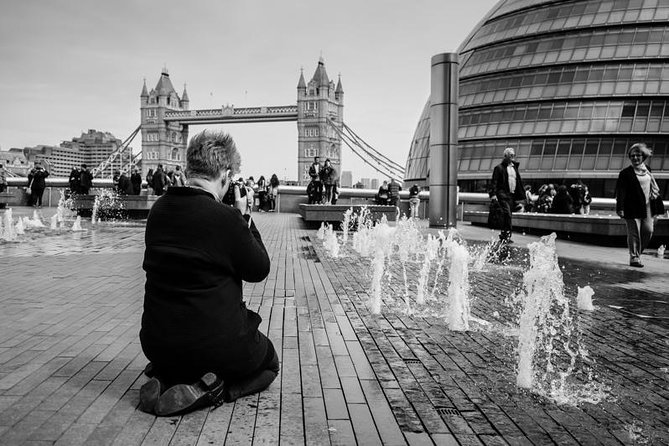
The strongest praise centers on clarity and patience. The course appears especially good at explaining technical subjects in ordinary language, then giving you a task that makes the idea practical.
Lou is named as the tutor in the feedback, and her teaching style is described as careful, enthusiastic, and attentive to the whole group. That matters when everyone brings a different camera. A lesson can become frustrating if the instructor only knows one brand or expects you to find settings without help.
The course also seems to handle mixed ability levels reasonably well. One participant considered themselves the least experienced person in the class, while others were further ahead, yet the practical format still worked for everyone. That does not guarantee the same pace for every group, but it suggests the tutor can adjust explanations.
You should expect to be involved throughout. The workshop sets short assignments and asks you to change settings, frame subjects, and take pictures. If you prefer to sit quietly and watch a demonstration, this may feel demanding. If you learn by doing, it is a strong match.
Bring your camera fully charged, plus a spare battery if you have one and enough memory cards. This is not the time to arrive with a nearly empty battery or a full card. You will be taking photographs, and the practical work is the point of the course.
Is $336.07 good value for four hours?
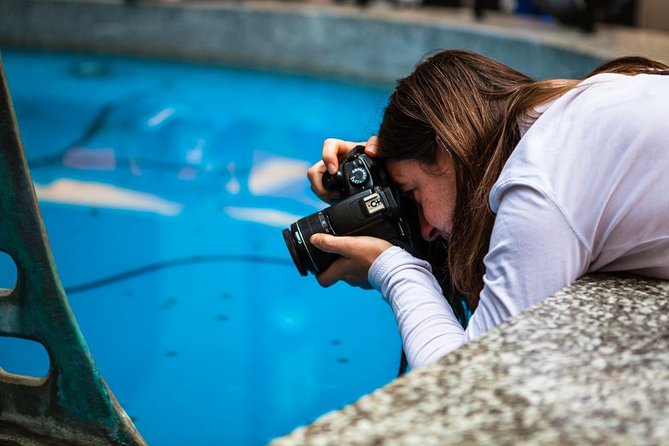
The price is the biggest question. At $336.07 per person, the workshop costs much more than a casual group walking tour or a self-guided photography walk.
The value depends on what you need. If you only want views of Tower Bridge and the Tower of London, the price is hard to justify. You can see those sights without a tutor, and admission to the listed stops is free.
If your camera has been sitting unused, or you remain stuck in auto mode, the calculation changes. You are paying for a small class, an experienced photography tutor, help with your particular camera, structured practice, and a London setting that gives each lesson a real subject.
The one-to-one help is especially important. Online videos can explain aperture and ISO, but they cannot look at the camera in your hands and guide you through a factory reset or a confusing control. The group size also offers more personal attention than many general photography classes.
I would see the price as worthwhile only if you plan to keep taking photographs after the workshop. Several students used the skills on later holidays and continued experimenting with shutter speed, aperture, ISO, and white balance. That long-term use is where the value grows.
Group discounts are available, though the supplied details do not state the discount amount. If you are booking with another person, check the final price before paying.
Who should book this course?
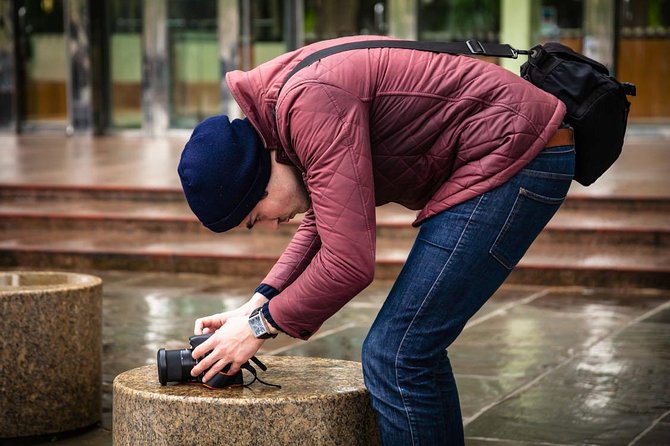
This workshop is best for you if:
- You own a digital camera but mostly use auto or scene modes.
- You want help with your exact camera model.
- You learn better through short exercises than through theory alone.
- You are happy to spend four hours walking and practicing in central London.
- You want to improve travel photography for future holidays.
- You are at least 16 years old.
It may also suit someone who inherited a camera and has no idea where to begin. The teaching is aimed at beginners, but people with some basic experience can still benefit from a refresher and personal help.
I would not choose it if you already use manual settings with ease, understand exposure, and regularly control focus, white balance, and depth of field. In that case, an intermediate or creative course would likely offer more useful work.
The tour is offered in English. Most people can participate, and service animals are allowed. It starts at London Bridge Station Approach Road, London SE1 9SP, and ends back at the meeting point, which makes the return simple.
Practical details before you book
The activity lasts about four hours. The published stop times account for three hours in total, with the remaining time presumably used for walking and moving between locations. You should allow the full four-hour period rather than planning another fixed appointment immediately afterward.
There is no food or lunch included. Bring anything you need for the morning or afternoon, depending on your start time. The supplied details do not specify a meal break, so a snack and water are sensible choices.
You receive confirmation at booking. Cancellation is free if you cancel at least 24 hours before the start time. A cancellation inside that window is not refundable, and changes that late are not accepted.
The activity requires a minimum number of participants. If the provider cancels because that number is not reached, you are offered another date or experience, or a full refund.
My verdict: a useful first step beyond auto mode
I would recommend this course to a beginner who wants personal help and plans to use the camera again. The small group, practical tasks, named tutor Lou, and focus on your own equipment give it more substance than a simple photo walk.
The price is high, and the four-hour format cannot cover every camera function. But if you leave able to control shutter speed, aperture, ISO, focus, and white balance with confidence, you have gained skills that can improve every future trip.
Book it if your camera manual feels unreadable, your camera has been stuck in a drawer, or you keep taking mediocre pictures without knowing why. Skip it if you already understand manual exposure and mainly want a guided tour of London’s landmarks.
FAQ
Where does the photography course start?
It starts at London Bridge Station Approach Road, London SE1 9SP, UK.
Where does the course finish?
The activity ends back at the meeting point.
How long does the workshop last?
It lasts approximately four hours.
How many people can join the workshop?
The group has a maximum of six participants.
What camera should I bring?
Bring your own digital camera. The teaching is adapted to the camera you own.
What equipment should I bring?
Bring a fully charged battery, a spare battery if you have one, and memory cards.
Is the course suitable for complete beginners?
Yes. It is designed for beginners, including people who have mainly used auto or scene modes.
What photography settings will I learn?
The course covers ISO, shutter speed, aperture, focusing, composition, depth of field, lens choices, light, and white balance.
Are food and drinks included?
No. Food, drinks, and lunch are not included.
What is the cancellation policy?
You can cancel for a full refund up to 24 hours before the start time. Cancellations made less than 24 hours before the start are not refunded.
Just added around London
- Iconic London Photo Walking Tour★ 4.6 · 11 reviews
- Flying dress professional photoshoot with pro photographer★ 5.0 · 5 reviews
- London: East End Instagrammable Street Art & Graffiti Tour★ 4.9 · 22 reviews
- Colourful Notting Hill Photography Tour★ 5.0 · 3 reviews
- London: Private Photography with Professional Photographer★ 5.0 · 7 reviews
- A Professional Photo Walk Experience in London★ 5.0 · 4 reviews
- Wildlife Photography Workshop in Richmond Park in London★ 4.5 · 5 reviews
- London Smartphone Photography workshop and tour★ 5.0 · 5 reviews
Photography Workshops & Lessons, compared.
Paris Photography Masterclass – Private Photography Lesson
Read our review →
2-Hour Photography Class While Touring Downtown Santa Fe, Smart Phones Welcome!
Read our review →
Unique Rome by Night, Photo Tour and Workshop Under the Stars
Read our review →
Elevate Your Photography – Barcelona Private Tour & Workshop
Read our review →
Rome Photography Masterclass – Private Photography Lesson
Read our review →
Venice Photography Masterclass – Private Photography Lesson
Read our review →
Edinburgh Photography Masterclass – Private Photography Lesson
Read our review →
Rome by Day, Beauty and History Unique Photo Tour and Workshop
Read our review →Browse the lists this shoot appears in