Review · KIMONO & COSTUME PHOTOSHOOTS
Kyoto Tea Ceremony and Samurai Photo Session
Kyoto has a quiet way of teaching you. This compact experience brings matcha-making, seasonal wagashi, and samurai armor photos together inside a 100-year-old machiya. I like the hands-on format, especially making both traditional matcha and a creamy latte. I also like the small group size, capped at 10 people, which should give you room to ask questions and try the steps yourself. The main consideration is timing: the core tea activity is described as about 50 minutes, while the full booking runs approximately 1 hour and 20 minutes, so you may want to confirm the exact schedule before arranging a tight connection.
The host Maya receives especially warm praise for her humor, clear English, patience, and friendly teaching style. You will not simply sit and watch a formal performance. You will learn some background, see the ceremony demonstrated, prepare your own matcha, taste a traditional sweet, make a latte, and finish with photos in samurai armor. At $71.74 per person, that is a fair price if you want a short cultural activity with food, instruction, and a playful photo session in one stop.
Key points at a glance
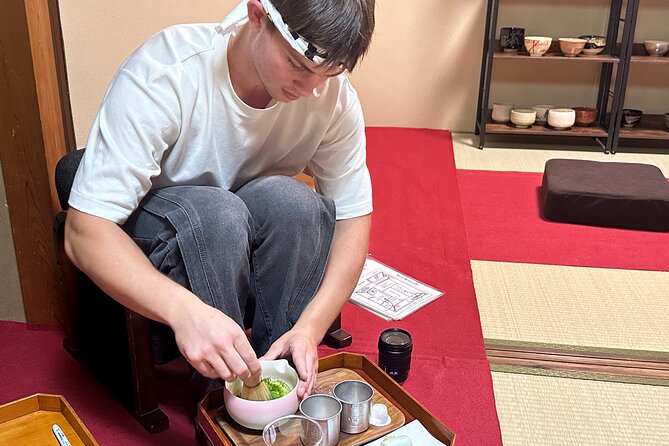
- A 100-year-old machiya setting: The traditional townhouse gives the class a sense of place that a modern hotel room would lack.
- You make the matcha yourself: The lesson covers the traditional preparation, not just a sample cup served to you.
- Two matcha experiences in one visit: You prepare classic matcha, then make a Kyoto-style matcha latte.
- Seasonal wagashi is included: The delicate Japanese sweet adds a small but important food element to the ceremony.
- Samurai armor photos finish the session: You get a playful visual souvenir after the quieter tea portion.
- Small groups and English instruction: The maximum is 10 people, and Maya is praised for clear English and an encouraging manner.
Entering a 100-year-old Kyoto machiya
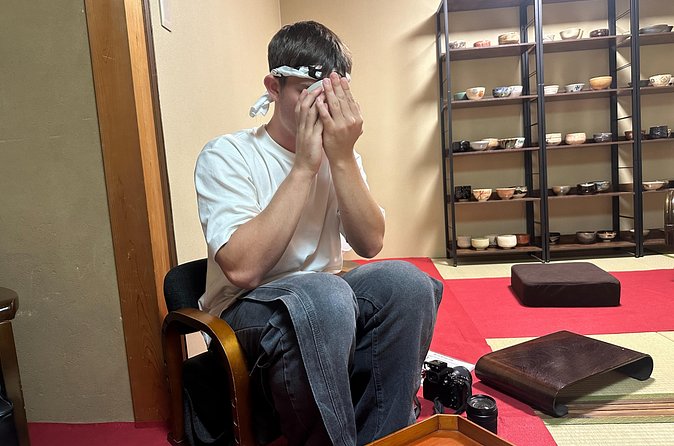
The setting does much of the early work here. A machiya is a traditional Kyoto townhouse, and this one is said to be about 100 years old. That gives the experience a useful sense of connection to the city, even though the activity itself is designed for modern visitors and beginners.
You meet at Samurai Gyoza Factory Kyoto, at 230-1 Kamimyokakucho in Nakagyo Ward. The activity returns to the same meeting point, which keeps the logistics simple. It is near public transportation, but no specific station or walking time is supplied, so check your map before setting out and allow a little time to find the entrance.
I like the choice of a townhouse for this kind of lesson. Tea culture can feel abstract when explained in a large tour room. In a traditional home, the small details of the surroundings help you pay attention to the bowl, whisk, sweets, and quiet rhythm of the preparation.
The experience is capped at 10 people. That is not a private lesson, but it is small enough to make participation practical. If everyone is preparing matcha, a very large group could leave you watching from the back. This format should feel more personal, though the exact amount of individual help will depend on the group that day.
More Kimono and Costume Photoshoots in Japan
- Kyoto: Maiko Makeover and Photoshoot Experience
★ 4.7 · 239 reviews - Kyoto: Tea Ceremony with Kimono and Photoshoot
★ 4.9 · 90 reviews - Kyoto Gion Kiyomizudera Kimono Yukata Hairstyle | Photoshoot
★ 4.9 · 55 reviews
The opening lesson: history, mindfulness, and proper matcha
The session begins with an explanation of the tea ceremony and its place in Japanese culture. You can expect a demonstration before trying the process yourself. The instruction covers the history and meaning of the ceremony, along with the idea of mindfulness and attention to the present moment.
That context matters. Without it, whisking green tea can become a quick craft activity. With it, the movements have a reason. You begin to understand why the host handles each item with care and why the ceremony values calm, hospitality, and attention.
Maya is the named instructor associated with the experience. Her approach appears to be warm rather than stiff. She is described as funny, cheerful, patient, and encouraging, with strong English. That combination is useful for a first lesson. Formal traditions can feel intimidating if you are worried about making a mistake, but a relaxed teacher helps you try the steps without treating them as a test.
Do not expect a full-length formal tea ceremony lasting several hours. This is a short, accessible introduction. You will get a guided explanation and a chance to see the process performed, but the experience is built for curious visitors with a busy Kyoto schedule.
Making your own matcha instead of only watching
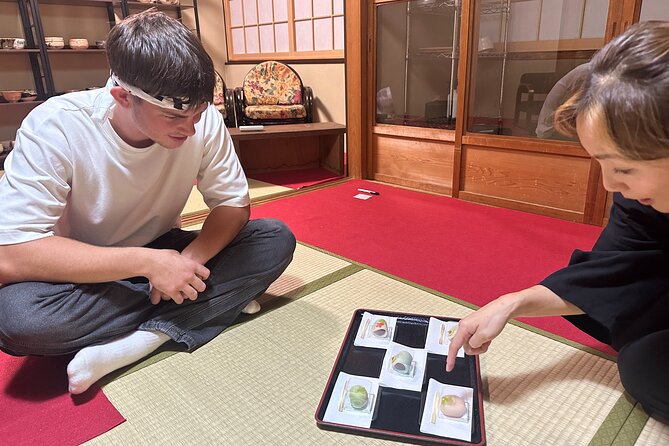
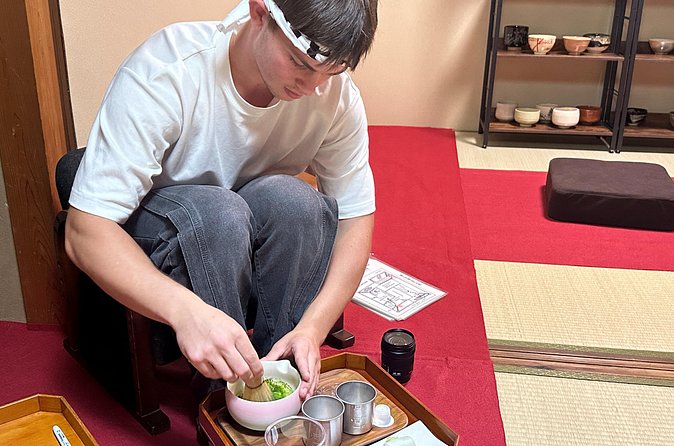
The most valuable part of the session is the practical work. You make your own matcha using the traditional method after watching the demonstration. This turns the activity from a cultural talk into a lesson you can repeat at home.
The basic act is simple, but the appeal comes from doing it carefully. You learn how the powder and water become a smooth drink through whisking, and you get a better feel for the preparation than you would from drinking matcha at a cafe. The instruction is intended for beginners, so you do not need previous tea experience.
The quality of the tea also receives praise. That matters because poor matcha can taste harsh, flat, or overly bitter. Good ingredients give you a fair chance to understand why the drink is valued. You may still find the flavor grassy or strong if you normally drink black tea or coffee, but the lesson lets you taste it in a setting where its preparation is explained.
The activity seems well suited to friends, couples, families with older children, and solo visitors who enjoy learning by doing. It also works for people who like Japanese food but have not yet tried a tea ceremony. You will leave with more than a photograph. You will know the basic process and may feel ready to prepare matcha again.
Seasonal wagashi and the pleasure of a small sweet
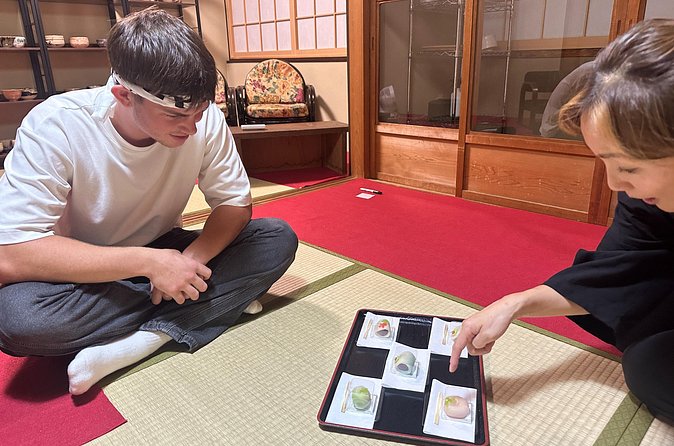
The matcha is served with seasonal wagashi, traditional Japanese confectionery. Wagashi often comes in delicate shapes and colors, and its sweetness balances the more vegetal taste of matcha.
This is a small part of the experience, but it helps you understand the pairing. The sweet is not just a snack placed beside the tea. Its texture and flavor are meant to prepare your palate for the tea and soften its bitterness.
The seasonal element is a nice touch because it links the food to the time of year. Exact flavors and designs are not specified, so do not book this expecting a particular sweet. The point is the changing character of the confectionery, not a fixed menu.
You should also keep your expectations realistic about quantity. This is a tea ceremony and workshop, not a meal. If you are hungry, eat beforehand or plan another food stop afterward. The wagashi adds flavor and context, but it is not intended to replace lunch.
More Kimono and Costume Photoshoots in Kyoto
- Kyoto kiyomizu Temple : Maiko and Samurai Couple Photoshoot
★ 4.8 · 25 reviews - Kyoto Kimono Professional Photoshoot
★ 4.0 · 10 reviews - Kyoto : Kiyomizu-dera Temple : kimono and Indoor photo shoot
★ 4.6 · 5 reviews - Kyoto Kiyomizu-dera Temple : Samurai Costume Photo Shoot
★ 5.0 · 2 reviews
A modern Kyoto-style matcha latte
After the traditional preparation, the class shifts into a more familiar drink: a Kyoto-style matcha latte. You make this yourself, too, which creates a clear contrast between the formal tea and the modern cafe version.
I like this two-part structure. The traditional matcha shows you the older method, while the latte explains why matcha remains popular with younger drinkers and international visitors. If straight matcha tastes too intense, the latte may be your favorite part. If you already enjoy unsweetened matcha, you may prefer the first preparation.
The class includes a recipe so you can try the latte at home. That adds real value to the price. A photo and a cup disappear quickly, but a simple recipe gives you a way to continue the experience after leaving Kyoto.
The latte also makes the session friendlier for mixed groups. One person may want cultural background, another may be curious about Japanese sweets, and another may simply want a good matcha drink. The modern portion gives everyone an easy entry point without removing the traditional element.
Samurai armor photos to end on a playful note
The final feature changes the mood completely. You can put on authentic samurai armor for photographs. After the quiet concentration of tea preparation, this creates a lively finish and gives you a memorable visual record of the visit.
The armor is the part that makes this experience different from a standard tea class. Many Kyoto cultural activities stop after the tea and sweet. Here, you get a second theme connected to Japan’s past, even though the two traditions come from different areas of culture.
The photos are likely best understood as a fun souvenir rather than a serious historical reenactment. The supplied information does not specify how long you wear the armor, how many photographs are taken, or whether professional photography is included. Bring a phone with enough battery and storage if you want to capture the moment yourself, but do not assume edited images or a photographer unless the operator confirms it.
This portion will appeal strongly to families, groups of friends, and anyone who enjoys dressing up. It may feel less important to a visitor seeking only a quiet, formal tea ceremony. For most people, though, the change of pace is part of the charm.
What the 50-minute core and 1-hour-20-minute booking mean
The description gives two time figures. The main activity is presented as taking about 50 minutes, while the overall duration is approximately 1 hour and 20 minutes. That difference may reflect arrival, transitions, armor photos, or a longer session on some dates.
Treat the experience as a short activity, but do not schedule a train departure immediately afterward. Kyoto transport can be easy to use, yet finding a townhouse entrance and moving through a small-group session can take longer than the printed lesson time.
An average booking lead time of 72 days suggests that popular dates can fill well ahead, especially during busy Kyoto seasons. If your itinerary is fixed, reserve early. If your schedule is flexible, you may have more choice, but the exact availability will depend on the date.
The mobile ticket is convenient. Keep it accessible on your phone, and arrive at the stated meeting point rather than heading directly to a separate end location. The session finishes back where it begins.
Is $71.74 a fair price?
At $71.74 per person, this is not the cheapest way to drink matcha in Kyoto. You can find a cafe drink for far less. But a cafe does not usually include a lesson in tea culture, guided preparation, seasonal wagashi, a handmade latte, a traditional townhouse, and samurai armor photos.
The value depends on what you want from the hour. If you only want a cup of tea, the price is too high. If you want a compact cultural activity with several hands-on parts, the cost is easier to justify.
You are paying for instruction and access, not simply ingredients. The English explanation is particularly useful if this is your first contact with the tea ceremony. Maya’s warm teaching style also appears to reduce the formality that can make beginners hesitant.
I would compare it with the price of separate activities. A tea class alone might fill your short afternoon, while a photo session alone might feel thin. Combining both makes the booking more efficient for a first visit to Kyoto.
Who will enjoy this most?
This experience is a good match for:
- First-time visitors who want an easy introduction to Japanese tea culture
- People who prefer making and tasting rather than only watching
- Friends and families who want photos as well as cultural context
- Matcha fans interested in both traditional tea and lattes
- Visitors who need an activity lasting roughly an hour
- People comfortable with a small shared group rather than a private appointment
It may be less suitable if you want a long, highly formal tea ceremony with strict etiquette and extended meditation. The tone here is friendly, interactive, and lighthearted. That is a strength for most beginners, but it may not satisfy someone seeking an advanced study of tea practice.
The samurai armor also makes the activity less purely focused. If your ideal afternoon is quiet from start to finish, the final photo session may feel like a sharp change. If you like variety, it gives the visit a memorable finish.
Practical advice before you book
Reserve ahead if you are visiting on fixed dates. With the experience commonly booked well in advance, leaving this decision until the last day may limit your choices.
Check the route to Samurai Gyoza Factory Kyoto before leaving. The address is in Nakagyo Ward and the site is near public transportation, but the information does not provide a named station or exact walking directions.
Wear something that allows you to sit and move comfortably. No dress code is supplied, so you do not need special clothing. If you want good armor photographs, consider bringing a charged phone and keeping personal items easy to manage during the session.
Allow extra time around the booking. The core portion is listed as 50 minutes, but the full activity is approximately 1 hour and 20 minutes. That makes it easy to fit into a Kyoto day, but not wise to place directly before a hard departure time.
Free cancellation is available up to 24 hours before the start time for a full refund. Cancellations or changes made less than 24 hours before the start are not accepted for a refund, and the cut-off follows local Kyoto time.
Should you book the Kyoto tea ceremony and samurai session?
I would book this if you want a friendly, beginner-level introduction to matcha with more than one thing to do. The strongest reasons are the townhouse setting, hands-on preparation, seasonal wagashi, useful latte recipe, and the chance to wear samurai armor at the end.
The price is reasonable for a compact activity that combines instruction, tasting, and photographs. Just keep your expectations in line: this is not an advanced tea-school lesson, a full meal, or a private historical performance.
For a first Kyoto visit, especially with friends or family, it offers a lot in a short time. Maya’s clear English and easygoing teaching style should help you feel comfortable trying the steps. Book it early if the date matters, leave room around the stated time, and choose it for a lively introduction rather than a solemn ceremony.
FAQ
Where does the tea ceremony and samurai photo session start?
It starts at Samurai Gyoza Factory Kyoto, 230-1 Kamimyokakujicho, Nakagyo Ward, Kyoto, 604-0025, Japan.
Where does the activity finish?
The activity ends back at the meeting point.
How long does the experience last?
The overall duration is approximately 1 hour and 20 minutes. The main tea activity is described as lasting about 50 minutes.
How many people can join the activity?
The group has a maximum of 10 participants.
Is the activity available by mobile ticket?
Yes. A mobile ticket is provided.
What is the cancellation policy?
You can cancel up to 24 hours before the start time for a full refund. Cancellations or changes made less than 24 hours before the start time are not accepted for a refund.
Just added around Kyoto
- Kyoto: Private Photoshoot in Arashiyama, Bamboo Forest★ 5.0 · 2 reviews
- Kyoto: Private romantic photoshoot for couples★ 5.0 · 4 reviews
- Kyoto:Private Tour/Luxury Vehicle with Guide & photographer★ 4.8 · 35 reviews
- Kyoto Kiyomizu-dera Temple : Samurai Costume Photo Shoot★ 5.0 · 2 reviews
- Kyoto: Photo Shoot with a Private Vacation Photographer★ 5.0 · 8 reviews
- Kyoto: Private Photoshoot Experience in Arashiyama Bamboo★ 4.9 · 55 reviews
- Kyoto : Kiyomizu-dera Temple : kimono and Indoor photo shoot★ 4.6 · 5 reviews
- Kyoto kiyomizu Temple : Maiko and Samurai Couple Photoshoot★ 4.8 · 25 reviews
Kimono & Costume Photoshoots, compared.
Kimono Dressing, Walking, and Photography Session
Read our review →Hanbok Photoshoot and History Tour at Gyeongbokgung Palace
Read our review →

Witch Costume Photo Shoot – Olde Salem Village theatrical set
Read our review →
Professional Hanbok Photography at Gyeongbok Palace
Read our review →
Witch Costume Photo Shoot – Witch Cottage theatrical set
Read our review →