
Review · JAPAN PHOTO TOURS & PHOTOSHOOTS
Kamakura Tour with Pro Photographer: Anime Train & Fuji view
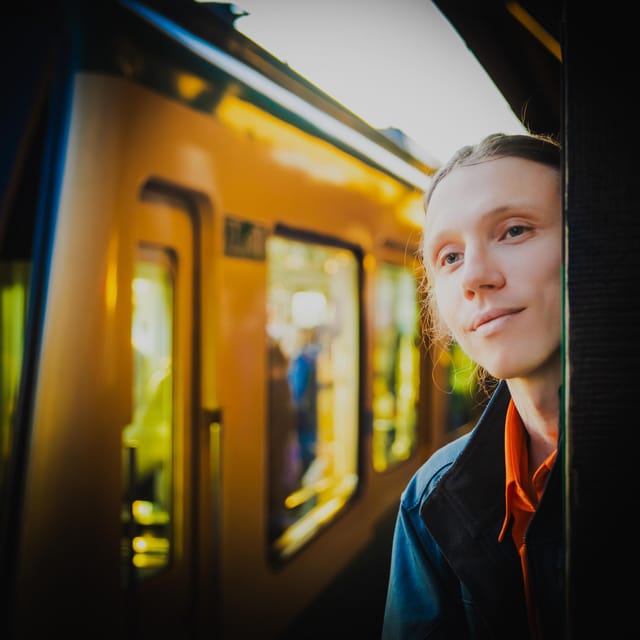
Anime fans have a real-life stage here. This two-hour Kamakura photo tour takes you to the Enoden crossing made famous by Slam Dunk, then down to the beach for portraits with Enoshima and, if the weather cooperates, Mount Fuji. I especially like the personal photographer and the chance to receive 30 edited images, and I like that the guide adds local stories instead of simply pointing at photo spots. The main drawback is weather: Fuji may not appear, and the train crossing can be busy.
The tour costs $133 per group, advertised for up to 10 people, though the activity details also describe a small group limited to eight participants. That price can be good value if you share it with family or friends. You must pay for your own transport to Kamakurakōkō-Mae Station, and the session involves walking and standing near the station and beach.
Key points at a glance
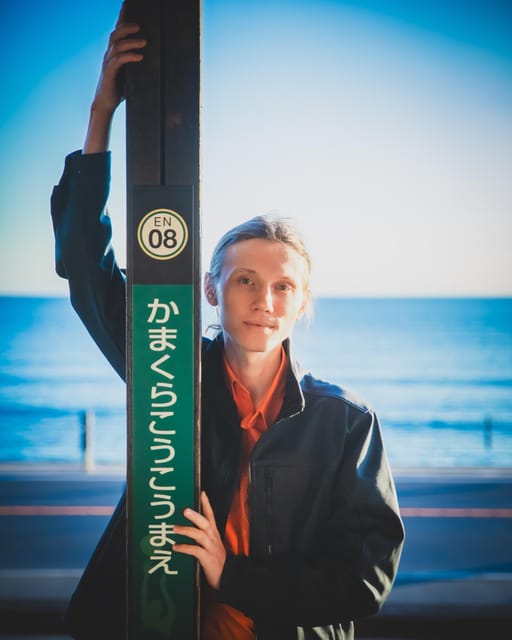
- Slam Dunk’s real-world setting: Visit Kamakura High School Station and the Enoden crossing linked with the famous anime.
- A photographer who directs you: Get help with poses, angles, and candid shots instead of guessing what to do with your hands.
- Sea, Enoshima, and possible Fuji views: The beach session adds variety, though Mount Fuji depends entirely on visibility.
- Thirty edited photographs: Finished digital images are sent within 72 hours.
- Small-group feel: The experience is designed for a limited group, with private attention during the photo session.
- Several language choices: The guide service is offered in English, Spanish, French, and Japanese.
Why the Kamakura anime connection matters
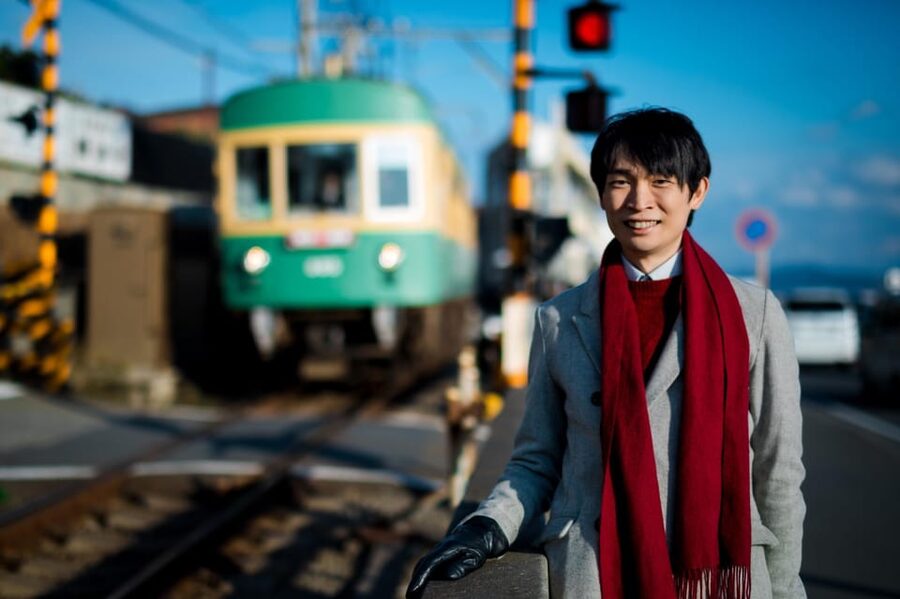
Kamakura High School Station, written as Kamakurakōkō-Mae Station, sits on the Enoshima Line. The nearby crossing is strongly associated with Slam Dunk, making it one of those Japanese pop-culture places where an animated setting connects directly with an ordinary working railway.
That connection is the reason to choose this tour over a standard Kamakura sightseeing walk. You are not only looking at a station sign or taking a quick phone snapshot. Your photographer-guide explains the cultural importance of the location and helps you create portraits that show why the place matters.
The anime link also gives the tour a clear focus. You do not spend two hours wandering between unrelated sights. You begin at one recognizable setting, work through several nearby photo angles, and finish with coastal views. I like that simple plan because it keeps the session focused without making it feel rushed from start to finish.
More Train Rides around Japan:
- Instagram Incense Quang Phu Cau Village Tour with Train Street
★ 5.0 · 323 reviews
Meeting at Kamakurakōkō-Mae Station
Your meeting point is just outside the main exit of Kamakurakōkō-Mae Station on the Enoshima Line. The photographer is identified by branded Photo Star clothing, which should make the first meeting easier in a busy station area.
You need to arrange your own transport to the station. That detail matters because the tour does not include transfers, and the experience begins at the meeting point rather than at a hotel or central Tokyo pickup location. Check the Enoshima Line route and allow enough time to find the correct exit.
The station itself sets the mood immediately. It is the practical starting point for local commuters, yet it has become a popular stop for people interested in Slam Dunk and Japanese railway scenes. Your guide uses the opening portion of the tour for an introduction and a short guided visit, listed at about 15 minutes.
This is a good point to explain what you want from the photographs. If you prefer relaxed portraits, anime-inspired poses, or more natural candid images, tell the photographer early. The guide is there to help with posing, and the available languages include English, Spanish, French, and Japanese.
The Enoden crossing and train photography
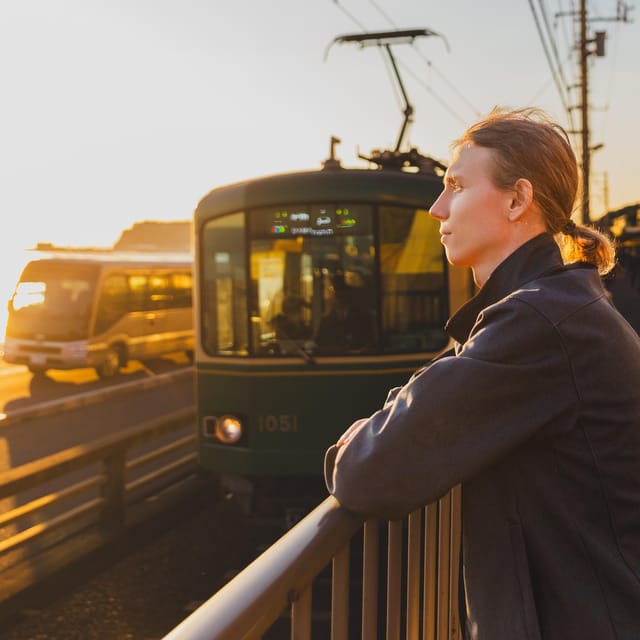
The main photo stop is the Enoshima Line crossing near Kamakurakōkō-Mae. Trains pass through the scene, with the road, tracks, sea, and distant views creating the familiar composition associated with the anime.
The photographer’s role is especially useful here. A casual visitor may stand in the obvious spot and take one hurried picture before moving aside. Your guide can look for better angles and time the session around the passing trains while also keeping the portraits personal.
The plan includes roughly 50 minutes for one photo session and another 20-minute photo stop in the same general area. That gives you more than a quick pose at the crossing. You can try several compositions, including portraits that show the station and railway setting, along with closer images focused on you.
Expect this to be a public place, not a private studio. The crossing is popular, so you may need patience when other people are nearby. The photographer’s promise to seek quieter spots is valuable, but it cannot remove the reality of an active station and public road. Keep clear of tracks and follow the guide’s directions.
The train itself adds movement and timing to the pictures. That is part of the appeal, but it also means the best shot may depend on several attempts. A professional camera and an experienced eye help, but you should not expect every image to include a perfectly placed train.
Posing help that makes the session easier
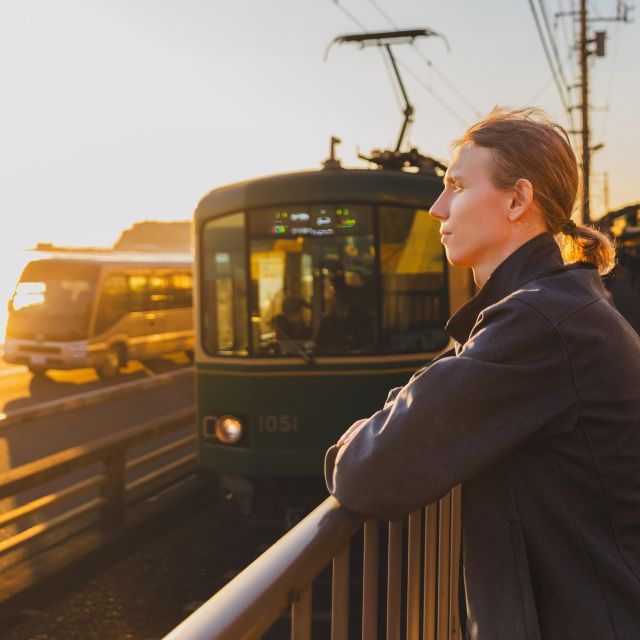
Many people like the idea of professional portraits but feel awkward once the camera comes out. This tour addresses that problem directly. The photographer gives guidance on elegant poses and helps create candid moments, so you do not have to invent a new stance at every stop.
I would make use of that help. Ask for a mix of images: some looking toward the camera, some looking toward the sea or tracks, and some less formal moments while walking. The included photographs are meant to give you a varied collection rather than 30 versions of one pose.
The two positive comments supplied for this experience both focus on the photographer’s personal approach. One specifically praises Luis as professional and skilled at finding a flattering angle. Another describes the photographer as attentive to personal preferences and professional in manner. Those details suggest that the human service is the strongest part of the tour.
That matters more than having a camera alone. A good photographer notices posture, facial expression, background clutter, and the direction of light. Just remember that the available information names Luis in one comment, but does not guarantee that Luis will lead every scheduled departure. If having a specific photographer matters to you, ask when booking.
A few more photo experiences around Japan worth a look
- Tokyo: Kimono Dressing, Walking, and Photography Session
★ 4.9 · 427 reviews - Best Go Kart Experience in Shibuya Crossing with Iconic Photos
★ 5.0 · 348 reviews - Tokyo Ryogoku Sumo Morning Practice + Photo Shoot with Wrestlers
★ 4.5 · 277 reviews - Kyoto: Maiko Makeover and Photoshoot Experience
★ 4.7 · 239 reviews
Down to the beach for Enoshima and Fuji
After the station-area photographs, the group walks about five minutes toward the beach. This short transfer changes the feel of the session. Instead of railway lines and anime references, you get open sea views with Enoshima as a major background feature.
The beach portion gives your photo collection needed variety. You can expect portraits that feel more spacious and coastal, along with the chance for candid walking images and posed shots. The guide can help position you so the sea and island remain part of the composition without overpowering the portrait.
Mount Fuji is listed as a possible view, not a promise. Clear weather is essential, and even then the mountain may not be visible from the chosen position. Treat Fuji as a bonus. If it appears, it can make the final images especially memorable. If it does not, Enoshima and the sea still provide a strong setting.
This weather issue is the tour’s biggest uncertainty. The station and crossing are dependable sights, but Fuji is not. For the best chance of seeing it, consider a day with clear conditions, while remembering that visibility cannot be guaranteed by the photographer.
A two-hour plan with a relaxed pace
The listed schedule includes a 15-minute guided portion, about 50 minutes at a photo stop, another 20-minute photo stop, and a five-minute walk back toward the station. The activity is described as lasting two hours, so some time is also used for introductions, moving between nearby viewpoints, arranging poses, and working around train activity.
The route stays compact. You start and finish at Kamakurakōkō-Mae Station, and the beach is reached on foot. That makes the tour manageable for people who want a focused experience rather than a full-day Kamakura excursion.
The schedule does involve outdoor standing and walking. The activity is marked wheelchair accessible, but you may still want to confirm the exact beach route and surfaces if you have specific mobility needs. It is not suitable for people with heart problems, according to the activity information.
Because the group is described as small, you should receive more attention than on a large sightseeing tour. There is a slight inconsistency in the capacity details: the price is shown for a group of up to 10, while the activity description says the group is limited to eight. Confirm the final group size if that affects your decision.
What you receive after the session
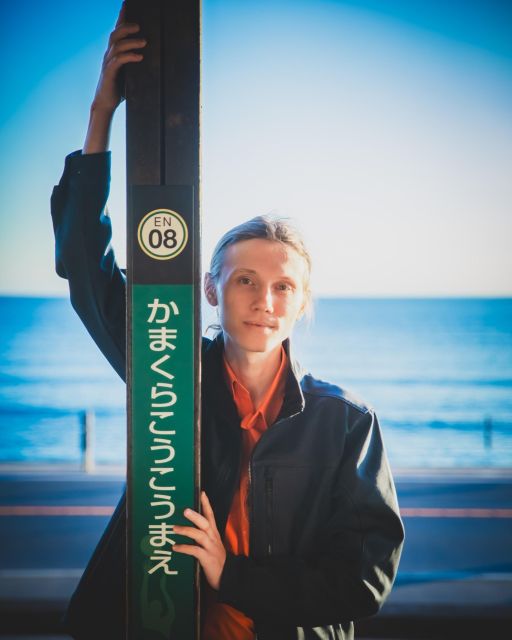
The package includes 30 professionally edited digital photographs. They are delivered within 72 hours, which is quick enough to share the experience soon after your visit.
Thirty finished images is a useful middle ground. You receive enough variety for personal keepsakes and social posts, but the package is not presented as every photograph taken during the session. The photographer selects and edits the strongest images.
Editing also means the final set should have a more consistent look than unprocessed phone pictures. Still, you should treat the exact editing style as something to clarify if you have strong preferences. The supplied details confirm professional editing and digital delivery, but they do not specify file size, retouching level, or whether additional images can be purchased.
The delivery time is one of the tour’s practical strengths. You do not need to wait weeks for the finished pictures. Make sure the provider has the correct contact information for digital delivery.
Is $133 good value for your group?
At $133 per group, the value depends on how many people share the booking. For a couple, it works out to roughly $66.50 each. A group of four brings the cost to about $33.25 per person, before transport. Larger groups can reduce the individual cost further, subject to the stated group-size limit.
That price pays for more than a guide pointing out an anime location. You receive about two hours with a local photographer, direction on posing, a mixture of candid and planned shots, local cultural information, and 30 edited images. If you would otherwise hire a photographer separately, the package is easy to understand.
The value is weaker if you only want to see the crossing for five minutes and take one phone picture. You will also need to pay for your own train or other transport to and from Kamakurakōkō-Mae Station. This is a photo experience first, not a broad Kamakura sightseeing tour.
Free cancellation is available up to 24 hours before the activity for a full refund, and you can reserve now while paying later. Those policies help if your schedule or weather plans are uncertain. They do not remove the risk that Fuji will be hidden on the day.
Who will enjoy this Kamakura photo tour?
I would recommend it most strongly to Slam Dunk fans, anime enthusiasts, couples, friends, and families who want polished photographs from a recognizable Japanese setting. It also suits solo visitors who would rather have a professional create portraits than rely on a stranger or a tripod.
The tour works well for people who enjoy a clear theme. You move from the station and train crossing to the beach, so every stop supports the same combination of anime, railway culture, and coastal scenery.
It is less suitable if you want a broad introduction to Kamakura’s temples, shrines, food, or older streets. The guide shares local stories and historical information, but the main purpose remains photography. You should also think twice if you dislike posing, outdoor sessions, or waiting for train timing.
Languages are another plus. English, Spanish, French, and Japanese are listed, allowing you to choose a guide experience that best fits your needs. The group format is limited, but it is not necessarily a private booking unless you reserve the whole group.
Should you book it?
Book this experience if you want more than a quick anime photo and would value a skilled person behind the camera. The strongest reasons are the photographer’s attention to posing and personal preferences, the famous Enoden crossing, and the 30 edited photographs delivered within 72 hours.
Skip it if your main goal is simply to visit Kamakura High School Station on your own, or if you need guaranteed Mount Fuji views. The mountain is weather dependent, and transport to the station is not included.
For most anime fans and anyone planning a special couple or family memory, I think the price can be worthwhile, especially when shared by several people. Confirm the group-size limit, ask who will lead your session if a particular photographer matters, and check the forecast before you go.
FAQ
Where does the Kamakura photo tour start?
It starts just outside the main exit of Kamakurakōkō-Mae Station on the Enoshima Line in Kamakura. The photographer wears branded Photo Star clothing.
How long does the experience last?
The tour lasts two hours. The schedule includes guided time at Kamakura Koko-mae, photo stops, a short walk, and a return to the station meeting point.
Is Mount Fuji guaranteed to be visible?
No. Mount Fuji can be seen from the beach if weather conditions allow, but visibility is not guaranteed.
How many edited photos are included?
The package includes 30 professionally edited digital photographs. They are delivered within 72 hours of the tour.
Is transportation included?
No. You must arrange and pay for your own transportation to and from Kamakurakōkō-Mae Station.
What languages are available, and how large is the group?
The tour is offered in English, Spanish, French, and Japanese. It is described as a small-group activity limited to eight participants, although the price information refers to groups of up to 10, so confirm the final capacity when booking.
Just added around Japan
- Kyoto: Private Photoshoot in Arashiyama, Bamboo Forest★ 5.0 · 2 reviews
- Kyoto: Private romantic photoshoot for couples★ 5.0 · 4 reviews
- Kyoto:Private Tour/Luxury Vehicle with Guide & photographer★ 4.8 · 35 reviews
- Kyoto Kiyomizu-dera Temple : Samurai Costume Photo Shoot★ 5.0 · 2 reviews
- Kyoto: Photo Shoot with a Private Vacation Photographer★ 5.0 · 8 reviews
- Kyoto: Private Photoshoot Experience in Arashiyama Bamboo★ 4.9 · 55 reviews
- Kyoto : Kiyomizu-dera Temple : kimono and Indoor photo shoot★ 4.6 · 5 reviews
- Kyoto kiyomizu Temple : Maiko and Samurai Couple Photoshoot★ 4.8 · 25 reviews
Japan Photo Tours & Photoshoots, compared.
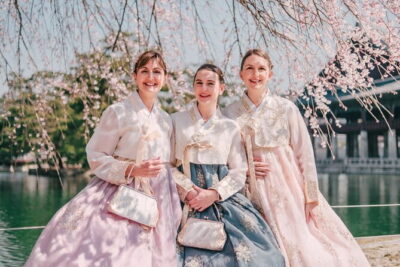
Kimono Dressing, Walking, and Photography Session
Read our review →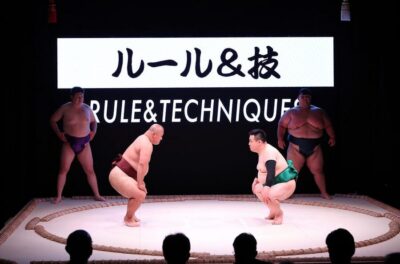
Sumo Stage Show with Bento or Snack + Fight & Photo
Read our review →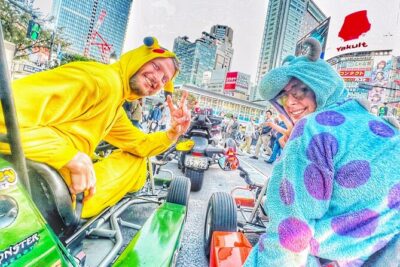
Best Go Kart Experience in Shibuya Crossing with Iconic Photos
Read our review →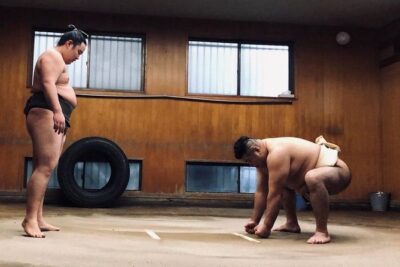
Tokyo Ryogoku Sumo Morning Practice + Photo Shoot with Wrestlers
Read our review →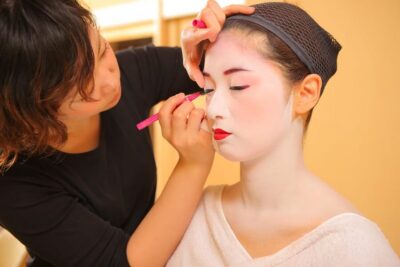
Tokyo by Night Photography Tour (Private Option Available)
Read our review →Browse the lists this shoot appears in